


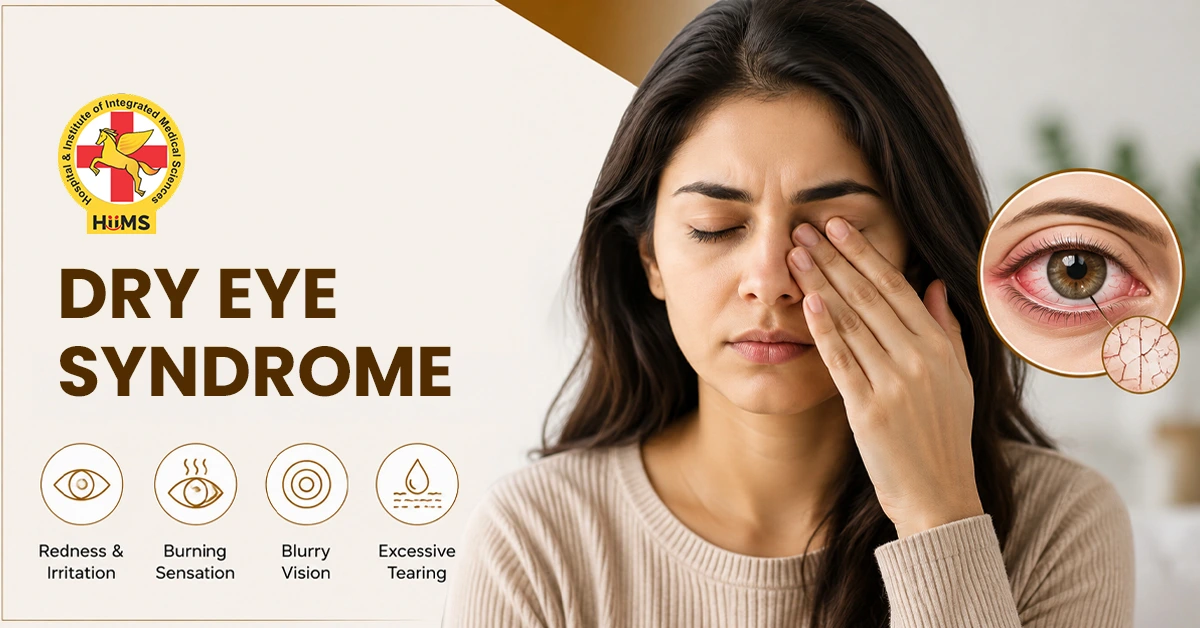
The eyes require a healthy tear film to stay moist and lubricated. Insufficient production of tears and excessive evaporation of tears can result in the eyes being dry. The medical term for this disorder is dry eye syndrome.
Some symptoms include burning, irritation, redness, gritty sensation and vision problems.
Today, long hours in front of computers and mobile phones have made dry eyes increasingly common. However, screen use is only one of several possible factors. Ageing, contact lenses, dry air, smoke, certain medicines and some health conditions can also affect the tear film.
For occasional dryness, simple eye care may be enough. But when the symptoms occur repeatedly or persist for a very long period of time, then one should consider the causes of such symptoms rather than ignoring the problem. It is particularly applicable to the problem of chronic dry eyes.
What Is Dry Eye Syndrome?
Dry eye syndrome happens due to the inability of the eye to form a constant layer of tears over the surface. Tears have three elements: water, oil, and mucus, with each playing a part in maintaining the smoothness and health of the eyes.
Dry eyes could be caused by a lack of enough tears in the eyes or evaporation of the tears at a much faster rate.
The syndrome can happen to one or both eyes. Some patients get affected when using the computer for an extended period of time, while others experience the problem throughout the day.
What Causes Dry Eyes?
There can be several causes of dry eyes, and the reason is not necessarily the same for everyone.
- Excessive Screen Time
When we concentrate on a phone, laptop or television screen, blinking often becomes less frequent. Since blinking helps spread tears across the eye, reduced blinking can allow the tear film to evaporate faster. - Ageing
Tear production and tear quality can change with age. Dry eyes are therefore more common among older adults. - Dry and Polluted Environment
Strong wind, smoke, dust, dry weather and air conditioning can increase evaporation from the surface of the eyes. - Contact Lenses
The prolonged use of contact lenses could possibly cause irritation. - Certain Medicines
Some medicines, including certain antihistamines, antidepressants and medicines used for blood pressure, can affect tear production. A medicine should never be stopped without discussing it with the prescribing doctor. - Other Health Conditions
Autoimmune conditions, thyroid disorders, allergies, eyelid inflammation and other health problems may sometimes be associated with dry eyes.
What Are the Symptoms of Dry Eye Syndrome?
Dry eye symptoms can be minor at first, becoming evident after long hours spent on the computer or due to dry conditions in the air.
Typical symptoms include the following:
- Burning or stinging of the eyes
- Itchiness and irritation
- Redness
- Gravelly sensation in the eyes
- Feeling like there is sand in the eyes
- Eye fatigue
- Light sensitivity
- Blurry or fluctuating vision
- Inability to wear contacts
- Watering of the eyes
It might be puzzling for someone who suffers from dry eye disease to experience watery eyes because, in response to irritation, one produces extra watery tears.
How Can Dry Eyes Be Managed Naturally and Through Ayurveda?
Traditional eye care methods involve using lubricants and eye drops to ensure the comfort of the eye surfaces. Such methods may be helpful, especially in cases where the condition is chronic.
People with recurrent eye dryness should also consider the effect of their lifestyles and the environment on the health of their eyes.
On the other hand, Ayurveda gives emphasis to Aahar, Vihar, sleep, lifestyle and individual constitution in taking care of one’s eyes. In this case, one’s diet, sufficient sleep, low eye stress, and Ayurvedic treatment may help one maintain eye health.
At Jeena Sikho HiiMS, the use of traditional Ayurveda for eye care is Akshitarpan, or Netra Tarpana. This is a traditional eye treatment method according to Jeena Sikho HiiMS.
The method is performed through the creation of a dough ring around the eyes filled with warm medicated ghee or oil for some period.
Netra Tarpana can also be used to soothe and nourish the eyes, and this topic is usually associated with dryness, irritation, and eye strain. Below are some things that may be considered as part of Ayurveda’s general treatment plan concerning:
- Screen behaviour: Regularly taking breaks from screens and restricting screen use time.
- Blinking: Efforts to blink properly while reading and working.
- Rest: Giving proper rest to the eyes, especially after doing some work requiring vision.
- Nutrition: Having a proper diet according to the needs of a person.
- Lifestyle: Dealing with the lifestyle in which the eyes are continually strained.
- Ayurvedic treatment: Performing Ayurvedic treatment, such as Netra Tarpana, after consulting a professional first.
The reason for such an approach is to consider not only repetitive eye strain but also the reasons behind it. But the problem is that one cannot perform Netra Tarpana or any other Ayurvedic treatment at home.
Why Can Dry Eyes Keep Coming Back?
Dry eyes may return when the factors causing them are still present. Someone who works eight or nine hours on a computer, sleeps poorly and sits directly under an air conditioner may continue experiencing dryness even after temporary relief.
Similarly, age-related changes, contact lens use, eyelid gland problems or certain health conditions may require ongoing attention.
This is why chronic dry eyes deserve proper assessment. Persistent dry eye can sometimes affect the surface of the eye and, in severe cases, may lead to complications.
Simple Eye Care Tips for Dry Eyes
A few everyday habits can make the eyes more comfortable.
1. Follow the 20-20-20 Rule
During prolonged screen work, every 20 minutes, look at something about 20 feet away for around 20 seconds.
2. Blink Properly
Do not forget to blink thoroughly when you read or use the computer because blinking is essential for distributing tears on the eye surface.
3. Avoid Direct Airflow
Do not sit directly in front of a fan, air conditioner or car vent. Direct airflow can increase tear evaporation.
4. Ensure Indoor Air Is Comfortable
A humidifier is recommended for use when the indoor air is very dry.
5. Eye Protection in Outdoor Settings
The use of sunglasses or eye protectors will help prevent exposure to dust and wind.
6. Give Your Eyes Proper Rest
When you have to read or use your computer continuously, take small breaks rather than waiting until your eyes begin to ache.
Can Diet Support Eye Wellness?
Diet cannot be said to be a direct treatment of dry eye syndrome, but it is necessary for the good health of both eyes and body.
One needs to have a balanced diet with vegetables, fruits, whole grains, pulses, nuts and others rich in nutrients. Vitamin A and fat-rich foods can also be included in the balanced diet.
Instead of relying on a single type of food or supplement, one needs to follow a balanced diet, which is a better choice. Only in proper cases should one take supplements.
When Should You See an Eye Specialist?
Dry eyes can be managed through alterations to one’s lifestyle. However, persistent cases must never be regarded as normal computer eye strain.
You should seek advice from an ophthalmologist if you have:
- Persisting dryness
- Considerable eye irritation
- Eye pain
- Regular blurring of vision
- Light sensitivity
- Visual disturbances that affect reading or working
- Dry eyes that do not respond to basic treatments
Vision loss, intense eye pain, or eye injury needs urgent medical attention. An eye examination can help identify whether the problem is related to tear production, tear evaporation, eyelid glands or another eye or health condition.
Conclusion
Dry eye syndrome can be linked with many factors, including reduced tear production, rapid tear evaporation, screen use, ageing, contact lenses, environmental conditions, medicines and certain health problems.
Regular blinking, screen breaks, proper rest, protection from wind and dust and a balanced diet can support everyday eye care. For people interested in an Ayurvedic approach, traditional therapies such as Netra Tarpana may be considered under professional supervision.
Jeena Sikho HiiMS provides Ayurvedic eye care guidance based on traditional practices and individual assessment. That’s why it is the best eye hospital in Hoshiarpur.
If you have persistent dry eye symptoms or chronic dryness, do not rely only on self-care. An appropriate eye examination can help identify the actual reason and ensure that any Ayurvedic or other supportive approach is used safely.

FAQs
Q1. What are the usual dry eye symptoms?
Symptoms include burning, reddening, irritation, grittiness, watering and blurring vision.
Q2. Why do people develop dry eyes?
This could happen because of the use of screen time, old age, arid conditions, use of contact lenses, certain medication, and medical conditions.
Q3. Is there any possibility for Ayurveda to assist with dry eye problems?
Ayurveda can help to support one’s eyesight in terms of lifestyle recommendations and traditional therapy like Netra Tarpana.
Q4. What is Netra Tarpana?
Netra Tarpana is a traditional Ayurvedic procedure of application of medicated warm ghee or oil around the eyes in the dough ring.
Q5. When should I consult an eye doctor?
Consultation with an eye specialist is necessary if there is persistent dryness or in case of accompanying pain, redness and vision changes.