

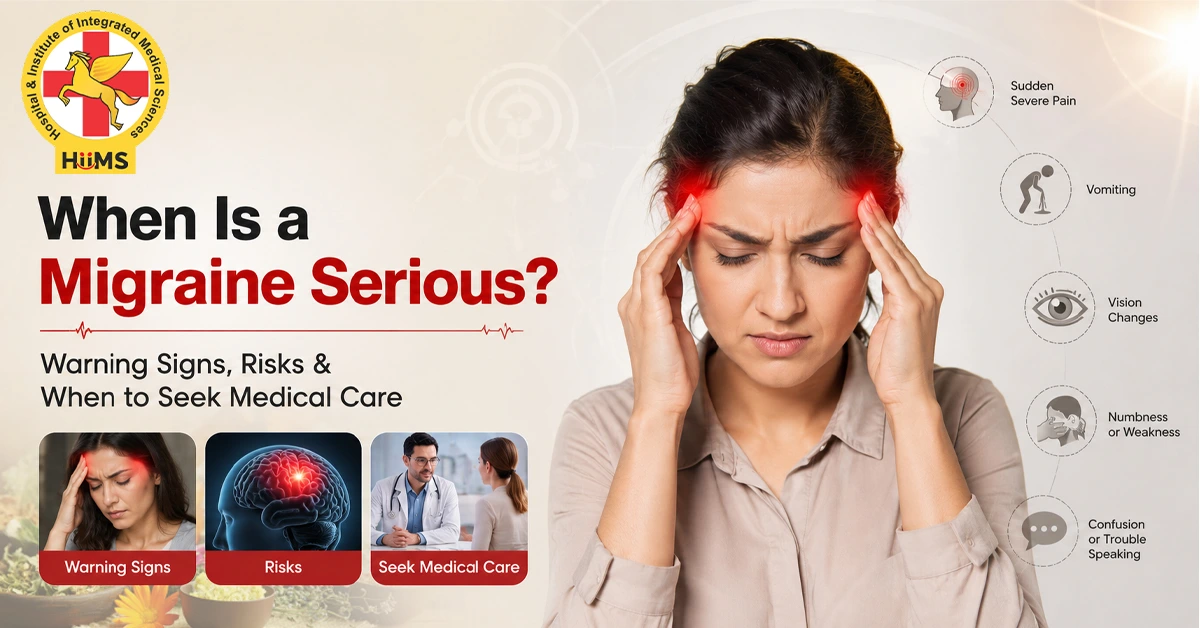

A migraine can be much more than an ordinary headache. It may bring severe head pain, nausea, vomiting, dizziness and sensitivity to light, sound or smell. For some people, the pain can be so strong that normal work and daily activities become difficult.
Most migraine episodes are not caused by a dangerous problem in the brain. However, a change in the usual pattern should never be ignored. Knowing the migraine warning signs can help a person understand when an episode needs attention from a healthcare professional.
A migraine may sometimes cause changes in vision, tingling, trouble speaking and other unusual sensations. For some people, these symptoms are already a familiar part of their migraine.
Still, if they appear suddenly for the first time or seem different from usual, it is important to get them checked. A sudden and severe headache can sometimes point to a serious condition that needs urgent attention.
Knowing the difference between a usual migraine and a concerning headache can help a person take the right step instead of simply waiting for the pain.
What Are the Migraine Warning Signs?
Migraine itself is generally not considered a life-threatening condition. However, not every severe headache should automatically be considered a migraine. Certain changes in the headache pattern may suggest that another health problem is present.
The migraine warning signs become more important when the headache is very different from what a person usually experiences.
A person should pay attention if:
- The headache starts suddenly and becomes extremely severe within a short time.
- The headache is the worst headache the person has ever experienced.
- There is new weakness or numbness in the face, arm or leg.
- There is difficulty speaking, understanding words or walking.
- There is sudden loss of vision or major changes in vision.
- The person becomes confused, unusually sleepy or loses consciousness.
- The headache occurs with fever and a stiff neck.
- The headache continues to become worse instead of settling.
- A new type of headache develops after a head injury.
These signs do not always mean that something dangerous is happening. However, they require proper health assessment because conditions such as bleeding, infection or stroke can sometimes produce similar symptoms.
Sudden Severe Headache Should Not Be Ignored
One of the most important migraine symptoms is a headache that reaches its highest intensity within seconds or about a minute. This is often called a thunderclap headache.
A person may describe it as a sudden and extremely intense headache that feels very different from previous episodes. Even if the person has a history of migraine, a new sudden headache should not simply be assumed to be another migraine.
Such a headache can sometimes be linked with serious problems, including bleeding around the brain. For this reason, immediate healthcare attention is recommended when a headache suddenly becomes extremely severe, particularly when it is a new experience.
When a Migraine Lasts Too Long
Most migraine episodes last for a few hours, though some may continue for a few days. If a severe episode lasts longer than 72 hours, it may be known as status migrainosus and needs expert attention. A migraine that lasts this long may also cause dehydration, poor sleep and difficulty carrying out normal daily activities.
This does not mean that every headache lasting several hours is dangerous. The important point is to notice how long the episode is continuing and whether it is following the person’s usual pattern.
If repeated episodes are becoming longer, stronger or more frequent, it is also worth discussing them with a healthcare professional.
When Frequent Migraine Needs Medical Attention
A person may become used to recurring headaches and start treating them as a normal part of life. This can make it easy to overlook gradual changes. Frequent headaches deserve attention when they begin to affect everyday life.
Some changes to look out for include:
- Headaches are becoming more frequent than before.
- The migraine pain is becoming stronger or lasting longer.
- Headaches are affecting sleep, work, exercise or daily activities.
- The usual pattern of migraine has changed.
- New symptoms are appearing with the headache.
Keeping a simple headache diary can also be useful, especially when headaches occur often. Write down when the headache begins, how long it lasts, what you ate and drank, your sleep quality, stress levels, water intake and any other noticeable changes. These details may help identify possible migraine causes and understand recurring patterns.
Ayurvedic Approach to Migraine Management
Ayurveda gives attention to digestion, eating habits, sleep, daily routine and the body’s overall balance when dealing with the recurring migraine. The care may include suitable changes in food, herbs or Ayurvedic therapies depending on the person’s needs. Along with this, simple habits such as eating at regular times, drinking enough water, sleeping properly and practising relaxation may support better daily comfort.
At HiiMS Gorakhpur, the approach begins by understanding individual health and daily habits.
Can Migraine Be Managed Naturally?
Many people look for a migraine cure, but migraine does not have the same cause or pattern in every person. Because of this, one natural approach may not work equally well for everyone.
Taking care of everyday habits can make a difference. Regular meals, good sleep, enough water, relaxation and avoiding known triggers may help a person manage recurring migraine. Ayurveda also looks at food habits, digestion, sleep and daily routine while planning care.
For migraine relief, resting in a quiet room, drinking water and avoiding bright light, strong smells or other known triggers may be useful. These steps can offer comfort, but serious warning signs should not be ignored.
Conclusion
A migraine can be painful and disturbing, but most migraine episodes are not dangerous. The real concern is a sudden change from the usual pattern. Knowing the migraine warning signs can help a person understand when medical attention is necessary.
If you are experiencing recurring headaches, it is useful to look at sleep, food, hydration, stress and daily routine along with the symptoms. At Jeena Sikho HiiMS, Ayurvedic wellness care can be considered according to individual needs. For guidance, you can also seek a VOPD consultation and discuss your symptoms with a qualified practitioner rather than self-managing a persistent or unusual headache.

FAQs
1. Is migraine a danger?
Migraine is usually not a dangerous condition. However, sudden headache with weakness, confusion, vision changes, trouble speaking or other the unusual symptoms can be a reason to seek immediate professional attention.
2. When is a migraine serious?
A migraine needs attention when the headache becomes suddenly severe, feels unusual compared with past episodes, lasts beyond 72 hours or is followed by weakness, confusion or major changes in vision.
3. Are migraines a worry?
When migraine keeps returning, it can slowly affect the daily routine of a person. If the headaches are becoming more frequent, stronger or different from what you normally experience, it is better to discuss the changes with a healthcare professional.
4. Is migraine very harmful?
Migraine itself is usually not considered harmful in the sense of causing a dangerous brain condition. However, severe or unusual headaches can sometimes have another cause, which is why sudden changes should be checked.
5. Which migraine is serious?
There is no single type that can be called serious based only on pain. A sudden thunderclap headache, new neurological symptoms, persistent severe headache, fever with neck stiffness, or a major change in the usual pattern requires medical attention.
6. How long is it safe to have a migraine?
A usual migraine may last from four hours to several days. If a severe episode continues beyond 72 hours, medical care should be sought, especially if the symptoms are not improving or are different from usual.

Leave a comment