

Low blood pressure is a common concern, especially when a person suddenly feels weak, dizzy or lightheaded. In general, a blood pressure reading below 90/60 mm Hg is considered low. However, a low reading does not always mean that something is wrong. Some people naturally have lower blood pressure and feel perfectly well. The concern is greater when low BP causes symptoms or appears suddenly.
There can be several reasons for low BP. Not drinking enough water, skipping meals, excessive sweating, standing for a long time or getting up suddenly may cause a temporary fall in the blood pressure. Sometimes, low BP can also be linked with an underlying health condition. Therefore, it is important to understand why the blood pressure is falling instead of only trying to increase the reading.
For mild and occasional symptoms, simple changes in food, fluids and daily routine may be helpful. Traditional practices may also be included as part of natural care. These remedies for low BP can support daily wellbeing when they are suitable for the person, while repeated or severe symptoms should be taken seriously.
Low Blood Pressure: An Overview
Blood pressure is the force with which blood moves through the blood vessels. It does not remain exactly the same throughout the day. Body position, food, physical activity, stress, hydration and even the time of day can affect it.
A person may have a low reading after standing suddenly, after losing fluids or when they have not eaten properly. Some people may have low BP without experiencing any discomfort at all. In such cases, treatment may not be needed.
However, when low BP is accompanied by dizziness, weakness, blurred vision or fainting, it deserves attention. A sudden fall in blood pressure can sometimes point towards a more serious problem.
The purpose of low blood pressure remedies should therefore be to support the body while also understanding the reason behind the low reading.
What Are the Causes of Low Blood Pressure?
Low blood pressure can develop for many reasons. Some causes are related to the everyday habits, while others may need proper assessment.
Some of the common causes include:
- Not drinking enough water
- Excessive sweating
- Vomiting or loose motions
- Skipping meals
- Eating too little
- Standing for a long time
- Getting up suddenly after sitting or lying down
- Pregnancy
- Blood loss
- Heart problems or hormonal disorders
- Certain medicines
A person’s low blood pressure may result from simple daily habits or underlying health conditions, so understanding the cause is important for choosing the right approach.
Signs and Symptoms of Low BP
Some people with the low BP have no symptoms. Others may notice changes when their blood pressure falls below what their body is comfortable with.
Common symptoms include:
- Dizziness or lightheadedness
- Weakness
- Tiredness
- Blurred or the fading vision
- Nausea
- Difficulty concentrating
- Fainting
These symptoms may appear after standing suddenly, staying in one position for too long or becoming dehydrated.
If dizziness or fainting happens frequently, it is better to understand the cause rather than repeatedly trying different home remedies for low blood pressure. Fainting, confusion, cold and clammy skin, rapid breathing or a weak and fast pulse can be signs of a serious fall in blood pressure and should not be ignored.
What Are the Home Remedies for Low BP?
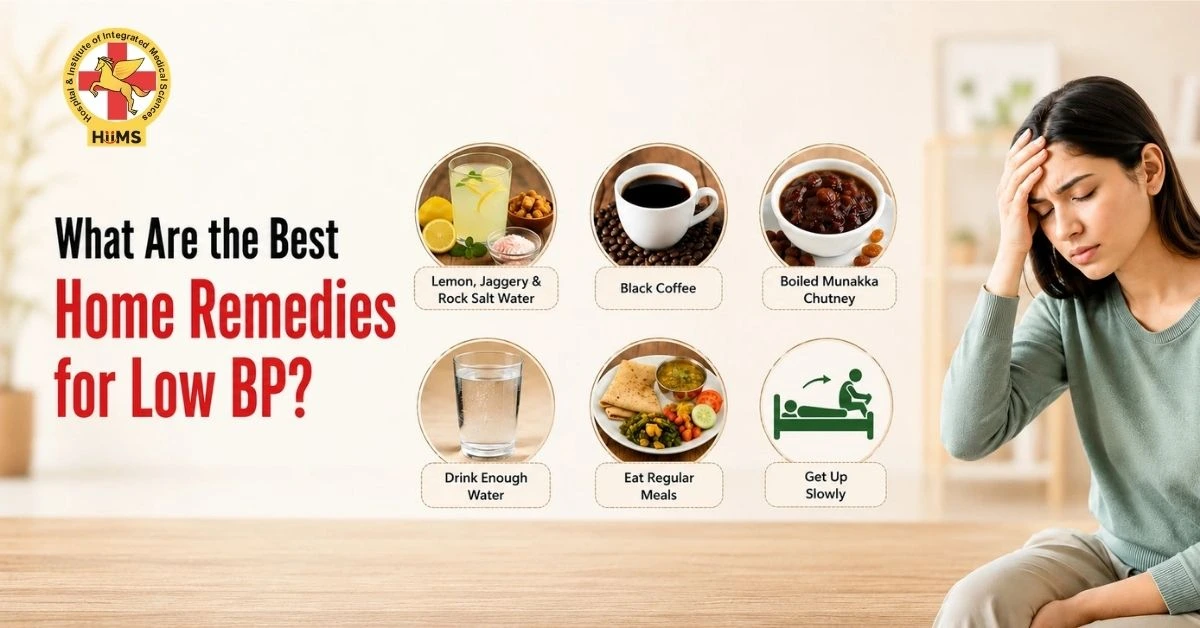
When low BP is connected with dehydration, irregular meals or temporary weakness, a few simple home practices may help. These low BP home remedies are easy to follow,
1. Lemon, Jaggery and Rock Salt Water
- Take a glass of water and add fresh lemon juice.
- Add a little jaggery and a small pinch of rock salt.
- Mix everything well and drink it slowly.
The drink provides fluid along with some sugar and sodium. It may be useful when weakness is related to fluid loss. People who have been advised to restrict salt or sugar should take suitable advice before using it regularly.
2. Black Coffee
- A small amount of black coffee may temporarily increase BP because of its caffeine content.
- It may provide short-term relief when a person feels weak or lightheaded.
- Coffee should not become the main way of managing low BP.
- Excessive caffeine may cause restlessness, poor sleep or a fast heartbeat in some people.
- Anyone who does not tolerate caffeine well should avoid depending on this option.
Caffeine can raise blood pressure for a short period in some people, although its effect is temporary. It is also important to drink enough water because caffeine can contribute to fluid loss.
3. Boiled Munakka (large-seeded raisins) Chutney
- Munakka can be softened by boiling it in water.
- The seeds can be removed if needed.
- The softened munakka can then be prepared into a simple chutney.
A small quantity can be included as part of the daily diet. Munakka provides natural carbohydrates and is rich in nutrients. It may help with weakness and dizziness.
4. Drink Enough Water
- Drink water at regular intervals during the day.
- Do not wait until you become very thirsty.
- Pay extra attention to fluids during hot weather or after excessive sweating.
- Adequate fluid intake helps maintain the amount of blood circulating in the body.
- If dehydration is causing weakness or dizziness, drinking more water may help.
Increasing water intake is one of the simple measures commonly suggested for the low BP, particularly when dehydration is involved.
5. Eat Regular Meals
- Avoid staying hungry for long periods.
- Try to eat meals at regular times.
- Include vegetables, fruits, pulses, whole grains, nuts and other nourishing foods.
- Smaller meals may be easier for some people than very heavy meals.
- Avoid making long gaps between meals a regular habit.
- Notice whether weakness or dizziness appears after skipping food.
Eating smaller meals more often may also help some people who experience a fall in blood pressure after eating.
6. Get Up Slowly
- Do not suddenly stand after lying down or sitting for a long time.
- Sit for a moment before standing.
- Move slowly when getting out of bed in the morning.
- If you feel dizzy, sit or lie down again until you feel steady.
- Avoid sudden changes in the body position.
Moving slowly from lying down to sitting and then standing is a simple measure recommended for people who experience postural BP drops.
These remedies for low BP may be useful for occasional symptoms, while recurring or severe symptoms should be assessed with greater care.
What Is the Natural and Ayurvedic Approach for Low BP?
Ayurveda gives importance to food, digestion, hydration, rest and daily routine. At Jeena Sikho HiiMS Clinic Bokaro, the approach may include dietary guidance, lifestyle changes and selected Ayurvedic therapies according to individual needs. Head-down tilt therapy, Panchakarma and local practices such as sandalwood application may be included as part of traditional care under suitable professional guidance.
These practices focus on the person’s overall wellbeing rather than only one blood pressure reading. The choice of therapy may depend on the person’s condition, routine and individual needs.
Lifestyle Tips to Keep Blood Pressure Balanced
Daily habits can make a difference when a person is prone to low BP. A simple routine is often easier to follow than making many sudden changes.
- Drink enough water throughout the day.
- Eat meals at regular times.
- Avoid staying hungry for very long periods.
- Get up slowly from the bed or chair.
- Avoid standing in one position for a long time.
- Rest adequately when you feel weak.
- Include gentle walking according to your strength.
- Practise simple breathing exercises if they suit you.
- Avoid excessive alcohol because it can contribute to the dehydration.
- Keep a record of BP readings and symptoms.
It can also be useful to note when the symptoms occur. For example, some people may feel dizzy after standing, while others may notice weakness after missing a meal. Keeping a simple record can help identify such patterns and make future guidance more useful.
Conclusion
Simple remedies for low BP such as adequate water, regular meals and suitable traditional food practices may help when low BP is linked with dehydration or daily habits. However, the same remedy may not suit everyone. Natural care also gives importance to food, digestion, rest, routine and individual needs.
Jeena Sikho HiiMS Clinic Bokaro follows an integrated approach that includes Ayurveda and lifestyle guidance. If low BP symptoms keep returning, it is better to understand the cause instead of repeatedly trying home remedies for hypotension. A VOPD consultation can help you receive guidance according to your health condition.

FAQs
1. What is considered low blood pressure?
A reading below 90/60 mm Hg is generally considered low blood pressure.
2. Can dehydration cause low BP?
Yes, not drinking enough water can reduce blood volume and contribute to low BP.
3. What is Head Down Tilt Therapy?
Head Down Tilt Therapy is a supervised approach in which the body is placed on an inclined surface with the head lower than the legs.
4. Can Ayurveda help with low BP management?
Ayurveda gives importance to food, digestion, daily routine and therapies chosen according to a person’s needs.
5. Can low BP keep coming back?
Yes, recurring low BP can have different causes, so understanding the underlying reason is important.