

Blood pressure problems are a health problem that many people carry without even knowing it. A person can eat on time, sleep well, and stay active, yet a check-up can show a reading much higher than normal, with no clear sign before that.
What is hypertension, in simple words? It is a condition where blood keeps pushing against the artery walls harder than it should, and this extra push does not go away on its own.
To understand why it turns dangerous, it helps to first know what these numbers mean, along with their causes, symptoms, types, and a natural way to manage it.
What is Hypertension in Simple Words?
Blood pressure is the force with which blood moves against the artery walls as the heart pushes it around the body. Doctors write this force as two numbers, the systolic number on top for pressure during a heartbeat, and the diastolic number below for pressure when the heart rests.
So when someone asks what is hypertension, or more clearly, what is hypertension disease, the simple answer is that it happens when these numbers stay above normal again and again, not just once. One high reading alone does not prove much. The real problem starts when this extra pressure keeps repeating day after day.
Why is Hypertension Called a Silent Danger?
In the early stage, hypertension usually gives no warning signs. A person can feel fine and go through the whole day without a single ache pointing to high blood pressure. This is exactly why doctors call it a silent killer, since it keeps working against the arteries and heart quietly. Since what causes hypertension often hides behind normal daily habits, the lack of warning makes it easier to ignore.
Knowing common hypertension symptoms early, even small ones like tiredness or a mild headache, can make a real difference. Over the years, this steady pressure can harm major organs, which is why regular BP checks matter so much. As the pressure keeps building, the damage does not stay limited to the blood vessels alone.
How Can High Blood Pressure Harm the Body?
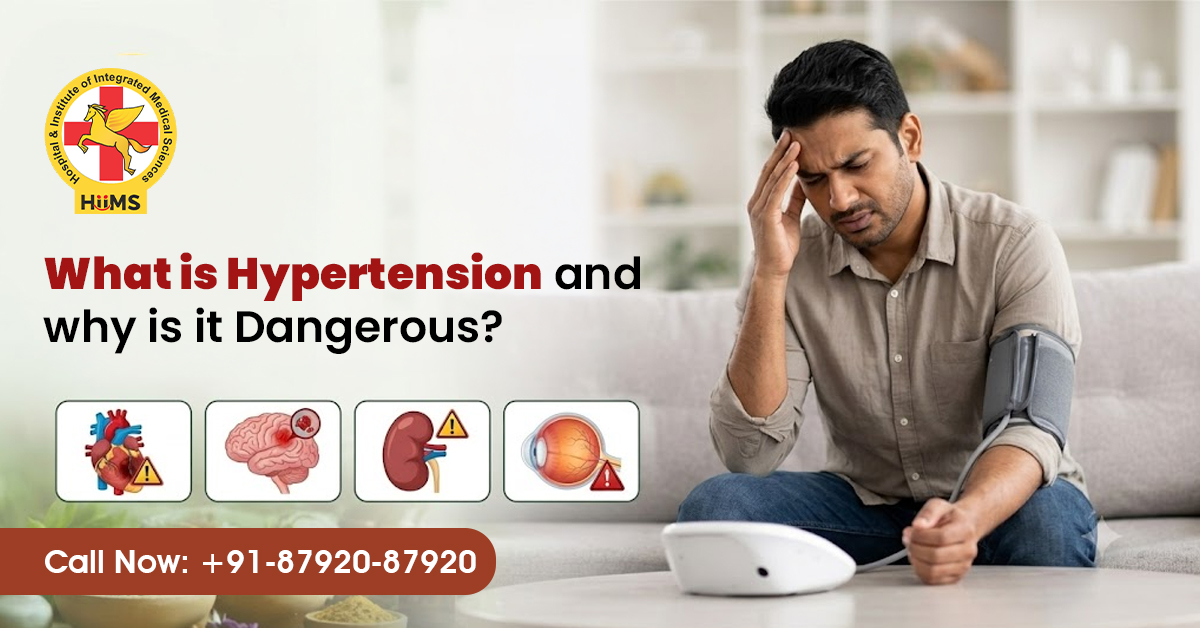
Looking at what is hypertension does to the body becomes clearer organ by organ.
The Heart Works Harder
When blood pressure stays high, the heart pumps against more resistance every day, and this extra work can weaken the heart muscle over time. Watching for hypertension symptoms near the chest, like heaviness or breathlessness, helps catch this strain early.
The Brain Can Get Affected
Steady pressure on the blood vessels going to the brain raises the risk of a stroke over time.
The Kidneys Face Extra Load
Kidneys need healthy blood vessels to filter blood properly, and long-term pressure can slowly reduce how well they do this job.
Eyes and Blood Vessels Can Suffer Too
The thin vessels inside the eyes can also get damaged, affecting eyesight over the years.
What Causes Hypertension in Everyday Life?
High BP does not always start because of one reason; it builds up from a combination of daily habits. Too much salt and packaged food, sitting for long hours, ongoing stress, poor sleep, smoking, alcohol, extra body weight, family history, growing age, and sometimes an existing kidney issue are among the common reasons.
Anyone trying to understand what causes hypertension finds it is rarely just one habit alone. Since there are different types of hypertension, ranging from the kind that builds up slowly to the kind linked with another health issue, knowing which one applies helps in choosing the right care. Ayurveda looks at these habits from another angle, seeing how they disturb the body’s inner balance.
A Natural Approach to Hypertension Treatment at Jeena Sikho HiiMS
At Jeena Sikho HiiMS, hypertension treatment starts by understanding what may be keeping a person’s blood pressure high, not just the number on the machine. The process usually includes a personal Ayurvedic assessment, guidance on diet and salt intake, Panchakarma where the doctor finds it useful, along with yoga and breathing practices that calm the nervous system.
Fixing sleep and stress routines is also given proper attention. Because different types of hypertension may need different care, this assessment looks at that too, combining Ayurveda, naturopathy, and modern medical understanding instead of one method alone.
Conclusion
Feeling fine on a particular day does not always mean blood pressure inside the body is normal. What is hypertension, in the end, is a quiet but ongoing force that can affect the heart, brain, kidneys, and eyes if left unattended for years. Getting BP checked regularly and following the right hypertension treatment guidance can change how this condition moves forward.
Jeena Sikho HiiMS supports people through this journey with a natural, doctor-guided approach. You can also opt for an online video consultation (VOPD) for your health concern with expert doctors at Jeena Sikho HiiMS.

FAQs
Q1: How is high blood pressure usually found in the first place?
Most people find out through a routine check-up, since it hardly ever shows a clear symptom before that.
Q2: What is the difference between the systolic and diastolic readings?
The systolic number is the pressure during a heartbeat, the diastolic number is the pressure when the heart rests.
Q3: Can daily lifestyle changes really bring blood pressure down over time?
Steady changes in diet, movement, sleep, and stress can support healthier blood pressure over time.
Q4: Are there different types of hypertension a person should know about?
Blood pressure can rise from a primary reason building up slowly, or a secondary reason linked to another condition.
Q5: When should someone see a doctor about their BP readings?
Repeated high readings, family history of heart trouble, or frequent headaches and dizziness call for a doctor visit soon.

Leave a comment