

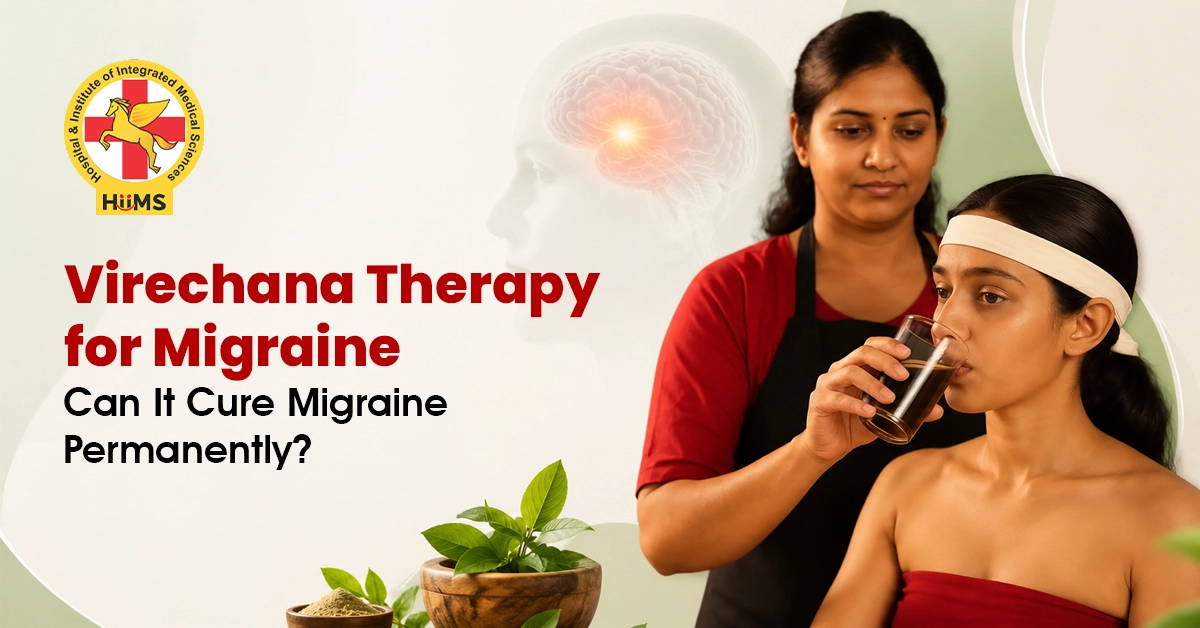

A migraine headache is one of those types of headache that can stop your day. A few hours of intense pain, vomiting tendency, sensitivities to sound or light, and the fear of when the next attack may strike can get pretty annoying. Hence, it is quite natural for patients to look for ways that can cure migraine permanently.
The Ayurvedic treatment of recurring headaches takes into account a larger picture. Instead of focusing on the pain, it considers digestion, eating habits, sleep, stress, daily routine and constitution of the patient. One of the Panchakarma methods used for treating such a condition is the Virechana method.
Virechana is done by following all the steps of the Panchakarma process. This includes appropriate preparation, administration under supervision and follow-up care after therapy. It can help you have realistic expectations about the therapy.
What Is Virechana Therapy?
Virechana is one of the classical Panchakarma treatments of Ayurveda, which involves a therapeutic purgation by employing a formula according to the condition of the person. The traditional Virechana requires proper preparation before the treatment and diet management after the treatment.
For a detailed explanation, watch the Jeena Sikho HiiMS video on Virechana therapy:
Purva Karma: This is the preparation stage and may include Ama Pachana, Snehapana, Abhyanga and Swedana according to the patient’s condition.
Pradhana Karma: This is the principal Virechana therapy, where the chosen drug is taken under the guidance of a professional.
Paschat Karma: After the procedure, the patient follows a gradual dietary routine to help digestion return to its normal state.
Because Virechana can cause repeated bowel movements and fluid loss, it should only be performed under appropriate professional supervision.
How Is Virechana Related to Migraine?
In Ayurveda, migraine-like symptoms may be discussed under conditions such as Ardhavabhedaka. Depending on the individual, Vata and Pitta are considered important in the Ayurvedic understanding of the condition.
Virechana is traditionally associated with the management of aggravated Pitta. Therefore, it may be considered by an Ayurvedic practitioner in selected cases. The aim is not simply to stop a headache for a few hours. The broader Ayurvedic approach also looks at digestion, diet, sleep, stress and daily routine.
This is different from searching for migraine home remedies or quick home remedies for migraines that may provide temporary comfort. Virechana is a planned therapeutic procedure and is not something that should be performed at home.
Common migraine symptoms may include severe or throbbing headache, nausea, vomiting and sensitivity to light or sound. The symptoms of migraine can vary from person to person, and recurring migraine headache symptoms may also be influenced by factors such as stress, sleep, food habits and daily routine.

What Happens Before Virechana?
Proper preparation is an important part of Panchakarma.
According to Ayurveda, Ama Pachana may be carried out for about three to five days. The medicines used during this process may vary depending on the individual’s health and digestive strength.
For a detailed explanation, watch the Jeena Sikho HiiMS video on Virechana therapy.
After Ama Pachana, Snehapana can be performed, through which ghee is slowly given based on the strength and digestion ability of the patient. The amount and duration differ from person to person.
During this period, the patient is generally advised to consume light, warm and easily digestible food. Heavy, cold and Kapha-aggravating foods are avoided according to the Ayurvedic protocol.
Abhyanga, or oil massage, and Swedana, or steam therapy, may also be performed before the main Virechana procedure.
This preparation is important because Panchakarma is not a simple migraine home treatment. It requires proper assessment and supervision.
How Is Virechana Performed?
After the preparation phase, the next phase starts.
The patient goes through Abhyanga and full-body Swedana. The chosen formulation for the procedure is then taken as per the decision made by the doctor.
The formulation varies from one individual to another. In the HiiMS video, the doctor explains the elements considered when formulating for different patients, including Prakriti, Koshtha, condition and strength of the patient, among others.
After the intake of the medication, the patient is monitored while the purgation takes place. The practitioner keeps an eye on the bowel movements and the patient’s reaction.
It is not only about achieving many bowel movements during the process. Too much purgation leads to weakness and dehydration, which is why monitoring is necessary.
What Happens After Virechana?
Post-procedural care forms an integral component of the Virechana procedure.
The digestive system of the body may become temporarily weaker after the therapeutic purgation process. Ayurvedic experts recommend a systematic return to a normal diet with the help of Samsarjana Krama.
This can continue depending upon the level of purity attained. Initially light food items are administered, which progress to a balanced diet.
The video posted in Jeena Sikho HiiMS elaborates about some foods that include Peya, Vilepi, Akrita Yusha and Krita Yusha, which have been prescribed for systematic progression of diet.
Moreover, patients are recommended to keep themselves away from cold, heavy and Kapha-provoking foods.
This treatment is distinct from home remedies for headaches since the latter are focused more on providing immediate relief. People might look for migraine home treatment, but this is not the same as the therapeutic Virechana procedure.
Migraine Home Remedies and Lifestyle Support
Lifestyle habits can be important for people who experience recurring migraines.
Keeping a healthy sleep and eating schedule, drinking plenty of water, dealing with stress and finding your triggers can help lower your chances of experiencing attacks.
Writing a migraine journal could be useful too. An individual could keep track of their sleep, meals, stress, and headaches to find any patterns that might exist.
Yoga and meditation can also be added to this list where necessary.
These behaviours can help in the management of migraines; however, it does not mean they are a guarantee for migraine home remedies.
When Should You Consult a Migraine Doctor?
Individuals suffering from the recurrent or painful headaches need to undergo a comprehensive medical evaluation if the diagnosis is unclear. A migraine doctor will be able to establish whether the pain originates from migraines or other headaches.
A migraine hospital or neurological care centre may be appropriate when headaches are frequent, severe or difficult to manage.
Immediate medical attention is important if a headache is sudden and extremely severe or occurs with symptoms such as weakness, confusion, fainting, seizures, difficulty speaking or vision loss.
If you already take prescribed migraine medicines, do not stop or change them simply because you are considering Ayurvedic therapy. Discuss any medication changes with your treating doctor.

Conclusion
Virechana is a traditional Ayurvedic Panchakarma procedure that may be considered as part of an individualised approach to recurring migraine symptoms. However, there is no reliable evidence to claim that Virechana can cure migraine permanently.
Proper preparation, professional supervision and post-therapy dietary care are important when undergoing the procedure. Sleeping regularly, taking meals in time, keeping hydrated, and stress management are other factors that could help in the treatment of migraine attacks.
In case you have been looking for a solution to cure migraine permanently, it would be wise to understand your disease rather than seeking a guaranteed cure.
FAQs
Q.1 Is Virechana able to cure migraines for good?
Ans: No. There is not sufficient scientific evidence proving that Virechana can cure migraines permanently. However, Virechana can be used as one of the methods of treatment in an individual case.
Q.2 What is Virechana therapy?
Ans: Virechana is a classical Panchakarma treatment including cleansing by purgation. This procedure is conducted only after proper preparation.
Q.3 What is the preparation before Virechana?
Ans: There may be such procedures as Ama Pachana, Snehapana, Abhyanga and Swedana before the treatment.
Q.4 What should I eat after the procedure of Virechana?
Ans: After Virechana therapy, one usually consumes a light and digestible diet. It depends upon the condition of the person and the guidance of the physician.
Q.5 Is there a chance of getting dehydrated through Virechana?
Ans: There may be a chance of dehydrating oneself due to purging through Virechana therapy.