

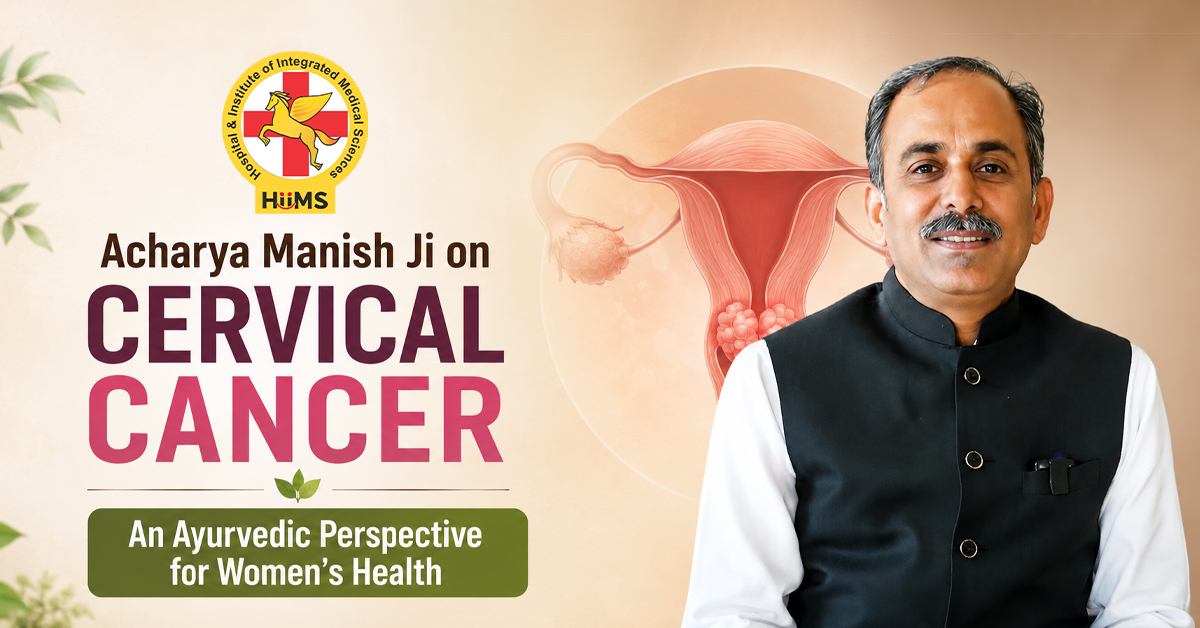

Cervical cancer is an alarming disease that impacts the cervix, which is the bottom part of the uterus attached to the vagina. The primary fact about cervical cancer is that the majority of its patients have a persistent infection with high-risk human papillomavirus that is more popularly referred to as HPV.
HPV infection is not always dangerous, but when high-risk HPV persists, it causes cellular alterations that can eventually result in cancer development.
The above-mentioned information explains why the awareness about the disease, its prevention through vaccination, screening, and proper evaluation by doctors is vital. In addition to medical care, the Ayurveda focuses on the food, daily regimen, mind condition and balance.
According to the words of Acharya Manish Ji, Founder of Jeena Sikho HiiMS Hospitals, this approach should be holistic because it takes into account the condition of the whole patient rather than just one symptom. Ayurvedic practices may be considered as supportive care, but they should not replace proven cancer diagnosis or treatment.
What Is Cervical Cancer and Why Does It Develop?
The cervical cancer meaning is quite simple. It refers to cancer that begins in the cells of the cervix. In most cases, the underlying cause is a persistent infection with a high-risk type of HPV. HPV is very common and is usually transmitted through sexual contact.
Most infections are cleared naturally by the immune system, but persistent high-risk infections can produce abnormal changes in cervical cells.
Some factors can increase the likelihood of developing cervical cancer. These include persistent high-risk HPV infection, smoking, a weakened immune system and certain other factors that influence the body’s ability to clear HPV.
The presence of a history of abnormalities on cervical cells may be another cause for worry. It is very crucial to understand the cervical cancer causes since most cases can be either prevented or detected early.
What Are the Common Cervical Cancer Symptoms?
Early cervical cancer may not cause noticeable symptoms. This is one reason screening is so important even when a woman feels completely healthy. As the condition progresses, certain warning signs may appear.
Some possible cervical cancer symptoms include:
- Bleeding after sexual intercourse
- Bleeding between periods
- Heavier or longer periods than usual
- Vaginal bleeding after menopause
- Unusual vaginal discharge
- Pelvic pain
- Pain during sexual intercourse
These symptoms do not always mean that a woman has cervical cancer. Several other conditions can cause similar complaints. Nevertheless, any irregular bleeding or recurring symptoms should never be overlooked. A healthcare provider will be able to diagnose the real cause after conducting the necessary tests.
Experiencing Cervical Cancer Symptoms?
Unusual bleeding, abnormal vaginal discharge, pelvic pain or other recurring symptoms should be properly evaluated by a healthcare professional. If you are looking for supportive Ayurvedic guidance related to diet and lifestyle, you can discuss your individual needs with Jeena Sikho HiiMS experts.
How Does Ayurveda Look at Women’s Overall Health?
Ayurveda approaches health by looking at the individual as a whole. Traditional Ayurvedic thinking gives importance to the balance of Vata, Pitta and Kapha, along with digestion, food habits, sleep, daily routine and mental wellbeing.
From this perspective, Acharya Manish Ji’s approach gives importance to understanding the person’s overall health rather than focusing only on an isolated complaint. Diet and lifestyle are adjusted according to individual needs, constitution and present health condition.
For women dealing with a serious illness, however, these practices should be considered supportive rather than a substitute for cancer care. There is currently no complementary health approach that has been shown to cure cancer or replace established cancer treatment. These complementary techniques might be able to provide some assistance in achieving well-being or dealing with particular symptoms.
Looking for Personalised Ayurvedic Guidance?
Every individual’s health, diet, lifestyle and daily routine can be different. Jeena Sikho HiiMS provides Ayurvedic consultations focused on personalised lifestyle and wellbeing support.
What Ayurvedic Lifestyle Practices May Support Overall Wellbeing?
A healthy routine can be of great benefit while undergoing and post-treatment. The specifics of the treatment have to take into account personal characteristics and recommendations of a healthcare provider.
Healthy Diet
Nutritious foods will be useful for keeping the overall health in good shape. The diet can consist of vegetables, fruits, whole grains, beans, appropriate protein products and sufficient liquid intake according to personal needs.
It has not been proven that there is some Ayurvedic food which could eliminate cervical cancer. It is very dangerous to limit oneself in food consumption and to practice starvation without medical assistance especially in case of undergoing cancer treatment.
Physical Activity and Yoga
Gentle yoga, breathing techniques and relaxation can contribute to physical and psychological well-being. However, any kind of physical activity has to be adjusted to personal strength, symptoms and state of health.
Relaxation
Being under stress for a long time can influence the process of sleeping and eating. Meditation, breathing techniques, enough sleep and personal daily regimen can be helpful for dealing with the difficulties of being ill.
Can Panchakarma or Ayurvedic Therapies Be Used During Cancer Care?
There are specific uses for Panchakarma and other forms of Ayurvedic medicine. But, if one is suffering from cervical cancer, he/she should first consult healthcare practitioners before engaging in cleansing methods, fasting, or herbal supplements.
Some of the herbs and supplements might have interactions with the cancer medications or drugs taken by people suffering from cervical cancer. Reliable cancer guidance recommends informing healthcare providers about all complementary products and practices being used.
At Jeena Sikho HiiMS, an Ayurvedic consultation can therefore focus on understanding the person’s overall health, diet, lifestyle and supportive needs while keeping appropriate medical care in consideration.
Considering Panchakarma or Ayurvedic Therapies?
Panchakarma and other Ayurvedic therapies should be considered according to an individual’s health condition and under appropriate professional guidance. If you are considering Ayurvedic supportive care during cancer treatment, discuss your requirements with a qualified healthcare professional first.
Why Are HPV Vaccination and Cervical Cancer Screening Important?
Prevention and early detection remain among the most important steps a woman can take. HPV vaccination helps protect against HPV types responsible for many cervical cancers. Screening can identify HPV infection or abnormal cervical changes before cancer develops or can help detect cancer at an earlier stage.
WHO’s 2026 guidance continues to support HPV-based screening as an important method for preventing cervical cancer. Therefore, an Ayurvedic wellness routine should never become a reason to delay screening, biopsy, specialist consultation or recommended cancer treatment.
Conclusion
Cervical cancer is a serious condition, but it is also one of the cancers where prevention and early detection can make a meaningful difference. Knowing the cervical cancer causes, recognising possible cervical cancer symptoms, receiving recommended HPV vaccination and following appropriate screening can help women take timely action.
From an Ayurvedic perspective, Acharya Manish Ji’s holistic approach places attention on food, lifestyle, digestion, stress management and overall well-being. These measures may support a person’s health and quality of life, but they should be used alongside, not instead of, appropriate cancer care.
If you want personalised Ayurvedic guidance for diet and lifestyle support, you can consult the experts at Jeena Sikho HiiMS through VOPD.
Book Your VOPD Consultation:

FAQs
Q.1 What is cervical cancer?
Ans: Cervical cancer is a cancer that begins in the cells of the cervix. Persistent infection with high-risk HPV is responsible for almost all cervical cancer cases.
Q.2 What are the common cervical cancer symptoms?
Ans: Possible symptoms include unusual vaginal bleeding, bleeding after intercourse, unusual discharge, pelvic pain and pain during intercourse. Early cervical cancer may have no symptoms.
Q.3 What are the key causes of cervical cancer?
Ans: High-risk HPV infection is the main cause of cervical cancer. There are other factors that could determine your likelihood of infection by HPV or development of cervical cancer.
Q.4 Can Ayurveda treat cervical cancer?
Ans: It seems that there is no evidence to show that Ayurveda or other complementary medicine can treat cervical cancer. However, the use of Ayurveda might be beneficial in terms of general wellbeing.
Q.5 Can cervical cancer be prevented?
Ans: Most cervical cancers can be prevented by using HPV vaccination and adequate screening. Screening may detect the presence of precancerous changes that can be treated before the cancer develops.

Leave a comment