

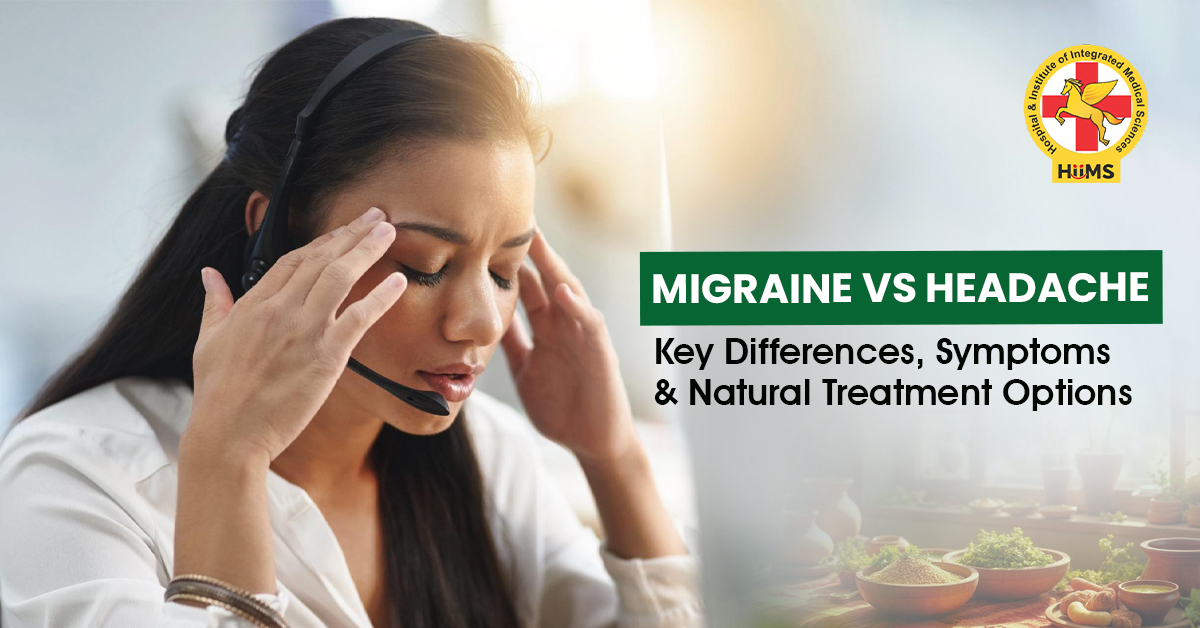
People often experience head discomfort in life, though each time it can be a little different. Often, migraine is mistaken for a normal headache and treated in a similar way, which is not always correct. The difference may seem small at first, but it can have a bigger impact on long-term health.
Understanding migraine vs headache becomes important because both have different causes, different patterns, and even different ways of care. A simple headache may go away with rest or water, but migraine can disturb the whole day or even more. It may affect work, sleep, and mood also.
In many cases, people keep taking tablets again and again without knowing the actual reason. This only gives short relief. At migraine hospital Jeena Sikho HiiMS Vadodara, the focus is more on understanding the body signals and not just stopping the pain for a few hours.
This article explains the real difference, symptoms, and also some natural ways that may help in managing both conditions better over time.
What is a Headache and Migraine?
A headache is a common issue that shows up as a pressure-like feeling around the head. Sometimes it feels dull, sometimes slightly sharp, but mostly it is manageable. It may happen due to tiredness, lack of sleep, dehydration, or screen exposure, and usually gets better with the simple rest.
A migraine feels stronger than a normal headache. It is not just simple pain and can feel different in the head. Many people notice it on one side, along with other issues. This is where the difference in migraine vs headache becomes easy to understand. It can last for hours and make daily work difficult.
Migraine vs Headache: Key Differences
Understanding this clearly helps in better care.
- Headache feels like pressure, migraine feels throbbing
- Headache is mild to moderate, migraine can be severe
- Headache usually does not stop routine, migraine can
- Migraine may come with nausea or light sensitivity
Many people ignore these signs. That leads to the repeated problems.
Common Symptoms You Should Notice
Headache and migraine symptoms are an important signal from the body. Ignoring them makes things worse later.
For migraine:
- Pain on one side
- Sensitivity to light
- Nausea feeling
- Dizziness or blurred vision
These are typical migraine headache symptoms that should not be ignored.
For headache:
- A steady pressure around the head
- Pain on both sides
- No major other symptoms
These signs help in understanding whether it is a simple headache or a migraine, so they should not be ignored.
Causes That Can Lead to Migraine
Migraine does not come randomly. There are some triggers behind it.
Common reasons include:
- Irregular meals
- Poor sleep cycle
- Stress or mental load
- Hormonal changes
- Too much screen exposure
These patterns slowly build a problem. That is why people keep searching for migraine relief but do not get lasting results.
Simple Lifestyle Changes for Better Comfort
A simple and steady routine helps more than random steps. Not everything works instantly, but consistency matters.
Some small steps:
- Drink enough water daily
- Eat meals on time
- Keep the sleep timing fixed
- Reduce the screen time slowly
- Practice deep breathing
These are basic home remedies for migraines that support the body.
Traditional Care Approach at Jeena Sikho HiiMS
When the problem becomes frequent, deeper care is needed. This is where traditional methods and migraine headache treatment approaches come in.
Panchkarma is a process that focuses on internal cleaning. It works step by step.
Main processes include:
- Vamana – a process that helps remove the excess toxins from the upper part of the body through controlled cleansing.
- Virechana – helps clear the digestive system and reduce the internal heat.
- Basti – works on deeper cleansing through the medicated oils or decoctions.
- Nasya – focuses on cleansing the nasal area and head region.
- Raktamokshana – a method used for purifying the blood in a controlled way.
Along with this, therapies are also used:
- Shirodhara for calming the mind
- Sirovasti for nerve relaxation
- Abhyanga for body balance
- Shiro pichu for head cooling
At Jeena Sikho HiiMS, these methods are used in a planned way. The idea is not just short relief, but working on the root level slowly.
This kind of migraine therapy is usually suggested when symptoms repeat again and again.
When to Visit a Doctor
Sometimes home care is not enough. It is better to take help.
You should consult a migraine doctor if:
- Pain becomes frequent
- Daily routine gets disturbed
- Migraine medicine stop giving effect
- Symptoms increase
Timely guidance helps avoid bigger problems.
Conclusion
Headaches should not be taken lightly, especially when it repeats again and again. Understanding migraine vs headache helps in choosing the right path. A headache may be simple, but migraine needs more attention and care.
Instead of only depending on the quick fixes, working on daily habits and the internal balance gives better results slowly. Natural methods, proper routine, and guided therapies can help in managing the condition in a more stable way.
At Jeena Sikho HiiMS, people can also consider a VOPD consultation to understand their condition step by step and move toward a more natural way of handling migraine.

FAQs
1. What is the difference between migraine and headache?
Migraine is more intense and may come with other symptoms, while a headache is usually mild.
2. What are the common symptoms of migraine?
Pain on one side, nausea, and sensitivity to light are common signs.
3. What causes migraine?
Stress, poor sleep, irregular meals, and screen time are common causes.
4. Are home remedies for migraines helpful?
Yes, small daily changes can support the body over time.
5. Can lifestyle changes help migraine?
Yes, they play a big role in long-term management.