

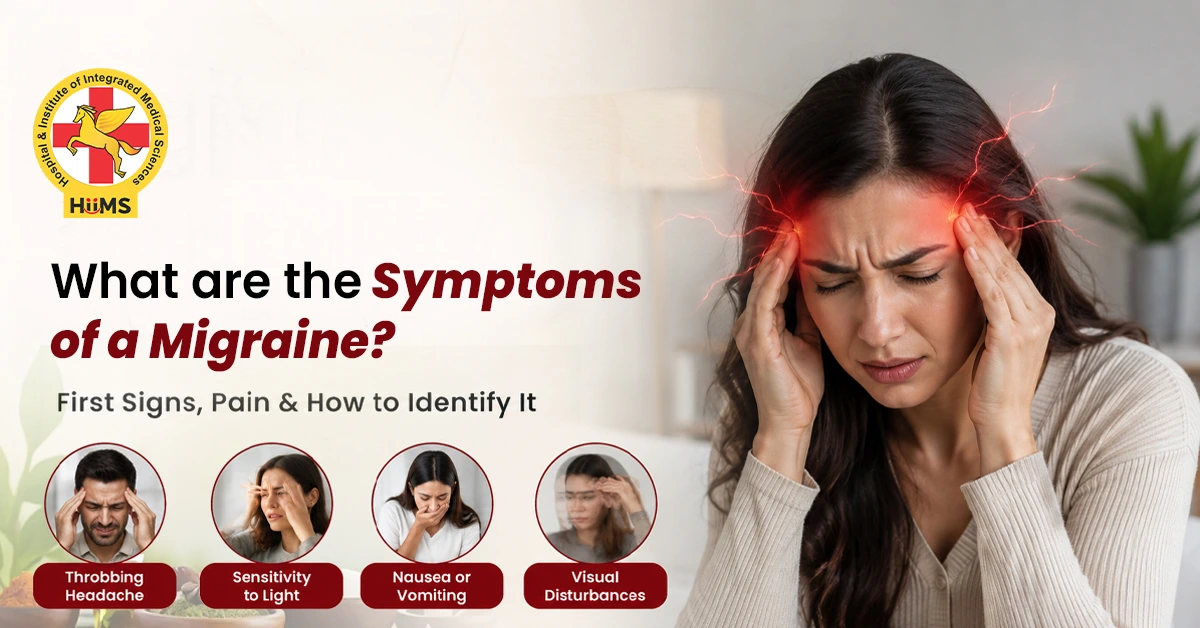
A migraine can be much more troublesome than a common headache. During an episode, even simple things like working, studying, sleeping, or being around noise may become difficult. The headache is often felt as a throbbing pain, though some people mainly notice nausea, dizziness, or discomfort from bright lights and sounds. The headache does not always come without warning. For some people, certain changes in the body can be noticed before the pain actually begins.
The symptoms are not exactly the same for everyone. Some people may have visual changes, while others may notice tiredness, frequent yawning, food cravings, mood changes, or neck stiffness. This is why knowing the usual pattern of your own symptoms can be helpful.
In this blog, we will discuss the common migraine symptoms, the early warning signs, where the pain usually occurs, and how a person can identify whether the headache may be related to migraine.
What Are the Common Symptoms of a Migraine?
The symptoms of migraine are not the same for everyone. Still, some signs are seen more often than others.
Common migraine symptoms include,
- Throbbing or pulsing pain in the head
- Pain that may become worse with normal physical activity
- Nausea or vomiting
- Sensitivity to bright light
- Sensitivity to loud sounds
- Sensitivity to strong smells in some people
- Dizziness or feeling unsteady
- Tiredness and difficulty concentrating
The headache may occur on one side of the head, although it can also affect both sides. For some people, the pain becomes so strong that they need to stop their usual activities and rest in a quiet and dark room. A migraine episode may last for several hours and sometimes up to three days.
What Are the First Signs of a Migraine?
A migraine does not always begin with head pain. Some people notice small changes hours or even a day before the headache. These early signs are called the prodrome phase.
You may notice,
- Frequent yawning
- Feeling unusually tired
- Changes in mood
- Food cravings
- Increased thirst
- Neck stiffness
- Difficulty sleeping
- Increased need to urinate
- Trouble concentrating
These signs can be easy to ignore. A person may think that tiredness or mood changes are simply due to a busy day. However, if the same pattern appears before headaches again and again, it may be useful to keep a record of it.
What Is Migraine Aura?
Some people experience a group of temporary symptoms known as ‘aura’ before or during the headache. An aura does not happen in every person with a migraine.
Visual changes are among the most common signs. A person may see,
- Flashing lights
- Bright spots
- Zigzag lines
- Temporary blind spots
- Changes in vision
An aura can also cause tingling or numbness in the face, hand, arm, or another part of the body. Some people may have difficulty speaking or finding the right words. These symptoms usually develop gradually and are temporary, often lasting less than an hour.
Vision loss, weakness, or difficulty in speaking should not always be considered part of a migraine. There may be another reason behind these symptoms, so it is better to seek expert advice when they occur for the first time.
Where Do Migraines Usually Hurt?
Migraine pain may affect one side of the head and is often noticed around the temple, forehead, or behind one eye. This does not mean it will always remain on one side. Some people may experience the pain on both sides of their head.
The pain is commonly described as throbbing or pulsing. It may become stronger while walking, climbing stairs, bending, or doing the other normal activities. Along with the headache, nausea and sensitivity to light or sound may make the episode harder to handle.
This is one reason migraine pain should not be judged only by its location. The complete pattern of symptoms is more useful than the place where the headache is felt.
What Can Trigger a Migraine?
There is no single known reason that explains all migraine causes. Genetic and environmental factors appear to have a role. Certain situations may also act as triggers for people who are already prone to migraine.
Some commonly reported triggers include,
- Skipping meals
- Irregular sleep
- Too much or too little sleep
- Stress
- Bright or flashing lights
- Strong smells
- Changes in weather
- Hormonal changes
- Excess caffeine or sudden changes in caffeine intake
- Certain foods in some individuals
Triggers are different for everyone. A food that causes trouble for one person may have no effect on another. Therefore, it is better to notice your own pattern rather than avoiding a long list of foods without a clear reason.
How Can You Identify a Migraine?
A migraine is usually understood by looking at the symptoms, the pattern of headaches, and the changes a person notices before, during, and after the headache. Since migraine symptoms can be different for each person, paying attention to your own pattern can be helpful.
One simple habit is to maintain a headache diary. You can note,
- When the headache started
- How long it lasted
- Where the pain was felt
- What the pain felt like
- What you ate and drank that day
- Your sleep pattern
- Whether you were under stress
- Any changes in vision
- Nausea or vomiting
- What made the headache better or worse
Keeping these details regularly may help you understand your migraine pattern, identify what may trigger a migraine attack, and discuss your symptoms more clearly with an Ayurvedic practitioner.
Natural Treatment Approach for Migraine Management
When the early symptoms begin, some simple changes may help reduce discomfort and support the body. Ayurveda gives importance to daily routine, food habits, sleep, and mental well-being. A natural migraine treatment approach may include the following:
- Take proper rest: Resting in a quiet and dimly lit room may help when light and noise increase discomfort.
- Maintain regular meals: Skipping meals or eating at irregular times may act as a trigger for some people. Fresh, light and balanced meals can support overall wellness.
- Stay hydrated: Drink enough water throughout the day. Not having sufficient fluids can sometimes add to the headache and make a person feel more tired.
- Manage stress: When stress becomes a regular part of the day, it may affect migraine as well. Meditation, gentle yoga and a few minutes of slow breathing may help bring some calmness.
- Follow a regular sleep routine: Sleeping and waking at similar times each day may help maintain the healthy daily rhythm.
- Try simple home care: A cool cloth placed gently on the forehead may bring temporary comfort. It is also sensible to give your eyes a break from the phones and other screens.
- Consider Ayurvedic therapies: Depending on the person’s condition, traditional therapies such as Shirodhara, Shiro Pichu and Shirovasti may be considered. Panchakarma may also form part of the care plan in suitable cases.
The main focus of treatment is to understand personal triggers and support the body’s natural balance through suitable food, routine, and lifestyle changes that may also support migraine relief.
When Should You Seek Medical Help?
Most migraine episodes follow a familiar pattern for the person experiencing them. However, a sudden and extremely severe headache, new weakness on one side, confusion, seizures, loss of vision, serious speaking problems, or a headache following a head injury needs attention.
You should consult a healthcare professional if your headaches are becoming more frequent, changing in their usual pattern, or interfering with your regular life.
Conclusion
Understanding migraine symptoms can help a person notice the early changes instead of ignoring them as a normal headache. The pain may be strong, but nausea, light sensitivity, visual changes, and tiredness can also be important clues. Regular sleep, timely meals, adequate water and a balanced daily routine may support better migraine management.
At Jeena Sikho HiiMS, individual health needs are considered while planning a wellness approach. For personalised guidance, you can choose a VOPD consultation and discuss your symptoms, food habits, and daily routine with an Ayurvedic practitioner.

FAQs
Q.1 What are the common symptoms of a migraine?
Ans: Common symptoms include throbbing head pain, nausea, vomiting, sensitivity to light and sound, dizziness, and tiredness. Some people may also experience visual changes or tingling before the headache.
Q.2 What are the first signs of a migraine?
Ans: Early signs may include frequent yawning, tiredness, mood changes, food cravings, neck stiffness, increased thirst and difficulty sleeping. These signs may appear hours or even a day before the headache.
Q.3 Can food trigger a migraine?
Ans: Certain foods may trigger migraine in some individuals, but the triggers are not the same for everyone. Keeping a food and headache diary can help identify whether a particular food is linked with your symptoms.
Q.4 Where do migraines hurt?
Ans: Migraine pain often occurs on one side of the head, especially around the temple, forehead or behind the eye. However, the pain can also occur on both sides of the head.
Q.5 How do I confirm I have a migraine?
Ans: Migraine is usually identified through your symptoms, headache history, and physical examination. There is no single test that confirms migraine. Keeping a record of your headaches can help a healthcare professional understand your pattern.