

Most of us take breathing for granted until it becomes difficult. You may find that a few stairs, a morning walk or a long conversation can suddenly feel exhausting. This is often how interstitial lung disease starts. This is a slow-developing condition, and many people mistake the symptoms for age, weakness or a common lung problem.
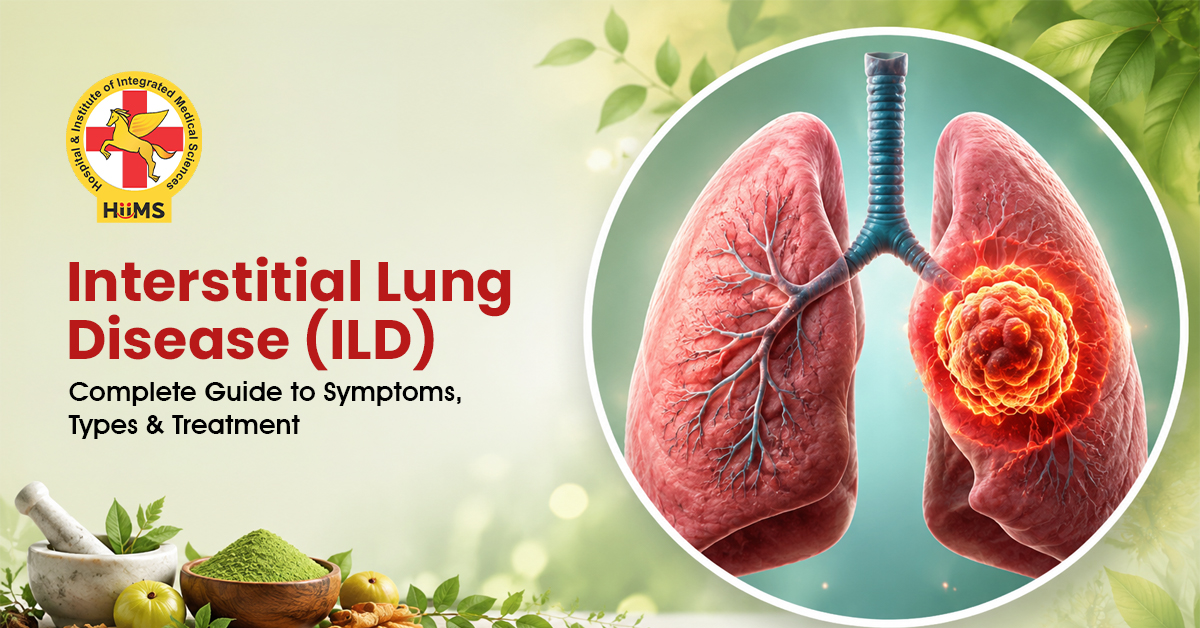
What is interstitial lung disease? Basically, these are diseases that lead to inflammation and fibrosis in the connective tissue around the air sacs of the lungs. With time, these alterations may lead to reduced efficiency of lung function.
Though today’s medicine tends to deal with the management and deceleration of the development of the disease, the Ayurvedic approach differs from it. It tries to understand the root cause of the imbalance and tries to correct it naturally. That is why many people also go for natural treatment for ILD along with lifestyle changes and ayurvedic guidance.
What Are the Early Signs of Interstitial Lung Disease That Should Not Be Ignored?
The problem with ILD is that it is a slowly progressive disease. Symptoms may seem mild initially, which is why people often ignore them.
Some of the common lung disease symptoms are:
- Shortness of breath with everyday activities
- A lingering dry cough.
- fatigue and low energy
- chest pain
- Weight loss for no reason
- Difficulty walking long distances or doing exercise
They may also be early signs of interstitial lung disease, particularly if symptoms have been present for weeks or if they worsen over time.
In Ayurveda these signs are often interpreted as an imbalance in the natural functioning of the body, especially involving the respiratory system and digestion. The body, the idea goes, sends warning signals before a serious illness develops.
Why Does Modern Interstitial Lung Disease Treatment Often Feel Temporary?
After diagnosis, many will receive medications, oxygen therapy or other supportive measures. These approaches can gain some time in relieving symptoms and improving daily comfort.
However, many patients feel that the problem is recurring or slowly progressing even after treatment. That’s because the focus is often on treating the symptoms, rather than the deeper imbalances that may be contributing to the condition. So that’s why you see so many people looking for the interstitial lung disease treatment options that are more holistic in nature.
According to Ayurveda, chronic conditions don’t develop overnight. They are the consequence of long-term imbalances in lifestyle, diet, digestion and body systems. Because Ayurveda examines the functioning of the whole body, not just the lungs.
Can Ayurveda Offer a More Natural Treatment for ILD?
In Ayurveda, the treatment of interstitial lung disease is aimed at restoring the balance of the body rather than just suppressing the symptoms.
The Ayurvedic care plan may include, depending on an individual’s condition:
- Changes to your diet
- Herbal support under professional supervision
- Breath work
- Everyday routine shifts
- Ways to manage stress
- Panchakarma therapies in selected cases
Some Ayurvedic centres, including Jeena Sikho HiiMS Udaipur, follow an integrated wellness approach wherein the therapies are personalised as per the person’s health condition.
Supportive therapies such as diet control, yoga, pranayama and Panchakarma-based therapies can be considered at Jeena Sikho HiiMS with expert advice for enhancing overall health and comfort in breathing. It is essential to correct the underlying imbalance of the body.
What Types of Interstitial Lung Disease Are Commonly Seen?
Interstitial lung disease is actually a group of many different diseases, not a single disease.
Some common types:
- Idiopathic Pulmonary Fibrosis (IPF)
- Autoimmune ILD
- Hypersensitivity Pneumonitis
- Occupational Lung Disease
- Sarcoidosis-associated ILD
Each type can have different causes and may progress differently. That is why a good assessment and tailor-made care are very important.
Ayurveda also acknowledges the uniqueness of every patient. For example, two people with similar symptoms might need different diets, therapies and lifestyle advice.
What Daily Practices Can Help Your Lungs?
Regardless of the chosen therapy, here are some practices that you can adopt to keep your lungs healthy:
- Do not smoke or get exposed to second-hand smoking.
- Exercise regularly as per your doctor’s advice.
- Perform mild breathing exercises.
- Have light meals.
- Maintain a proper sleeping schedule.
- Manage the stress with meditation or yoga.
Small lifestyle changes can often make a big difference to overall well-being.
Conclusion
It can be overwhelming to live with interstitial lung disease when simple things become difficult. Conventional treatment can help manage symptoms, but many people turn to Ayurveda because it emphasises understanding the deeper imbalances in the body and supporting long-term wellness in a natural way.
Ayurveda treatment for an individual, which involves lifestyle modification, diet advice, and supporting therapies, is likely to benefit your well-being.

FAQs
Q1. Define interstitial lung disease.
Ans. This refers to a cluster of diseases where inflammation and scarring occur in the lung tissue surrounding the air sacs.
Q2. What are the initial symptoms of interstitial lung disease?
Ans. Initial symptoms of this disease include breathlessness, chronic dry coughing, fatigue, and reduced exercise tolerance.
Q3. Can ILD be treated completely?
Ans. It depends on the specific type and the severity of the condition being experienced. Treatments differ for individuals.
Q4. Is there any natural cure available for ILD?
Ans. People tend to use Ayurveda treatments, make certain lifestyle adjustments, engage in breathing exercises, and change their diet.
Q5. When do I need to see a doctor regarding lung disease symptoms?
Ans. When breathlessness and coughing persist for many weeks and affect day-to-day living, one needs to consult a doctor.