
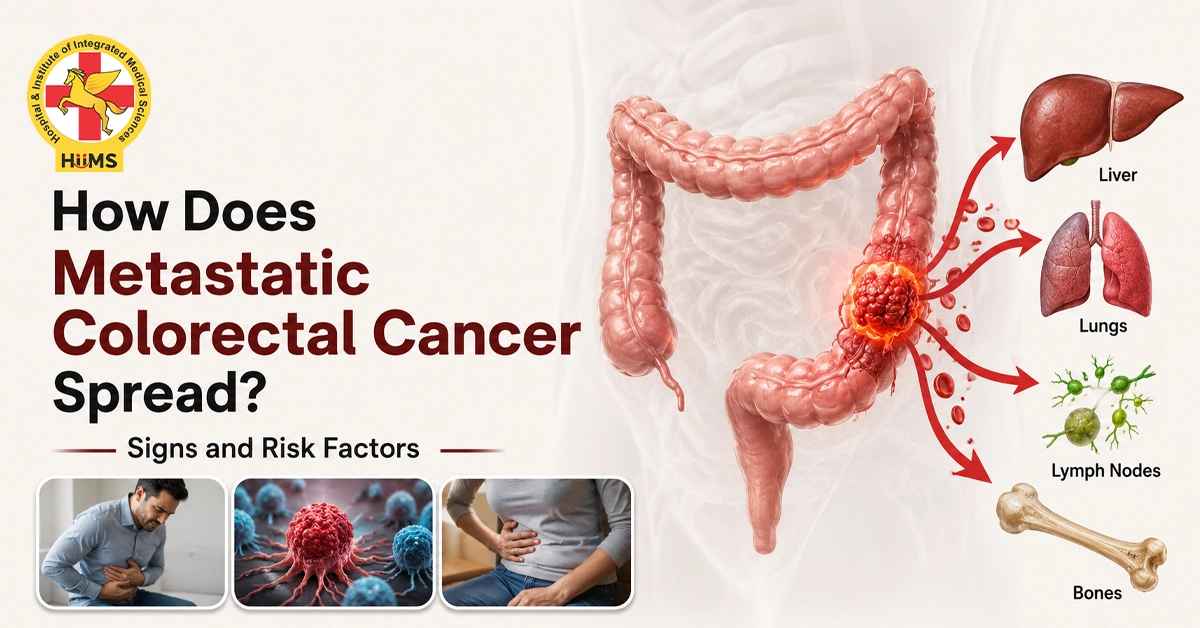
Colorectal cancer starts in the colon or rectum, but its effects can extend beyond the place where it first develops. When cancer cells move from the original tumour to distant organs or tissues, doctors describe it as Metastatic Colorectal Cancer.
Cancer cells can leave the original tumour and travel through the blood or lymphatic system to other parts of the body, such as the liver, lungs, or abdominal lining. Once the cancer spreads, the symptoms may depend on the area involved, which makes it useful to understand the changes that may occur.
At the same time, understanding colorectal cancer risk factors can help people recognise when closer medical attention may be needed. This does not mean that having a particular factor will lead to cancer, but awareness can encourage timely screening and consultation.
In this blog, we will look at how colorectal cancer spreads, where it commonly travels, the signs to watch for, and the factors that may increase its likelihood.
What Is Metastatic Colorectal Cancer?
When colorectal cancer remains limited to the colon or rectum, doctors assess its size and whether it has reached nearby tissues or lymph nodes. Once cancer cells travel to distant parts of the body and form new tumours, the disease is considered metastatic. This is commonly referred to as stage 4 colorectal cancer. Importantly, the cancer keeps the identity of where it started. For example, if colorectal cancer reaches the liver, the cells in the liver are still colorectal cancer cells, rather than a new primary liver cancer.
How Does Colorectal Cancer Spread?
From the Original Tumour
Cancer starts when abnormal cells grow in the colon or rectum. As the tumour progresses, some cancer cells can move beyond the area where they first formed and enter nearby tissues.
Through Blood and Lymph
The bloodstream and lymphatic system can provide routes for cancer cells to travel. Some cells may survive this journey and reach another part of the body.
When New Growth Begins
After reaching a distant location, certain cancer cells can settle there and form another tumour. This process is called metastasis and is the defining feature of metastatic colorectal cancer.
Where Does Colorectal Cancer Commonly Spread?
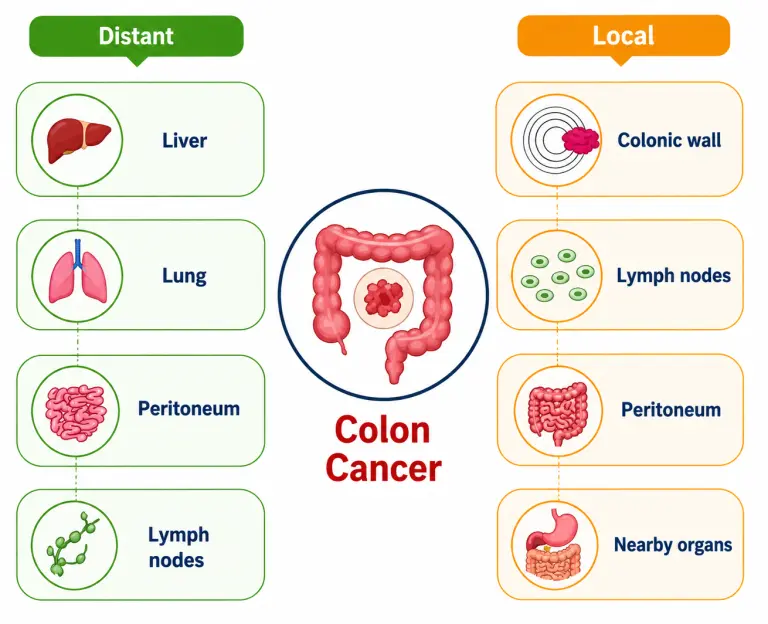
Colorectal Cancer Spread to Liver
The liver is one of the most common places for colorectal cancer to spread. Blood from much of the digestive tract passes through the liver, creating a direct route for cancer cells travelling through the circulation.
Spread to the Lungs
The lungs are another common site of distant spread. Cancer cells can reach them through the bloodstream and may later cause symptoms related to breathing.
Spread to the Peritoneum
The peritoneum is the thin lining around many organs inside the abdomen. Colorectal cancer can also spread to this area, particularly in more advanced disease.
What Are the Signs and Symptoms?
The metastatic colorectal cancer symptoms a person experiences can depend on both the original cancer and the organ involved. Changes in bowel habits, blood in the stool, abdominal discomfort, unusual tiredness, and other digestive changes may occur with colorectal cancer.
When the cancer spreads, new symptoms can appear. Liver involvement may be associated with jaundice or swelling in the abdomen, while lung involvement may cause breathlessness. Abdominal swelling or discomfort can occur when the peritoneum is affected. These symptoms are not specific to cancer, so persistent or unexplained changes deserve proper health care assessment.
For guidance on colorectal cancer prevention and the potential benefits of safe sun exposure, watch this insightful video featuring Acharya Manish Ji from HiiMS.
What Are the Colorectal Cancer Risk Factors?
Several factors can affect a person’s chances of developing colorectal cancer, and some cannot be changed.
Age and Family History
The likelihood increases with age, while having a close family member with colorectal cancer can also raise concern. A family history does not mean cancer will definitely develop, but it can make appropriate screening more important.
Inherited and Health Conditions
Certain inherited conditions, including Lynch syndrome and familial adenomatous polyposis, are linked with a higher likelihood of colorectal cancer. Long-term inflammatory bowel diseases, including ulcerative colitis and Crohn’s disease, can also influence risk.
Lifestyle Habits
Smoking, alcohol consumption, physical inactivity, and obesity are among the established lifestyle-related colorectal cancer risk factors. These factors do not tell the complete story, but they are worth discussing with a healthcare professional when assessing overall health.
Can Ayurveda Be Part of Supportive Cancer Care?
Ayurveda takes an individualised view of health, with attention to food habits, daily routine, digestion and the person’s overall condition. At Jeena Sikho HiiMS, an integrated approach may consider these areas alongside appropriate medical care.
Ayurvedic medicines, dietary changes or therapies should be selected by qualified professionals according to the individual’s condition and ongoing cancer treatment.
Conclusion
Understanding how colorectal cancer spreads can make an unfamiliar diagnosis easier to discuss and understand. Metastatic Colorectal Cancer means that cancer cells from the colon or rectum have travelled to distant parts of the body, with the liver, lungs and peritoneum among the recognised sites.
The symptoms can vary according to where the disease has spread, while age, family history, inherited conditions and certain lifestyle factors can influence colorectal cancer risk. Paying attention to persistent bowel changes, bleeding or unexplained symptoms is important, but only proper health care diagnosis can determine their cause.
At Jeena Sikho HiiMS Surat, patients can discuss their concerns through an integrated approach while continuing appropriate medical care. You can also opt for a VOPD consultation with expert doctors at Jeena Sikho HiiMS from home.

FAQs
Q1: What does metastatic colorectal cancer mean?
It means cancer that began in the colon or rectum has travelled to distant parts of the body and formed new growths there.
Q2: Which organs are commonly affected by colorectal cancer spread?
The liver, lungs and peritoneum are among the commonly recognised sites where colorectal cancer can spread.
Q3: What symptoms can appear when colorectal cancer spreads?
Symptoms vary by location and may include abdominal swelling, jaundice, breathing difficulty or other changes linked to the affected organ.
Q4: How is stage 4 colorectal cancer different from earlier stages?
Stage 4 indicates that colorectal cancer has spread to distant organs, tissues or lymph nodes rather than remaining limited to nearby areas.
Q5: Which factors can increase the likelihood of colorectal cancer?
Age, family history, certain inherited conditions, inflammatory bowel disease, and some lifestyle factors can increase the likelihood of developing colorectal cancer.