
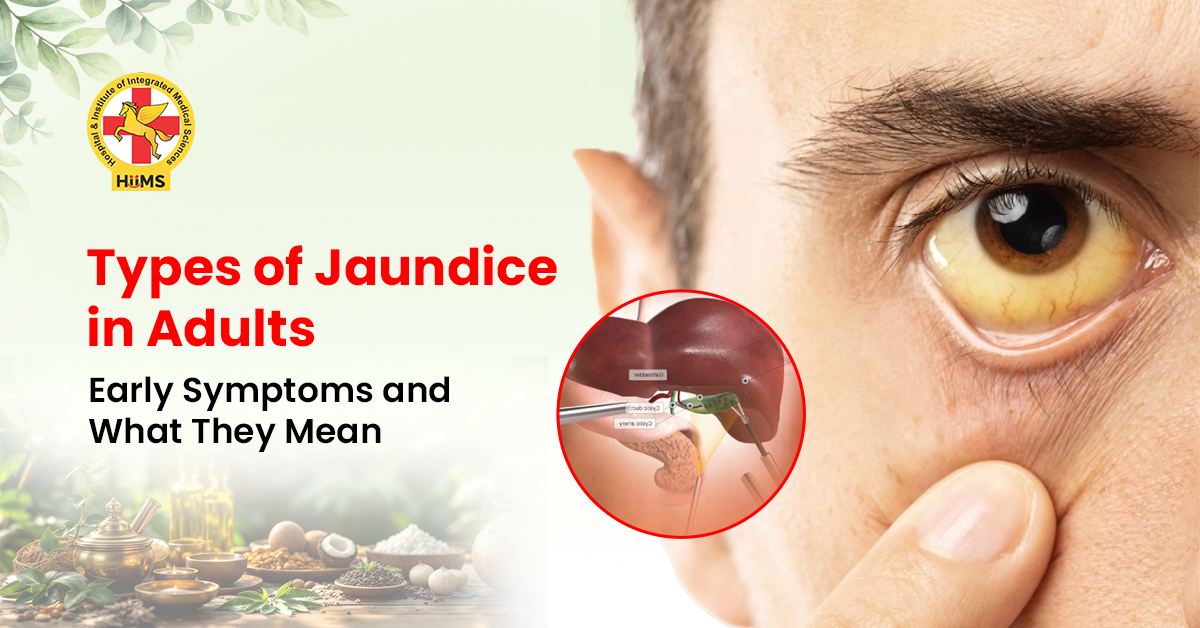
In daily life, we commonly notice small physical changes and push them to the side. A little tiredness feels normal, a mild digestive issue gets blamed on food, and even changes in urine colour or appetite are ignored for days. Jaundice works the same way for many adults. It usually starts quietly without making a big disturbance to the body. Instead, it shows up quietly through signs that feel unrelated at first.
Jaundice is not a disease on its own. It is a visible sign that something inside the body is struggling to maintain balance. In adults, this imbalance usually involves the blood, the liver, or the bile flow. Because work pressure, irregular meals, stress, and habits take priority, early symptoms go unnoticed.
Understanding the types of jaundice in adults helps connect these early signs before they become severe. It explains why symptoms differ and what they may be pointing toward internally.
In this blog, you will clearly understand what jaundice is, how it develops, the early symptoms to watch for, and how different types of jaundice reflect different internal issues.
What Is Jaundice? A Simple Explanation
Jaundice shows up when a yellow pigment called bilirubin stays in the blood. The body makes bilirubin while breaking down old red blood cells. A healthy liver removes it, but when that process slows, the pigment begins to collect.
When this process slows down or gets disturbed, bilirubin stays in circulation. As levels rise, it begins to settle in tissues, especially the skin and the whites of the eyes, causing a yellow tint. This change shows something is off inside the body, not just on the outside.
How Jaundice Develops Inside the Body
The Normal Bilirubin Process
Every day, the body breaks down old red blood cells and replaces them with new ones. This breakdown creates bilirubin. Then the liver collects it, processes it, and mixes it with bile. Bile then moves into the digestive system and exits the body naturally.
What Goes Wrong in Jaundice
Problems arise when bilirubin production increases too fast, the liver struggles to process it, or bile flow gets blocked. Any one of these disruptions can cause bilirubin to build up, leading to jaundice.
Common Early Symptoms of Jaundice in Adults
Early symptoms usually appear gradually and feel easy to ignore. Yellowing of the skin or eyes is the most noticeable sign, but it may start in a subtle way. Dark-coloured urine often appears before visible yellowing. Pale or clay-coloured stools suggest bile flow changes.
Many adults also experience fatigue, body heaviness, mild itching without a rash, digestive discomfort, or a reduced appetite. These signs together often signal an internal imbalance linked to types of jaundice.
Why Symptoms May Differ From Person to Person
Symptoms vary depending on how fast bilirubin builds up, which organ is affected, and how strong the liver and digestion already are. Some people develop symptoms suddenly, while others experience a slow progression. Overall metabolic health and daily habits also influence how the body reacts.
Types of Jaundice in Adults: Understanding the Difference
Understanding the types of jaundice in adults becomes easier when viewed by where the problem begins. Each type reflects a different internal process and produces slightly different symptoms.
Pre-Hepatic Jaundice: When the Issue Starts in the Blood
What This Type Means
Pre-hepatic jaundice starts before the liver gets involved. Red blood cells break down faster than normal, and the liver cannot handle the excess bilirubin in time.
Early Symptoms Often Seen
Symptoms usually include mild yellowing of skin and eyes, darker urine without pale stools, and fatigue linked to blood imbalance rather than digestion.
Hepatic Jaundice: When the Liver Is Under Stress
What This Type Indicates
In hepatic jaundice, liver cells struggle to process bilirubin efficiently. The issue lies within the liver itself during bilirubin conversion.
Symptoms That Give Clues
Adults may notice yellowing along with digestive discomfort, appetite changes, nausea, body weakness, and a flu-like heaviness. This form represents one of the most commonly discussed types of jaundice.
Post-Hepatic Jaundice: When Bile Flow Is Obstructed
What This Type Suggests
Here, the liver processes bilirubin correctly, but bile cannot exit the body smoothly. Blockage causes bilirubin to flow back into the bloodstream.
Signs That Stand Out
Intense itching, very dark urine, pale or whitish stools, and upper abdominal discomfort are common features of this type.
Key Differences Between the Types of Jaundice
The main difference lies in where the disruption starts. Blood-related causes affect bilirubin production, liver-related causes affect processing, and bile-related causes affect elimination. Changes in stool and urine colour provide strong clues, while itching generally points toward bile flow issues.
Why Understanding Symptoms Early Matters
Jaundice acts as a warning sign rather than a final diagnosis. Early symptoms reflect internal imbalance long before serious complications develop. Recognising these signs helps guide timely evaluation and informed decisions.
Jaundice Through an Ayurvedic Perspective
From a holistic view, liver health links closely with digestion. When digestion feels heavy or off, bilirubin does not clear smoothly. Observing symptoms carefully before jumping to conclusions allows a clearer understanding of imbalance patterns.
When Jaundice Symptoms Need Immediate Attention
Rapid yellowing, confusion, extreme fatigue, persistent itching, abdominal pain, or sudden changes in urine and stool colour signal the need for urgent medical attention.
Conclusion
Jaundice is the body’s way of highlighting internal imbalance rather than creating fear. Knowing the types of jaundice in adults makes symptoms easier to understand; it removes doubt. Acting early becomes simpler. Small changes, when noticed on time, usually stop bigger issues later.
For guidance, evaluation, and holistic care, you may connect with Jeena Sikho HiiMS. Call +91 82704-82704 or email care@jeenasikho.com to seek professional support.
FAQs
Q1. What causes jaundice in adults?
Jaundice develops due to blood breakdown imbalance, liver processing difficulty, or bile flow obstruction, reflecting different types of jaundice.
Q2. Are all types of jaundice the same?
Different types of jaundice in adults vary based on whether blood, liver, or bile pathways are involved.
Q3. Can jaundice appear without pain?
Many types of jaundice begin without pain and show gradual signs like fatigue or colour changes.
Q4. Does jaundice always affect digestion?
Digestive changes appear mainly in liver-related types of jaundice, though not in every case.
Q5. Why does urine turn dark in jaundice?
Dark urine occurs when excess bilirubin circulates in the blood, common across several types of jaundice.