

If you live in Surat and get a headache that makes you stop work, switch off the lights and wait it out, you are not the only one. Many people go through this every month and keep guessing the reason.
This blog explains migraine care in Surat in simple terms: what usually triggers an attack, which signs to watch for, what a doctor checks first, and the Ayurvedic support Jeena Sikho HiiMS offers, along with regular medical advice.
What Causes Migraine? Triggers People Often Miss
Doctors do not point to one single reason. A migraine is linked with changes in how the brain handles pain and sensory signals, and it often runs in families. What differs from person to person is the trigger, the thing that brings on an attack.
A 2020 study in Cureus followed 400 headache patients at a medical college hospital in Cuttack, and 163 of them had migraine. Among those without aura, the triggers they named most were fasting (41.2%), dehydration (36.1%), bright light (34.5%), menstruation (32.8%) and stress (31.9%). Among those with aura, stress (56.8%), poor sleep (50%) and hunger (43.2%) came up most.
Notice how many of those are daily habits. In our OPD, many people tell us the headache starts around mid-afternoon on days they skipped breakfast and drank very little water. In a busy city like Surat, long shifts and irregular meals make that very easy to do.
Migraine Symptoms: What an Attack Can Feel Like
Migraine symptoms are not only a headache. An attack can come in phases, and not everyone goes through all of them. Some people get a warning a day before, with yawning, neck stiffness or food cravings.
Some see flashing lights or zigzag lines just before the pain starts, which is called aura. Then comes the headache itself, and afterwards many people feel tired and foggy for a day.
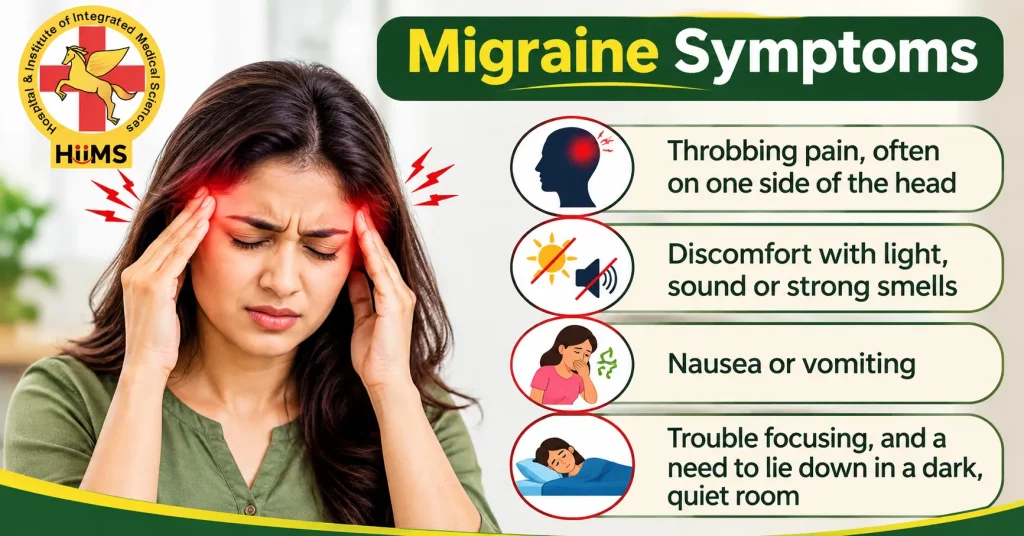
During the headache phase, people commonly notice:
- Throbbing pain, often on one side of the head
- Discomfort with light, sound or strong smells
- Nausea or vomiting
- Trouble focusing, and a need to lie down in a dark, quiet room
Symptoms of Migraine That Need a Doctor’s Check
Most symptoms of migraine follow a pattern you come to know. Please see a doctor soon if the pattern changes. That includes a sudden, very sharp headache, a headache after a head injury, weakness in an arm or leg, trouble speaking, confusion, fever with a stiff neck, or a first migraine after the age of 50.
Headaches on most days of the month also deserve a proper check, since regular use of pain medicines can make headaches more frequent.
Migraine Care in Surat: What a Doctor Usually Does First
Good Migraine Care in Surat starts with a proper history. The doctor asks how often attacks come, how long they last, what you were doing before, and which medicines you have already taken. A scan is not needed for every person, but it may be advised if the pattern is new or there are unusual signs.
Many doctors also ask you to keep a simple headache diary for a month, noting sleep, meals, water, stress, and your cycle, since this shows what causes migraine for you better than any general list.
From there, the usual steps are prescribed medicines for attacks, other medicines if attacks are frequent, and lifestyle changes. Please take these only as your doctor advises.
How to Choose a Migraine Specialist in Surat
A migraine specialist in Surat is usually a neurologist or a physician who sees many headache patients.
A few things help you pick well: they should take time to hear your history, explain what each medicine is for, look at how much pain medicine you take in a month, and say clearly when you should come back. If you also want Ayurvedic support, tell your doctor first so both plans fit together.
Ayurvedic Support for Migraine Care in Surat at Jeena Sikho HiiMS
Ayurveda looks at migraine through digestion, sleep, stress, and the nervous system together. At Jeena Sikho HiiMS, we use a root-cause approach under Acharya Manish Ji’s guidance, and we do this along with, not instead of, your regular medical care. This is what we offer for migraine:
- Shiro Pichu (under Panchakarma): a strip of cotton soaked in warm medicated oil is kept on the head for a set time, which is relaxing for people with a tense head and neck.
- Shirodhara, Abhyanga, and Swedana (under Panchakarma): a gentle flow of warm oil over the forehead, an oil massage, and herbal steam, chosen by the doctor to suit you.
- Breathing and posture practices: left-nostril breathing (a Nadi Shodhana style adjustment), light yoga and stretching.
- Hot and cold foot therapy: feet are placed in warm water and then cold water in turns.
A 2025 randomised trial in Primary Health Care Research & Development did look at alternate nostril breathing, done three times a day for three months, in 86 adults with migraine in Izmir, Turkey. The breathing group’s attacks fell from a median of 15 to 12, while the usual-care group went from 18 to 17. Pain severity did not differ clearly between the groups. The authors also noted that the study was short, open-label and from a single centre, so these practices are better seen as a supportive habit.
Food matters too. Acharya Manish Ji’s pH-balanced diet is eaten in two plates. Plate 1 is raw food, like seasonal fruit or a fresh salad. Plate 2 is a cooked meal such as a millet dish or roti with dal and vegetables, and dinner is taken before sunset. Regular meal times and enough water are exactly what the trigger studies above point to.
Please check with the doctor before hot and cold foot therapy or any oil therapy if you have heart problems, diabetes with numb feet, very low blood pressure, skin infections or are pregnant. If travel is hard, a VOPD video consultation is available, and the doctor will go through your headache diary and reports with you.
Want to know which of these suits your headache pattern? Share your reports and diary with a HiiMS Ayurveda doctor first.
Daily Habits That Support Migraine Care in Surat
- Keep fixed sleep and wake times, even on weekends.
- Eat on time and do not skip breakfast.
- Drink water throughout the day, especially in Surat’s hot and humid months.
- Take a short break from the screen every 30 to 40 minutes.
- Limit strong tea and coffee, and see if processed food or very late dinners bring on an attack.
- A short walk or light stretching each day helps with stress.
Conclusion
Migraine is common, and migraine care in Surat is usually easier once you know your own triggers. Keep a diary, fix your sleep and meals, and see a doctor if the pattern changes.
A migraine specialist in Surat can check the cause and plan medicines, and Ayurvedic support can sit beside that plan. Please do not stop any prescribed medicine on your own.
Prefer a video call? Book a VOPD with Jeena Sikho HiiMS and go through your migraine reports with a doctor from home.

FAQs
Q1. Is migraine just a bad headache?
No. A migraine often comes with nausea, sensitivity to light or sound, and can last hours to days. A normal tension headache is usually milder and on both sides.
Q2. Can heat or humidity bring on a migraine?
For some people, yes. Heat can also dry you out, and dehydration is a common trigger, so drink water throughout the day.
Q3. Can skipping meals cause a migraine?
It can for many people. Fasting and hunger were among the most reported triggers in the Cuttack study above.
Q4. Does migraine run in families?
Often it does. If a parent or sibling has migraine, you are more likely to have it too, though habits still decide how often attacks come.
Q5. Is it safe to do breathing exercises during an attack?
Gentle, slow breathing in a quiet room is usually fine. Stop if you feel dizzy or your pain gets worse.