

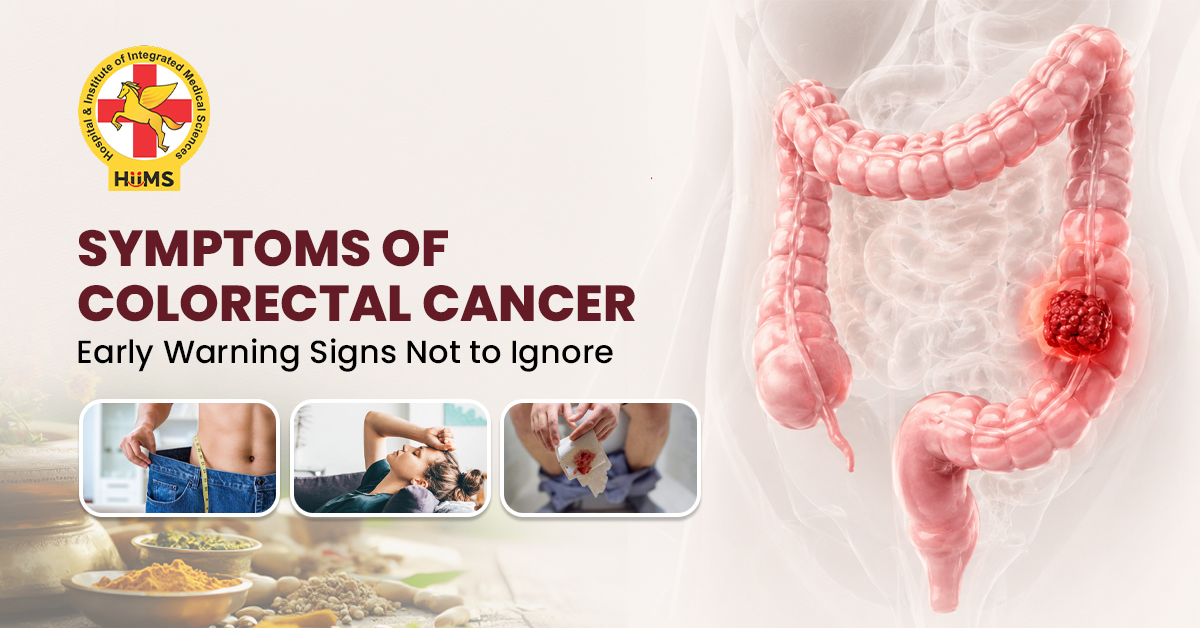
People usually notice stomach trouble only when it starts affecting meals, sleep, or daily work. A little constipation, a strange feeling after passing stool, or a small trace of blood is often ignored as piles, gas, or something eaten the night before. That habit can become costly when the body is trying to signal a deeper problem in the colon or rectum. Symptoms of colorectal cancer do not always show up with loud pain, so the first clues are often easy to miss.
This blog explains the early warning signs in simple language and shows how they may appear in everyday life and colorectal cancer symptom management.
What Is Colorectal Cancer?
The colon and rectum are the last parts of the digestive tract. They help the body move waste out at the right time. Colorectal cancer starts when cells in this area grow in an unusual way, often from small growths called polyps. Some polyps stay harmless, while others may slowly turn risky over time. That is why doctors stress screening and close attention to bowel changes.
In the early phase, the body may not create severe pain, so people often miss the early signs of colorectal cancer and assume the problem is only gas or a weak stomach.
Common Symptoms That Should Not Be Ignored
Bowel Habits That Keep Changing
One of the first colon cancer symptoms is a change in bowel habits. A person may notice constipation, loose motions again and again, or a sudden change in stool form. These changes can happen in symptoms of colon cancer in adults, and they often get ignored because they seem small at first. A one-time stomach upset is common, but a repeated pattern needs a closer look.
Blood In Stool And Why People Delay Care
Blood during a bowel movement often gets blamed on piles, but that is not always the full story. The real causes of blood in stool causes can be different, and some need proper medical attention. Bright red blood, dark stool, or hidden bleeding may point to something serious inside the bowel. If it keeps coming back, it should not be treated as a routine issue.
Gas, Cramping, And A Heavy Abdomen
Some people keep feeling bloated even after eating light meals, while others notice a mild pain, heaviness, or cramps in the lower part of the stomach that return again and again. The discomfort may come and go, but later it can stay long enough to disturb meals and sleep. When pain does not behave like ordinary indigestion, it deserves attention. Many colorectal cancer warning signs start quietly.
Feeling That The Bowel Has Not Emptied
A person may use the washroom and still feel the bowel is not empty. That can leave them restless and uncomfortable throughout the day. When this feeling happens often, it may point to a change in the colon or rectum that needs checking. People usually explain this symptom late, after adjusting their routine around it.
Weakness And Weight Loss
Fatigue is easy to blame on work or poor sleep, but tiredness that stays for weeks deserves notice. Slow internal blood loss can reduce energy and make simple tasks feel heavy. Sudden weight loss without trying can also appear, sometimes with a lower appetite. When the warning signs show up with weakness and weight change, the whole pattern matters.
When Symptoms Last for More Than a Few Weeks
A stomach problem can happen once and go away. What needs attention is the pattern that repeats again and again, especially when it includes bleeding, pain, weakness, or major bowel changes. Waiting usually adds more worry and less clarity. Early consultation gives doctors a better chance to understand the issue in time and guide the next step properly.
When Should You Speak to a Doctor?
Repeated blood in stool, severe abdominal pain, rapid weight loss, long-lasting bowel changes, and unusual tiredness all deserve a proper health care assessment. The earlier a person speaks up, the easier it becomes to understand whether the problem is temporary or something that needs further care.
Conclusion
Colorectal health should never depend on speculation, because symptoms of colorectal cancer often start with small changes that feel ordinary at first. A person may notice bowel changes, bleeding, tiredness, or weight loss and still keep waiting for the issue to settle on its own. That delay can hide an important chance for care. A better approach is to notice the pattern early, speak to a doctor without delay, and keep colorectal cancer symptom management steady with the right medical guidance and daily habits.
If you are facing any health concern, you can also choose an online video consultation (VOPD) with experienced doctors at Jeena Sikho HiiMS.

FAQs
Q1: What are the early warning signs of colorectal cancer?
Common warning signs include bowel habit changes, blood in stool, abdominal discomfort, weakness, and unexplained weight loss that do not settle quickly.
Q2: Can blood in stool always mean piles?
No, because blood in stool causes can range from piles to more serious digestive problems, so repeated bleeding needs medical attention.
Q3: How long should bowel changes be watched before seeing a doctor?
If bowel changes keep returning for more than a couple of weeks, it is better to get checked instead of waiting for them to fade on their own.
Q4: Do younger adults also get colorectal cancer symptoms?
Symptoms of colon cancer in adults can appear at different ages, so ongoing digestive changes should never be ignored only because someone feels too young.
Q5: How can daily habits support colon health?
Simple habits like light meals, enough water, regular movement, and ayurvedic support for colon health can help the body feel more balanced.
Disclaimer: The information provided on this blog is for general educational and informational purposes only. It is not intended to replace professional medical advice, diagnosis, or treatment. Always consult a qualified healthcare professional before making any changes to your diet, lifestyle, or treatment plan. Individual results may vary.