
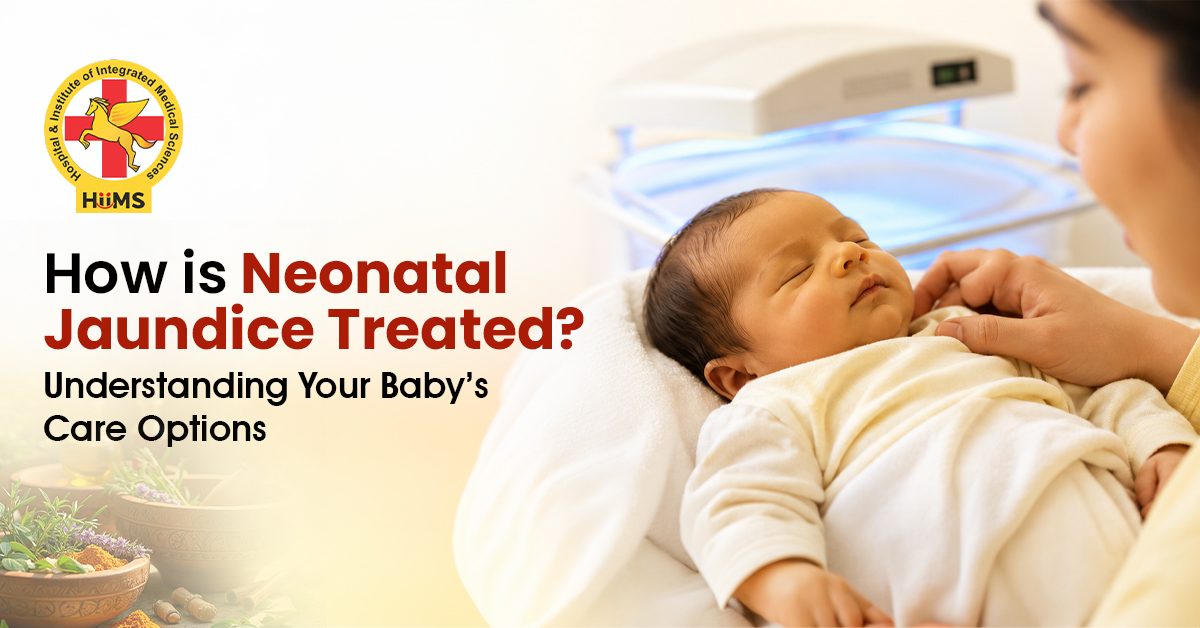
Neonatal jaundice treatment is primarily based on the level of bilirubin in a baby’s blood. Most mild cases get better on their own with frequent feeds. Hospitals use phototherapy (light therapy) for high bilirubin levels in newborns. If the jaundice is caused by incompatibility of blood types, doctors give intravenous immunoglobulin (IVIG) that stops the breakdown of blood cells. In rare, critical emergencies, an exchange transfusion is performed to rapidly refresh the infant’s blood supply.
Noticing your newborn looks yellow can trigger instant anxiety, making you wonder if you did something wrong when a doctor mentions jaundice in newborn babies. This condition is incredibly common, affecting sixty percent of full-term infants. It is simply a temporary, highly manageable phase that pediatricians treat every single day. In this blog, we will break down your options for neonatal jaundice treatment to calm your fears and give you absolute confidence as you care for your little one.
Understanding Neonatal Jaundice: Why Does It Happen?
Neonatal jaundice is a common condition that causes a newborn baby’s skin and the whites of their eyes to turn yellowish in color because of a buildup of a yellow pigment called bilirubin. Usually happens in the first two or three days after birth. For most babies, this peak lasts a few days and then fades away naturally in one to two weeks as their bodies adjust.
Old red blood cells break down naturally and make a yellow substance called bilirubin. Usually, the liver processes this yellow stuff and excretes it in stool.
However, a newborn baby’s liver is still forming. Often, it can’t clear the bilirubin quickly enough. When this occurs, it builds up in the blood, causing high levels of bilirubin in newborns. This extra pigment deposits in the skin and the whites of the eyes, giving them their characteristic yellow color.
There are two easy ways doctors use to track these levels:
A light monitor (TcB): It is a painless, handheld device that is placed gently on the baby’s forehead to get an initial reading.
A Blood Test (TSB): A quick test to check the exact bilirubin level if the light monitor shows a high reading.
Neonatal Jaundice Symptoms to Watch For
Before starting any care plan, doctors look closely at the severity of the symptoms. While a mild yellow tint is normal, you should always be aware of changing signs.
Common neonatal jaundice symptoms include a yellow color that starts on the baby’s face and moves down to the chest, stomach, arms, and legs. The whites of your baby’s eyes might also look distinctly yellow.
If your baby becomes very sleepy, is difficult to wake up for feedings, or is not producing enough wet and dirty diapers, these are signs that the bilirubin may be rising too fast. Knowing these signs helps you work with your doctor to choose the right newborn jaundice treatment at the right time.
4 Main Treatment Options for Your Baby
When it comes to neonatal jaundice treatment, pediatricians have a clear, step-by-step medical plan based entirely on your baby’s age, weight, and blood test results.
1. Frequent Feeding (The Natural Flush)
For mild cases of jaundice, the best medicine is simply more milk. Bilirubin leaves your baby’s body almost entirely through their poop and pee. When you feed your baby breast milk or formula every two to three hours, it speeds up their digestion.
This frequent eating causes more bowel movements, which literally flushes the yellow pigment out of their system naturally. Your doctor will simply ask you to feed your baby often and keep a close eye on their skin color.
2. Phototherapy (Blue Light Therapy)
If bilirubin levels go above a safe line on the doctor’s chart, they will recommend phototherapy for neonatal jaundice. It is a very common and safe treatment.
How it works: Your baby is put in a warm bassinet and exposed to special blue-green lights with only a diaper and tiny protective eye patches.
The Science: This particular light alters the shape and structure of the bilirubin molecules in the skin. It changes the pigment into a form that will dissolve in water so that the liver and kidneys can easily filter it out.
Home option: If the levels are just slightly raised, your doctor may permit you to use a biliblanket at home. This is a portable, light-emitting blanket that wraps around your baby, so you can hold and feed them normally while they’re being treated.
3. Intravenous Immunoglobulin (IVIG)
Sometimes jaundice happens because the mother and baby have incompatible blood types such as Rh or ABO incompatibility. In these cases, the mother’s immune system makes antibodies that get into the baby’s bloodstream and quickly destroy the baby’s red blood cells. That leads to an immediate, large increase in bilirubin due to the rapid breakdown.
To prevent this, doctors can give the baby a medicine called IVIG through a tiny IV line. IVIG is a blood protein that prevents the mother’s antibodies from attacking the baby’s blood cells. It stops the cell destruction and the production of extra bilirubin and helps the family avoid more intensive treatments safely.
4. Exchange Transfusion (The Emergency Reset)
In very rare and critical situations where bilirubin levels remain dangerously high despite intense light therapy and IVIG, an exchange transfusion is performed in the neonatal intensive care unit.
In this process, small quantities of the baby’s blood are removed repeatedly and replaced with fresh healthy donor blood. This lowers the bilirubin level right away, protecting the baby’s brain and nervous system from damage.
Home Care and Important Safety Red Flags
When you care for a baby with mild jaundice at home, you will be helping your baby recover while watching closely to see how he or she is doing.
Essential Home Care
Feed Frequently: Feed your baby every 2-3 hours. More milk means more dirty diapers, which naturally flushes bilirubin out.
Diaper Tracking: Record all wet and dirty nappies to help you know your baby is well-hydrated.
Skip Sunlight: Never place a naked baby in a sunny window. Newborns’ skin burns easily, and they can overheat or get too cold.
Safety Red Flags to Watch For
Call your pediatrician immediately if you notice any of these warning signs:
- The yellow color deepens or spreads to the stomach, knees, and feet.
- Your baby is too sleepy to nurse or difficult to wake up for feeds.
- Your baby produces fewer than six wet diapers a day.
- Your baby arches their back or develops an unusual, high-pitched cry.
Conclusion
It is completely natural to feel overwhelmed if your baby needs neonatal jaundice treatment. It’s heartbreaking to see your newborn sleeping under blue lights or having to stay in the hospital an extra day.
But you can rest assured that these treatments have a near-perfect success rate. Within a few days, your baby’s liver will catch up, their skin will clear, and this stressful time will be a distant memory. Just keep a simple log of your baby’s feeding times and wet diapers, and trust your medical team to guide you through this short phase.
Frequently Asked Questions
Q1. How long does it take for neonatal jaundice to go away?
Mild jaundice usually fades within one to two weeks as the baby’s liver matures and they feed frequently.
Q2. Does breast milk cause jaundice?
Sometimes, certain proteins in breast milk can make jaundice last a bit longer, but doctors rarely recommend stopping breastfeeding because the milk is so beneficial.
Q3. Can a baby get jaundice again after being cured?
Once a baby’s liver is fully functioning and the bilirubin levels drop to a safe baseline, it is highly unusual for jaundice to return.
Q4. Is phototherapy painful for a newborn baby?
No, the blue lights do not hurt. The lights are warm and comfortable, though your baby might get a little fussy because they are wearing eye patches and sleeping without a swaddle.
Q5. How can I prevent high bilirubin levels at birth?
The best way to prevent high levels is to feed your newborn frequently right after birth, which encourages early bowel movements to clear the pigment out immediately.