

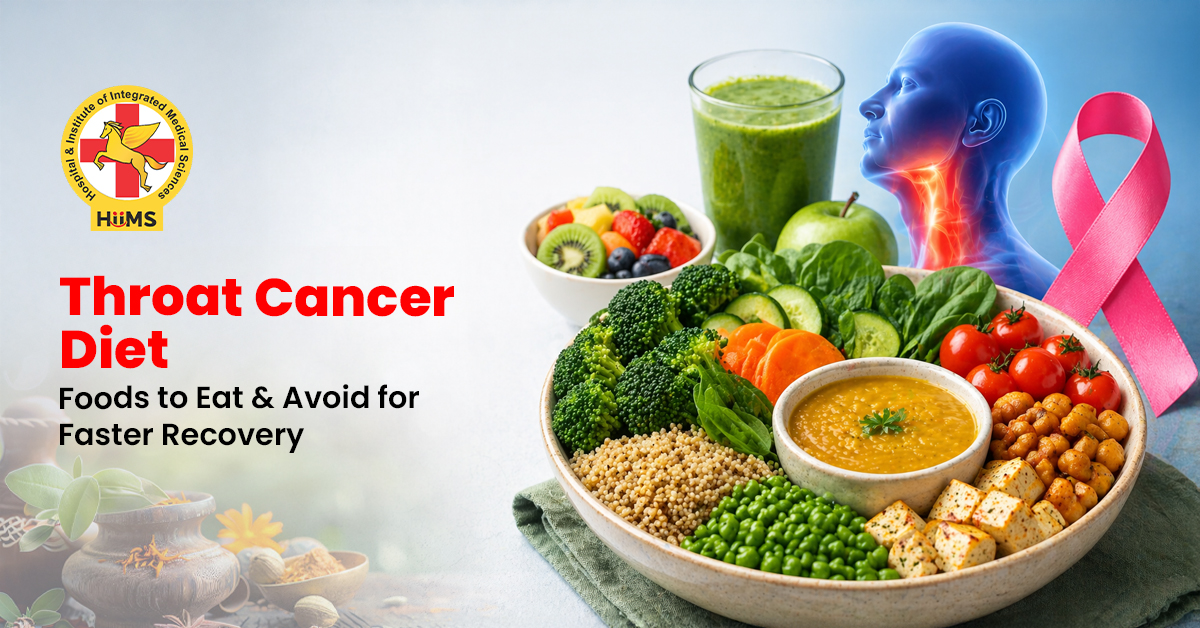
Food becomes one of the hardest things for people suffering from throat cancer. Something as basic as swallowing food can feel uncomfortable or even painful. Many people lose their appetite, feel weak, or avoid eating altogether because it does not feel easy anymore.
It is in this situation that the correct throat cancer diet plays an equally crucial role. The idea here is not about imposing strict diets but rather eating food that is easy to digest and helps the body cope faster.
In addition to taking care of one’s health, taking care of one’s nutrition for throat cancer recovery may help improve physical strength and energy levels. In this blog, you will understand what to eat, what to avoid, the diet for throat cancer patients, and how to adjust your meals in a simple and practical way.
Why Does Diet Matter in Throat Cancer?
When someone is going through treatment, the body needs more support than usual. But due to pain, dryness, or difficulty swallowing, eating becomes difficult. A proper throat cancer diet helps in the following:
- Maintaining strength and energy.
- Supporting healing and recovery.
- Reducing discomfort while eating.
- Preventing unwanted weight loss.
Instead of forcing heavy meals, the focus should be on simple, soft, and nourishing food.
Best Foods to Eat for Throat Cancer
The foods that should be taken in a diet for throat cancer patients suffering from throat cancer are
1. Soft and Easy to Swallow Foods
Khichdi, daal, mashed vegetables, and porridge are some examples of such foodstuffs. These foods do not need much mastication and are easy to swallow.
2. High-Protein Foods
Protein helps the body repair tissues. Options like soft lentils and sprouts can be helpful.
3. Smooth Liquids and Soups
Fruit soup and broth can be consumed to meet dietary requirements without straining the throat. It is ideal for people who find eating solid foods challenging.
4. Soft Forms of Fruit
Instead of eating whole fruits, you may want to try fruits that have been mashed or blended. Fruits like bananas, papayas, and stewed apples are easy to digest.
5. Fats
Including healthy fats like ghee or healthy oils in moderation will boost energy without an increase in food intake.
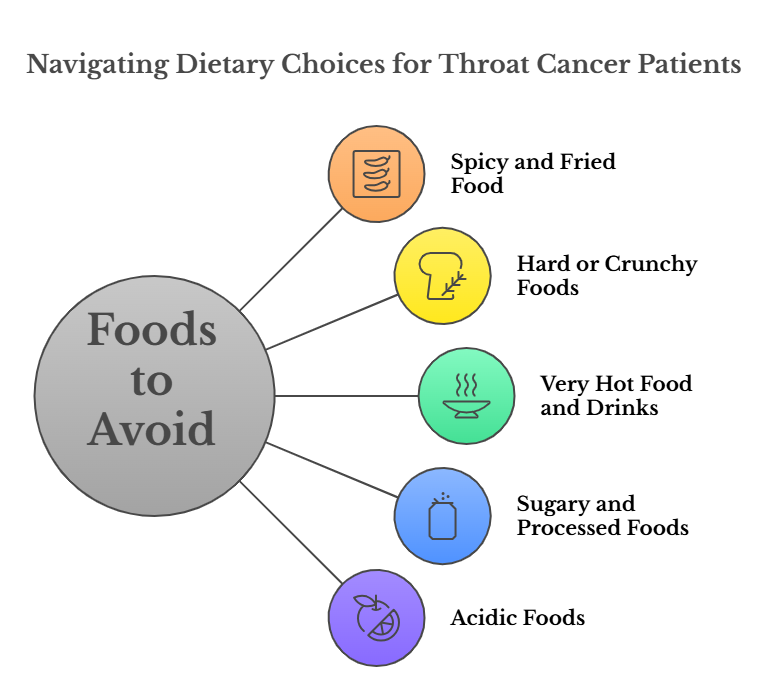
Foods to Avoid in Throat Cancer
Some foods can aggravate discomfort or inflammation. Throat cancer patients should steer clear of the following foods:
1. Spicy and Fried Food
Spicy and fatty foods tend to agitate the throat, making swallowing a painful task.
2. Hard or Crunchy Foods
Foods such as toast or chips that are crunchy can be hard to swallow, thus irritating the throat.
3. Very Hot Food and Drinks
Food and drinks that are too hot may irritate your sensitive throat.
4. Sugary and Processed Foods
These do not provide real nutrition and may reduce overall energy levels.
5. Acidic Foods
Excessive consumption of foods rich in acidity may lead to irritation, particularly if one’s throat is sensitive.
Practical Tips That Actually Help
They are minor adjustments that can make eating more comfortable:
- Chew your food in small portions and chew slowly.
- Select soft foods instead of dry foods.
- Drink fluids between meals.
- Avoid forcing large meals.
- Eat more frequently in small portions.
These simple adjustments can make a big difference in daily comfort.
Natural Support for Recovery
Apart from healthy food, other elements play an important role.
- Healthy foods, but nothing very heavy.
- Get enough water throughout the day.
- Simple things like breathing exercises.
- Reducing stress as much as possible.
A natural treatment approach focuses on helping the body recover step by step instead of rushing the process. At Jeena Sikho HiiMS, the focus is on a root cause approach with lifestyle-based recovery. They guide patients with a pH-balanced diet that includes the 2-plate system, where one is a fruit plate, and the other is a food plate; a daily routine; and supportive therapies to help the body regain balance.
When Should You Take Diet Seriously?
You should pay attention to:
- You are losing weight quickly.
- Eating feels painful or difficult.
- You feel weak most of the time.
- You are skipping meals regularly.
In such cases, adjusting your throat cancer diet becomes very important.
Conclusion
Food may feel like a challenge during throat cancer, but the right choices can make things easier. A simple, gentle, and balanced diet can help your body in times of need. There’s no need to make anything complex. It’s only some small
yet practical things that will help you maintain your eating process and get enough nutrition. If you find eating tough or feel tired, one option is to attend a VOPD counseling session offered by Jeena Sikho HiiMS.

FAQs
Q1. What is the best throat cancer diet?
A soft, easy-to-swallow diet with balanced nutrition works best.
Q2. Which foods should be avoided in throat cancer?
Spicy, hard, and very hot foods should be avoided.
Q3. Can I drink juices during throat cancer?
Fresh juices and smoothies can be helpful if they are not too acidic.
Q4. Why is eating difficult in throat cancer?
Pain, dryness, and irritation in the throat can make swallowing uncomfortable.
Q5. Can diet help in recovery?
A proper diet supports energy, strength, and overall recovery.