
Your body often sends small signals when something changes inside it. Learning to read them is a useful health skill. Different types of cancer start in different organs, so each one gives its own early clues. Some show up as a lump, while others appear as a cough, a sore, or a change in digestion.
India’s National Cancer Registry Programme estimated about 14.6 lakh new cancer cases in the country in 2022. The same ICMR study found that 1 in 9 people may face cancer in their lifetime. Lung cancer was the most common in men, and breast cancer was the most common in women. This blog covers 15 types of cancer, their early signs, and how care works today.
What Is Cancer, and Why Do Early Cancer Symptoms Matter?
Your body makes new cells every day, and this process follows strict rules. Cancer begins when some cells break these rules and continue to grow. Over time, they can form a lump called a tumour or spread through the blood and lymph.
Doctors use “stages” to describe how far cancer has grown. Stage 1 usually means the cancer is small and stays in one place. Stage 4 means it has spread to other parts of the body. So, the earlier someone notices a change, the simpler the treatment usually is.
In India, many people still reach a doctor late. A hospital study of 1,210 breast cancer patients in Mumbai found that 54% were diagnosed at stage 3 or 4. Better awareness of early signs can help close this gap. That awareness starts with knowing what raises the risk in the first place.
Noticed a change in your body that just won’t go away? Talk to our experts and understand what it could mean.
What Raises the Risk of Cancer?
Cancer rarely has a single cause. Instead, it usually builds up from several factors over many years.
- Tobacco in any form: Smoking, gutka, khaini and paan with tobacco all damage cells in the mouth, throat and lungs. The ICMR-NCDIR National Cancer Registry Programme Report 2020 found that tobacco-related cancers make up 27.1% of all cancers in India. That makes tobacco the biggest risk you can actually control.
- Alcohol: Regular drinking strains the liver and irritates the lining of the mouth and gut. Over the years, this raises the risk of liver, mouth and colon cancer.
- Certain infections: Some viruses and bacteria slowly change healthy cells. For example, HPV is linked to cervical cancer, hepatitis B and C to liver cancer and H. pylori to stomach cancer.
- Diet, weight and inactivity: Meals high in processed and fried foods but low in fibre affect gut health. Extra body weight and long hours of sitting also raise the risk of several cancers.
- Age, family history and pollution: Risk increases with age because cell damage accumulates over time. A close relative with cancer, or years of breathing polluted air, can add to it as well.
Each risk affects the body in its own way. As a result, different types of cancer show different signs, depending on where they begin.
Worried that tobacco, family history, or lifestyle may put you at risk? Our experts can help you understand where you stand.
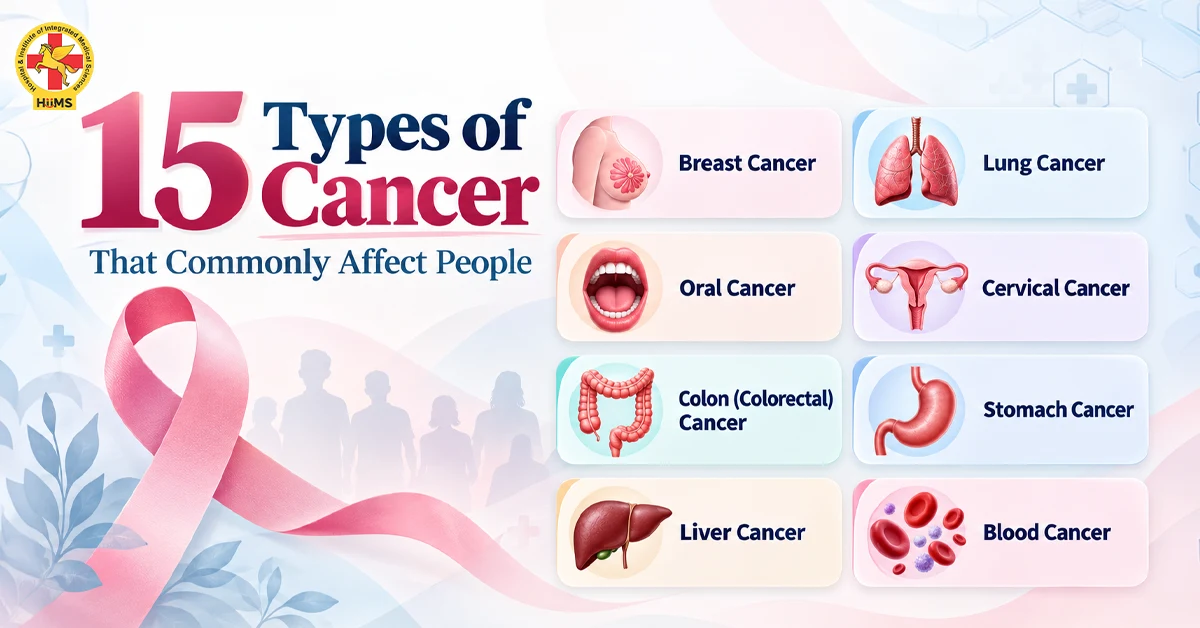
15 Types of Cancer That Commonly Affect People
The list starts with the cancers most common in India. For each one, you’ll find where it starts, its early signs, and who should stay alert.

1. Breast Cancer
Breast cancer usually starts in the milk ducts. It is the most common cancer among Indian women. The first sign is often a painless lump in the breast or underarm. Other changes include dimpled skin, a nipple that turns inward, or unusual discharge. Women over 40 and those with a family history should stay more alert. A simple monthly self-check in front of a mirror helps you spot changes early.
2. Lung Cancer
Lung cancer begins in the airways or air sacs of the lungs. It is the most common cancer in Indian men. Watch for a cough that lasts more than three weeks or keeps getting worse. Coughing up blood, chest pain, and breathlessness during light work are also warning signs. Smoking is the biggest cause, but polluted air and second-hand smoke matter too. People often mistake it for TB, so a proper check matters.
3. Oral Cancer
Oral cancer affects the lips, tongue, cheeks, gums or the floor of the mouth. India sees a very large number of oral cancer cases, mainly because of chewing tobacco. An early sign is a mouth ulcer that does not heal within two weeks. White or red patches, a lump in the cheek, and difficulty opening the mouth are other clues. Anyone who uses gutka, khaini, or cigarettes should check their mouth regularly.
4. Cervical Cancer
Cervical cancer starts in the cervix, the lower part of the womb. Most cases are linked to a long-lasting infection with HPV (human papillomavirus). Early signs include bleeding after intercourse, between periods, or after menopause. A watery or foul-smelling discharge can also be a sign. The good news is that screening works well. A large Mumbai trial of about 1.5 lakh women tested a simple vinegar-based check called VIA. It cut cervical cancer deaths by 31%. Women over 30 should ask their doctor about regular screening.
5. Colon (Colorectal) Cancer
Colon cancer grows in the large intestine (colon) or the rectum. It often begins as small growths called polyps. Look out for blood in the stool, ongoing constipation or diarrhoea, and a feeling that the bowel never fully empties. Some people also feel weak, because slow blood loss leads to anaemia. A low-fibre diet, processed meat, obesity and age above 50 raise the risk. Many people blame these signs on piles, so get them checked.

6. Stomach Cancer
Stomach cancer starts in the inner lining of the stomach. Its early signs often feel like regular acidity, which is why people tend to ignore them. However, indigestion that does not settle, feeling full after a few bites, and nausea need attention. Weight loss without trying and black, tar-like stool are more serious signs. Long-term H. pylori infection, very salty or smoked foods, and smoking raise the risk. If antacids stop helping, see a doctor.
7. Liver Cancer
Liver cancer often begins in a liver already damaged by disease. Early on, it may cause few symptoms. Later, people may notice pain under the right ribs and a swollen belly. Yellow eyes or skin (jaundice) can follow. Loss of appetite and constant tiredness are common too. The main risk factors include hepatitis B and C, heavy drinking, and fatty liver disease.
8. Blood Cancer
Blood cancer affects how the bone marrow makes blood cells. It has three main forms. Leukaemia affects white blood cells, lymphoma affects the lymph glands, and myeloma affects plasma cells in the bone marrow. Common signs include frequent infections, easy bruising or bleeding, and tiredness that does not go away. Fever, night sweats and swollen glands may also appear. A simple blood test (CBC) is often the first step towards finding it.
Have questions about cancer symptoms, risk factors, or supportive care approaches? Connect with our experts for guidance based on your health concerns.
9. Prostate Cancer
The prostate is a small gland below the bladder in men. Prostate cancer usually grows slowly and may stay silent for years. Later signs include a weak urine flow and waking up often at night to urinate. Blood in the urine or semen and lower back pain can also occur. Men over 50 and those with a family history carry a higher risk. A PSA blood test and a doctor’s exam help find it early.
10. Ovarian Cancer
Ovarian cancer begins in the ovaries, which produce eggs and hormones. It is hard to catch early because its signs are vague. Bloating, pelvic or belly pain, and feeling full quickly are the most common ones. The key clue is that these signs stay for weeks instead of coming and going. Women over 50 and those with a family history of breast or ovarian cancer should not ignore such changes.

11. Thyroid Cancer
The thyroid is a butterfly-shaped gland at the front of the neck. Thyroid cancer is more common in women, and it usually responds well to treatment when found early. The first sign is often a painless lump or swelling in the neck. A hoarse voice that does not improve, trouble swallowing, and swollen neck glands may follow. Most thyroid lumps are not cancer, but a doctor should still check any new one.
12. Kidney Cancer
Kidney cancer usually starts in the tiny tubes inside the kidney. Often, doctors find it by chance during a scan for some other problem. When signs do appear, blood in the urine is the most common. Pain in the side or lower back that does not ease and a lump in the side are other clues. Smoking, obesity, and long-term high blood pressure raise the risk.
13. Pancreatic Cancer
The pancreas sits behind the stomach and helps with digestion and blood sugar control. Because it lies deep inside the body, cancer here is hard to find early. Signs include upper belly pain that spreads to the back, yellow skin and eyes, and dark urine. Weight loss without trying and sudden diabetes after age 50 are other important clues. Smoking, obesity, long-term pancreatitis, and diabetes all increase the risk.
Noticing ongoing symptoms or changes in your health? Discuss your concerns with our experts and understand what steps you can take next.
14. Brain Cancer
Brain tumors grow from cells inside the brain or its coverings. Their signs depend on which part of the brain they press on. A new headache that feels worse in the morning or comes with vomiting needs attention. Seizures, blurred or double vision, and changes in speech, memory, or behavior are other warning signs. Since many of these signs have other causes too, a brain scan helps doctors find the reason.
15. Skin Cancer
Skin cancer starts in the skin cells, mostly in areas exposed to the sun. It is less common in India than in Western countries, but it still occurs. Watch for a mole that changes in size, shape, or colour, or a sore that does not heal. Doctors use the “ABCDE” rule to check moles. It stands for Asymmetry, Border, Colour, Diameter, and Evolving. In simple words, an uneven, rough-edged, multi-coloured, large or changing mole needs a look. People with fair skin and long hours in the sun face a higher risk.
Every cancer on this list has its signs. Still, several of them share a few common warnings that are easy to remember.
Common Cancer Symptoms and When to Get Checked
Many cancer symptoms overlap across organs. Knowing the common ones helps you act sooner.
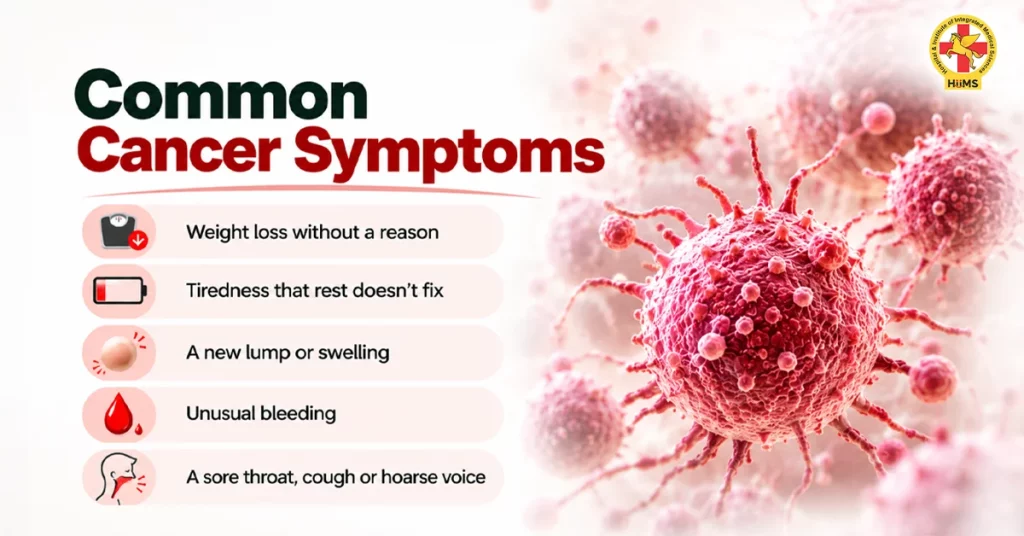
- Weight loss without a reason: Losing 4–5 kg without trying means the body needs a check.
- Tiredness that rest doesn’t fix: This is common in blood and colon cancer. Often, it happens because the body is short of healthy blood cells.
- A new lump or swelling: A lump in the breast, neck, armpit, or belly should always be examined. Most lumps turn out to be harmless, but only a check can confirm it.
- Unusual bleeding: Blood in the stool, urine or cough, or bleeding between periods always needs attention.
- A sore throat, cough or hoarse voice: These can point to problems in the mouth, lungs or throat. They deserve a check if they last beyond three weeks.
A simple rule helps here. If any change lasts more than two to three weeks, see a doctor. Regular screening helps too, from breast self-checks to Pap tests and PSA tests.
Not sure whether a symptom needs attention? Speak with our experts for clear guidance.
How Cancer Is Diagnosed in Modern Treatment
When a doctor suspects cancer testing comes first. Blood tests give clues about overall health and certain cancer markers. Imaging tests like X-ray, ultrasound, CT, MRI or PET scans show the size and location of a growth. Finally a biopsy where a tiny piece of tissue is tested in a lab, usually confirms the diagnosis.
Different types of cancer respond to different treatments, so the plan depends on the type and stage. Surgeons may remove the tumour, while chemotherapy uses medicines to kill cancer cells. Radiation uses high-energy rays and targeted therapy and immunotherapy act on specific features of the cancer.
These treatments save many lives. However, they also bring real challenges. Many patients face tiredness, nausea, poor appetite, hair loss and low immunity during treatment. Treatment can stretch over months, and the cost adds up. Because of this, many families look for supportive care that helps the body and mind cope better.
The Ayurvedic View of Cancer Care
Ayurveda calls abnormal growths Arbuda (large and deep-rooted) or Granthi (small and knot-like). According to Ayurveda, these growths develop when the three doshas, Vata, Pitta and Kapha, lose their balance. Weak agni, or digestive fire, also plays a part. When agni is weak, food isn’t digested well. This leads to the accumulation of a sticky waste known as ama in the tissues.
So, rather than looking only at the growth, Ayurveda looks at the whole person. It pays attention to digestion, diet, sleep, stress, and daily routine. Rasayana care is a key part of this approach. It aims to support strength, appetite, sleep, and recovery through herbs, food, and lifestyle.
Research in this area is still growing. In a 4-month Ayurvedic nutrition and lifestyle program for 32 breast cancer survivors, 84% completed the programme. Participants showed large improvements in sleep and mood scores, along with moderate gains in fatigue and stress. It was a small pilot study, yet it shows how Ayurveda can work alongside regular cancer care to support well-being.
Supportive Cancer Care at Jeena Sikho HiiMS
Jeena Sikho HiiMS brings this same whole-person idea into hospital care for people living with cancer. HiiMS is an integrated hospital; it combines Ayurveda, Naturopathy, Homeopathy, Unani, and modern science under one roof. For cancer patients, the focus is on supporting the body during and after treatment.
Golden Therapy
Golden Therapy is a foot-churning therapy. A paste of neem, banyan, peepal and guava leaves, karela and raw turmeric is churned with the soles of the feet. Traditionally, it is used to support the body’s natural cleansing and help the patient relax.
Cancer Detox Juice
This fresh juice blends leafy greens, raw turmeric, ginger, beetroot, and amla. It is rich in antioxidants and vitamin C. For many patients, it is a simple way to support nutrition and energy during chemotherapy or radiation.
Panchakarma
Panchakarma is Ayurveda’s classical cleansing therapy. The doctor chooses the procedure after assessing the patient’s strength.
Herbal Support
Herbs like Ashwagandha, Haldi (turmeric), Neem and Tulsi are traditionally used to support strength, digestion and immunity. Doctors always give them under close supervision.
pH-Balanced Diet
Patients receive fresh, simple, plant-based meals with very little processed food. The team personalizes each diet plan to the patient’s needs and appetite.
Mind & Body Healing
Yoga, pranayama, and meditation help patients manage stress and sleep better. They also help people feel more in control during a tough phase.
Every plan at HiiMS begins with a doctor’s assessment. Beyond these therapies, a few daily habits can also help lower the risk of cancer.
Looking for supportive care alongside your cancer treatment? Connect with Jeena Sikho HiiMS and speak with our doctors.

Everyday Habits That Help Lower Cancer Risk
Not every cancer can be prevented. Still, simple daily choices can lower the risk of many of them.
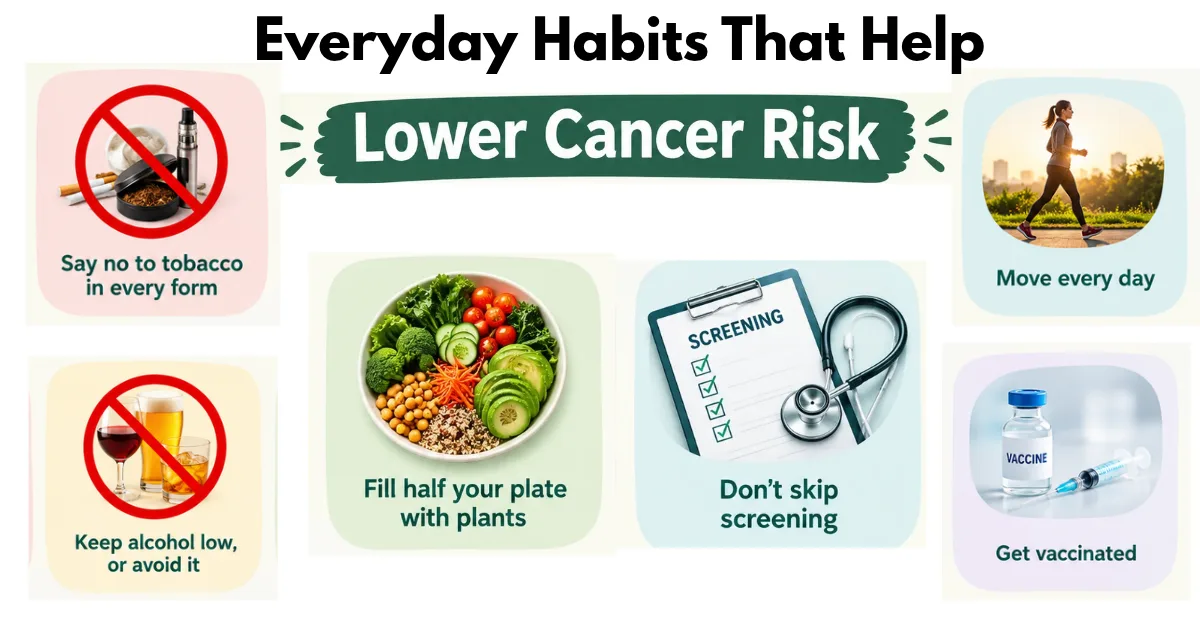
- Say no to tobacco in every form: Quitting smoking, gutka or khaini lowers the risk of mouth, lung and many other cancers.
- Keep alcohol low, or avoid it: Less alcohol means less strain on the liver and gut. This, in turn, lowers the risk of liver, mouth and colon cancer.
- Fill half your plate with plants: Vegetables, fruits, whole grains and pulses give you fibre and antioxidants. Fibre keeps digestion regular and supports gut health.
- Move every day: Even a brisk 30-minute walk help control weight and improves digestion.
- Get vaccinated: The HPV vaccine protects against cervical cancer, and the hepatitis B vaccine protects the liver.
- Don’t skip screening: Tests like the Pap smear, VIA, oral checks and PSA can catch changes early. For this reason, regular screening is one of the most practical steps you can take.
Together, these habits support your body every day, not just when something feels wrong.
Conclusion
Cancer can begin in almost any part of the body, and each type sends its own early signs. This blog covered 15 types of cancer, from breast and lung cancer to skin cancer, along with their risk factors. Finally, it showed how Ayurveda supports the body alongside standard care. Knowing the types of cancer and their signs gives you a clearer picture of your health.
Take the first step toward a healthy lifestyle with Jeena Sikho HiiMS. Connect with our Ayurveda experts through a VOPD (video consultation) from your home for personalised guidance, and receive a personal care plan to protect your health in the long term.

FAQs
Q1. Which cancers are most common in India?
Lung and mouth cancers are among the most common in men. In women, breast and cervical cancers top the list.
Q2. What are the first signs of cancer?
Common early signs include weight loss, lasting tiredness, a new lump, unusual bleeding, and a sore that won’t heal. Any change that lasts over two to three weeks needs a check.
Q3. Can cancer be found before symptoms appear?
Yes, some cancers can. Tests like Pap, VIA, mammograms, and PSA can find some cancers before signs show up.
Q4. Which of these 15 types of cancer are linked to lifestyle?
Mouth, lung, liver, stomach, and colon cancers have strong links to tobacco, alcohol, and diet. Changing these habits can lower the risk a lot.
Q5. How does Jeena Sikho HiiMS support cancer patients?
HiiMS offers supportive care like Golden Therapy, Cancer Detox Juice, Panchakarma, herbs, and a pH-balanced diet. Each plan follows a doctor’s assessment and works alongside oncology care.
