
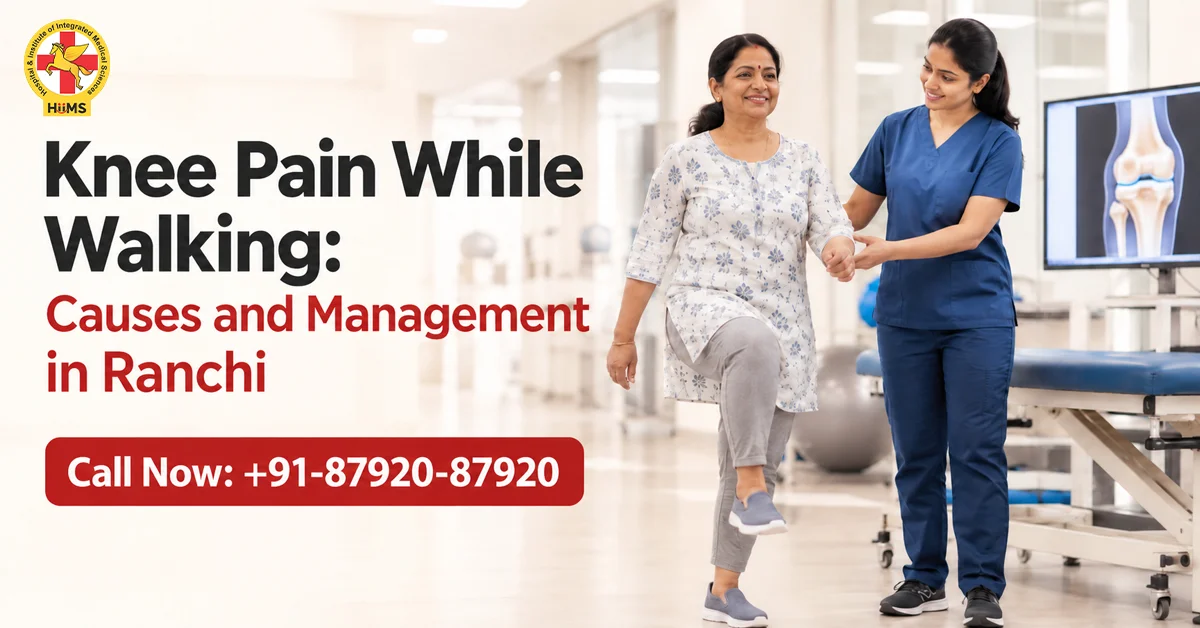

Knee pain can turn a simple walk into a daily struggle. Climbing stairs, getting up from a chair or walking to the market all start to feel hard. The good news is that most knee pain has a clear cause, and the right care can ease it.
Knee problems are common across India. A community study in Tamil Nadu screened 1,986 adults and found knee osteoarthritis in 27.1% of them. Age above 50, female sex, diabetes and high blood pressure were linked to it.
This blog explains why the knee hurts while walking, what you can do at home, and how to approach knee pain treatment in Ranchi.
Knee Pain Causes: Why Does It Hurt While Walking?
Your knees carry your full body weight with every step. Many things can strain them over time. Common causes include:
- Osteoarthritis – The cartilage that cushions the joint wears down with age and use
- Ligament or meniscus strain – A twist, fall or sudden stop can injure these structures
- Extra body weight – Each extra kilogram adds load to the knee with every step
- Weak thigh muscles – Weak muscles cannot absorb shock, so the joint takes more strain
- Arthritis and high uric acid – These can cause joint swelling and pain
- Old injuries and poor footwear – Both change how the knee moves when you walk
Knee Pain Symptoms to Watch For
Knee pain looks different in different people. These signs are common:
- Pain while walking, climbing stairs, or getting up from a seat
- Stiffness after rest, especially in the morning
- Swelling or warmth around the knee
- A clicking or grinding sound when you bend the knee
- A feeling that the knee may give way
Mild symptoms often ease with simple habits. So let us start with what you can do at home.
Everyday Habits That Take Load Off Your Knees
Knee pain relief often starts with small changes to your routine. Each tip works best when you follow it steadily.
- Pace your activity – Rest the knee when it hurts, but do not stop moving completely. Short, slow walks on flat ground keep the joint flexible. Increase the time slowly, and stop if the pain becomes sharp.
- Use a warm or cold compress – A warm towel relaxes stiff muscles before you move. A cold pack, wrapped in a cloth, can ease swelling after activity. Use either one for about ten minutes.
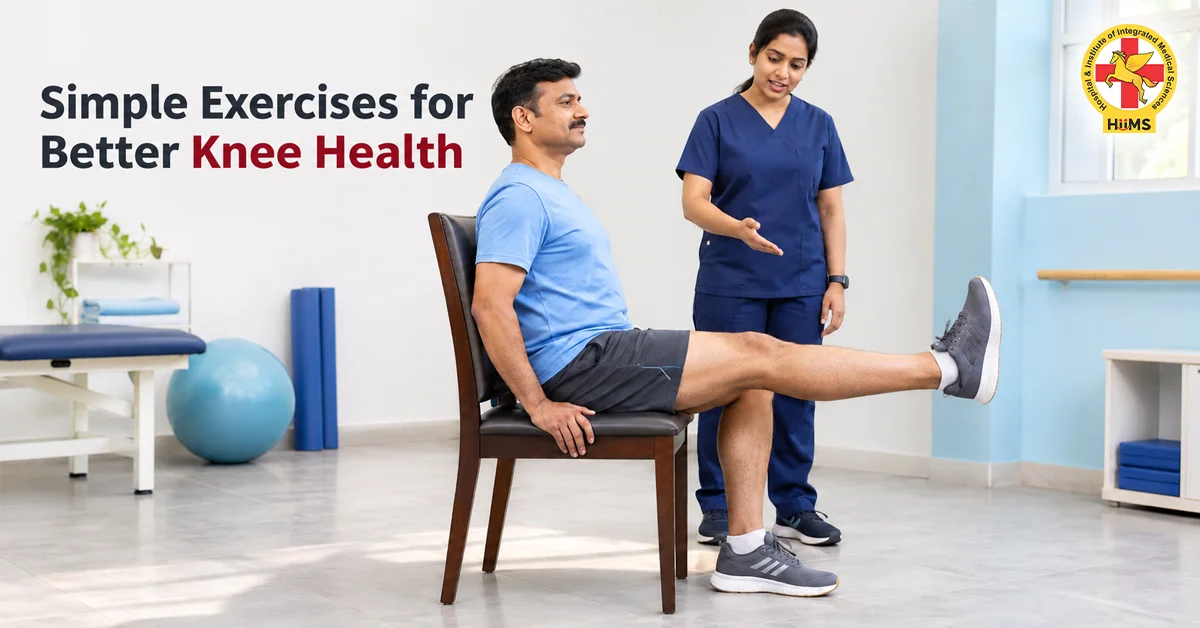
- Strengthen your thigh muscles – Strong thighs take pressure off the knee. For example, sit on a chair and slowly straighten one leg, hold for five seconds, and lower it. Repeat ten times on each side.
- Watch your weight – Even a small drop in weight reduces the load on your knees. Eat fresh home-cooked meals and cut back on fried and sugary food.
- Choose the right footwear and surface – Wear shoes with good cushioning and avoid walking on hard, uneven ground. Also avoid deep squats and long stair use when the knee is sore.
These steps help with mild pain. However if the pain lasts for weeks or swelling increases it is time to see a doctor.
Knee Pain Treatment in Ranchi: Standard Options and Their Limits
If home care does not help start with a knee pain doctor in Ranchi. A knee specialist in Ranchi will examine your knee and ask about your symptoms. The doctor may also advise an X-ray or MRI to see the joint clearly.
Common standard options include:
- Pain medicines and anti-inflammatory tablets.
- Physiotherapy to strengthen the muscles around the knee.
- Injections for severe pain or swelling.
- Surgery or knee replacement in advanced cases.
These options help many people. However they have limits. Medicines often ease the pain without changing the cause, so it may return after you stop them. Long-term use can also bring side effects, such as stomach problems. Surgery is a major step and many people prefer to try gentler care first.
This is why many people look for care that supports the joint and the whole body. Ayurveda takes this approach.
How Ayurveda looks at Knee Pain
Ayurveda calls knee osteoarthritis Janu Sandhigata Vata. It links the problem to aggravated Vata, which dries and stiffens the joint, and to weak digestion. So Ayurvedic knee joint pain treatment looks at food, routine, herbs and cleansing therapies together.
A 2023 systematic review in the International Journal of Ayurvedic Medicine studied Panchakarma-based treatment for knee osteoarthritis. In three trials, the effect on pain and stiffness was medium to large. Only three trials reported on safety and none noted serious side effects. Sudation, which means herbal sweating therapy, and enema therapy showed benefit. In practice, Ayurvedic care works best as support alongside proper checkups.
Knee Care at Jeena Sikho HiiMS Ranchi
Jeena Sikho HiiMS Ranchi is an integrated hospital that combines Ayurveda and naturopathy with modern science. The Ranchi hospital offers OPD, IPD, day care and home care. At day care, patients can take Ayurvedic therapies in the clinic itself.
Therapies for Knee Care
After a doctor’s check, the plan may include:
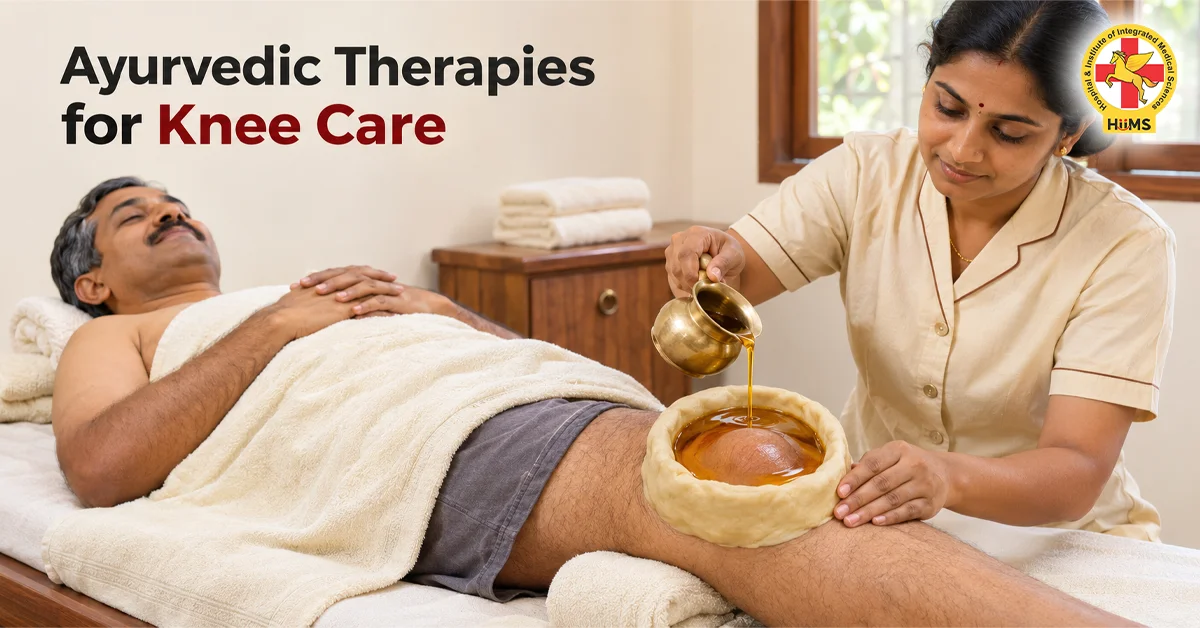
- Janu Basti: A ring of dough is placed around the knee. Warm herbal oil is then poured inside it. The warmth helps ease stiffness and relax tight muscles.
- Patra Potli Swedan: Bundles of warm herbal leaves along with herbal oil are pressed on the knee. This support blood flow and help the joint relax.
- Lepam: A herbal paste is made to apply over the knees. It helps ease swelling and discomfort.
- Abhyanga and Swedana: A warm herbal oil massage comes first, and herbal steam follows. Together they loosen stiff joint and relax tense muscles.
- Herbal support: Doctors may suggest herbs such as Shallaki, Guggulu, Ashwagandha or Nirgundi. You take them only under supervision.
- pH-balanced diet: This plan uses fresh, plant-based and easy-to-digest food. It also cuts down on processed and oily food.
- Yoga and lifestyle: Gentle yoga, regular sleep and steady routine support the joints and ease stress.
Knee joint pain treatment here starts with a doctor’s assessment, so the plan fits your knee. Care is personal and results vary. These therapies work as supportive care.
Conclusion
Knee pain symptoms often build slowly, so many people wait too long. Start with small habits and note when the pain gets worse. If the pain continues, asking a doctor is a proactive way to care for your joints. Knee pain treatment in Ranchi work best when it is combined with lifestyle changes.
Start your knee care at Jeena Sikho HiiMS Ranchi. Visit the clinic in person or book a VOPD (video consultation) to receive personalised guidance from home.

FAQs
1. Why does my knee hurt while walking?
Common causes are cartilage wear, ligament strain, extra weight and weak thigh muscles. A doctor can confirm the cause after an exam.
2. Is it safe to walk with knee pain?
Gentle walking on flat ground is usually fine for mild pain. Stop if the pain turns sharp, and see a doctor if it lasts for weeks.
3. When should I see a doctor for knee pain?
See a doctor if the pain lasts more than two weeks, the knee swells or it gives way. Also seek care after an injury.
4. Can I get advice through a video consultation?
Yes. A video consultation (VOPD) lets you share reports and discuss your care from home. The doctor will tell you if an in-person visit is needed.
5. What does knee care at Jeena Sikho HiiMS Ranchi include?
It includes therapies such as Janu Basti and Patra Pottali Swedan, herbal support, a pH-balanced diet and yoga. It runs alongside regular medical advice.