
Doctors check your blood pressure first, before anything else. Ever noticed that? There is a reason for it. This one small reading tells them a lot about your heart, your blood vessels, and how well your body is working on that day. If the number goes too high or too low, it can point to a health problem hiding below the surface.
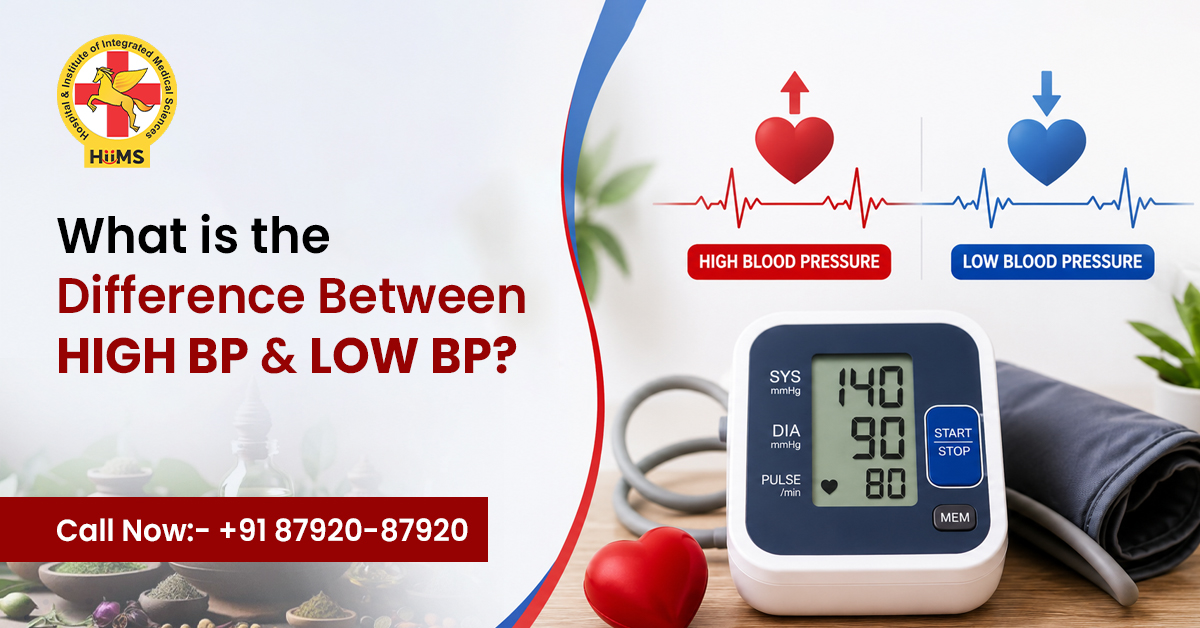
High and low blood pressure both affect the way blood moves in your body, but they affect it in opposite ways. One pushes strongly on the blood vessels. The other does not push very hard enough. Once you understand high BP vs low BP, you can spot the early signs faster and take the right steps instead of ignoring them as normal tiredness.
In this blog, we will look at what blood pressure means, how these two conditions are different, what symptoms and causes you should know, and when it is time to see a doctor.
What Is Blood Pressure?
Your heart works like a small pump. Every time it beats, it pushes blood through your body. This flowing blood pushes against the walls of your blood vessels, and that push is what we call blood pressure.
When you get your BP checked, you see two numbers. The upper number is systolic pressure. It shows the force when your heart beats and pushes blood out. The lower number is diastolic pressure. It shows the force when your heart rests between two beats.
A healthy reading is usually close to 120/80 mmHg. Keeping your blood pressure levels in this range is important because your brain, kidneys, and every other organ need a steady supply of blood to work properly.
High BP vs Low BP – Understanding the Main Difference
High blood pressure, also called hypertension, happens when blood pushes too hard against your artery walls. Over time, this extra pressure can damage the arteries and tire out the heart.
Low blood pressure, or hypotension, works the other way. Here, the pressure is too weak, so organs like the brain do not get enough blood or oxygen on time.
In simple words, the difference between high BP and low BP is about too much force versus too little force. But both problems disturb the same balance your body needs to stay healthy.
Symptoms That Can Help You Identify the Difference
Common Signs of High Blood Pressure
High BP usually does not show any clear signs in the early stage. That is why people often ignore it for years. But when the numbers go very high, a person may feel a strong headache, tightness in the chest, blurry eyesight, or problems with breathing.
Common Signs of Low Blood Pressure
Low BP shows up faster than high BP. Common signs are sudden dizziness, weakness, fainting, blurred vision, feeling sick in the stomach, and tiredness that does not go away even after rest.
Why Symptoms Alone Are Not Enough
Symptoms can be missing, or they can look the same for both conditions. So you cannot always trust how you feel. Checking your blood pressure levels regularly with a machine gives a much clearer answer than guessing.
What Causes High and Low Blood Pressure?
Common Reasons Behind High Blood Pressure
Too much stress, extra salt in food, sitting for long hours without movement, unhealthy eating habits, and growing age along with family history are the main reasons behind rising blood pressure.
Common Reasons Behind Low Blood Pressure
Not drinking enough water, lack of proper nutrition, skipping meals for a long time, certain illnesses, and some medicines can pull your blood pressure down below the normal level.
When Should You Consult a Doctor?
You should see a doctor if your readings stay high for many days, if you feel dizzy or faint often, if a strong headache comes with a very high reading, if there is chest discomfort, or if your blood pressure changes suddenly without any reason.
How Jeena Sikho HiiMS Hospital Pune Supports Blood Pressure Management
At Jeena Sikho HiiMS Hospital Pune, blood pressure treatment is not just about simply noting down a number. The doctors here first understand your body type (prakriti), food habits, stress levels, sleep pattern, and daily routine. Then they suggest a plan made for your body, not a generic plan.
This plan may include Ayurvedic consultation, diet guidance, small lifestyle changes, yoga, and Panchakarma therapy if needed. The goal is to bring your body back into balance in a natural way, not just hide the symptoms for some time.
Conclusion
In short, high BP vs low BP are two separate problems, but both need proper attention. High BP quietly damages your arteries over the years. Low BP can make you feel dizzy or unwell within minutes. Checking your blood pressure regularly and visiting a doctor on time can protect your heart in the long run.
If you want expert guidance for your case, you can also book a VOPD consultation with the doctors at Jeena Sikho HiiMS and get proper support for your blood pressure treatment.
 FAQs
FAQs
1. Can high blood pressure suddenly become low?
Certain medicines, dehydration, or a sudden health issue can drop your BP quickly, so any sudden change should be checked by a doctor right away.
2. Which is more dangerous, high BP or low BP?
Both can be risky in their own way, since high BP silently damages your arteries while low BP can cause sudden fainting or weakness.
3. How often should blood pressure be checked?
Most healthy adults should get it checked every few months, though your doctor may ask you to check it more often based on your health.
4. Can Ayurveda help manage blood pressure naturally?
Ayurveda works on diet, daily routine, and therapies like Panchakarma to slowly bring your blood circulation and blood pressure back into balance.
5. What is considered a normal blood pressure reading?
A reading close to 120/80 mmHg is generally seen as healthy, though it can vary a little based on your age and gender.