

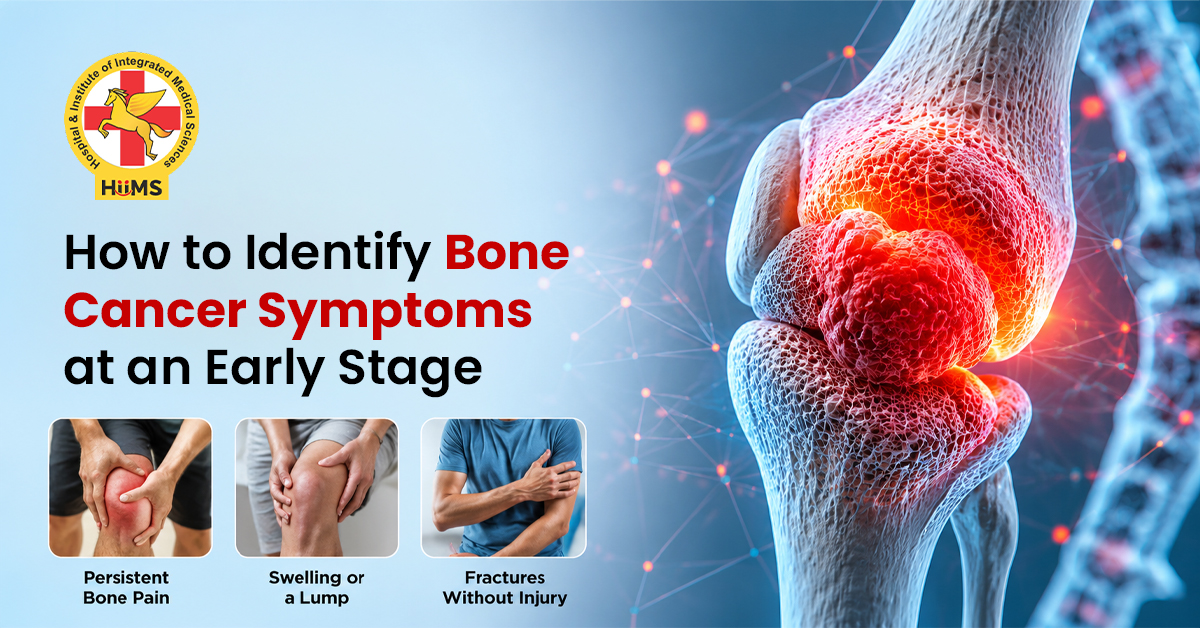
Four major bone cancer symptoms can help with early detection of bone cancer: constant pain in the bones, swelling or a visible lump near a joint, bone weakness or sudden fractures and persistent fatigue with unexpected weight loss. While these symptoms are frequently caused by non-cancerous conditions like minor sports injuries or arthritis, getting a professional bone cancer diagnosis is necessary if they do not fade within two weeks.
Paying close attention to unexplained changes in your body is natural but searching for symptoms online can often cause unnecessary anxiety. It is important to remember that knowing exactly what to look for brings clarity rather than fear. By understanding how to read your body’s signals early, you can take control of your wellness journey safely, effectively and with total peace of mind. In this blog, we will explore bone cancer symptoms and what steps you can take.
What Are the Earliest Bone Cancer Symptoms?
Catching bone cancer symptoms early depends on knowing how your bones feel under daily strain versus when they are sending a true distress signal. Because early detection heavily relies on tracking changes, here is each primary symptom detailed from its earliest phase:
Persistent and Progressive Bone Pain
This is the most common early sign. Initially, the pain may not be constant; it might come and go or feel like a dull ache after physical activity. However, as the tumour grows, the pain becomes a steady, deep throbbing that worsens during rest and becomes particularly intense at night, disrupting your sleep. Unlike a muscle strain, it does not improve with massage, elevation or standard painkillers.
Swelling and Lumps near a joint
You may notice a distinct swelling, stiffness or a firm immovable lump in the affected area weeks after the initial pain begins. If the tumour is located near a joint such as the knee or shoulder, it can limit your normal range of motion and can make everyday movement difficult. The skin over the lump might also look red, feel unusually warm to the touch, or feel highly sensitive and tender when light pressure is applied.
Unexplained Bone Weakness and Fractures
Cancer weakens the internal architecture of the bone from the inside out. Even if you do not feel severe pain initially, the bone becomes structurally brittle. This can lead to what doctors call a ‘pathological fracture’, a sudden break or crack caused by an incredibly minor everyday movement, a slight slip, or no identifiable injury at all. A sudden, sharp spike in pain after a minor twist often points to this structural weakness.
Systemic Body Changes (Fatigue and Weight Loss)
When a tumour develops, it alters your body’s entire metabolism and drains your energy reserves. This causes a deep, systemic fatigue that does not go away no matter how much rest you get. You may also find that you suddenly lose weight for no apparent reason and have recurring fevers or heavy night sweats that leave you feeling drained.
What Causes Bone Cancer and Who Is at Risk?
While the exact cellular triggers that cause bone cells to mutate are still being studied, understanding potential bone cancer causes helps you stay highly proactive about your long-term skeletal health.
The major risk factors include genetic predisposition (such as certain inherited syndromes), previous exposure to high-dose radiation therapy for other conditions, or pre-existing chronic bone diseases such as Paget’s disease. Knowing these factors makes you proactive about your long-term bone health.
How to Tell the Difference Between Bone Cancer and Regular Aches
It is easy to mistake early bone warning signs for regular wear and tear, muscle strains or minor joint inflammation. Normal muscle or joint pain usually behaves predictably, it reacts well to basic rest, ice packs, or temporary care and completely fades away within a few days.
The key difference with early bone cancer symptoms is that they are progressive and persistent. The pain does not care if you are resting or active, it steadily gets worse over several weeks, signalling that something deeper needs attention.
How HiiMS Helps Fight Bone Cancer in Its Early Stages
At HiiMS, their holistic approach to care treats the whole body and not just one symptom. A comprehensive, natural bone cancer treatment framework focuses on shifting your internal environment to help your body heal itself from within.
- Panchakarma: Specialised, natural therapies that purify the bloodstream and calm systemic inflammation naturally to flush out deep-seated toxins from your cells.
- Golden Therapy: An Ayurvedic detox in which patients churn a raw paste of turmeric, neem and banyan leaves with their bare feet. It induces deep cellular detox and strengthens the immune system.
- Diet and lifestyle changes: A raw plant-based diet and exposure to the morning sun to naturally regenerate healthy cells and eliminate the harmful ones. Specialised breathing exercises, like Anulom Vilom, that increase oxygen intake help alleviate bone pain naturally.
- Herbal Support: Uses natural herbs like ashwagandha, turmeric, giloy and manjistha to reduce deep bone inflammation, promote marrow well-being, and safely enhance cellular immunity.
Conclusion
An unexpected health symptom is curable, especially when you catch it early and address it with a balanced, full-body approach. Reclaiming your health starts with stepping onto a structured, reliable path toward true recovery.
If you notice persistent bone pain or changes that feel different from a normal ache, do not let worry delay your peace of mind. You can easily take a secure, completely private consultation through the VOPD (Video Consultation) service by Jeena Sikho. And connect directly with trusted wellness experts from the comfort of your home to get the clear, compassionate guidance you deserve.

FAQs
- What is the most common early sign of bone cancer?
The most common early sign is deep, persistent bone pain that worsens at night or during rest and does not improve with standard painkillers.
- How do you distinguish bone cancer from regular aches?
Regular aches usually improve within a few days with rest and ice. Bone cancer pain is progressive, steadily worsens over weeks, and does not respond to standard pain remedies.
- What are the primary bone cancer causes or risk factors?
While the exact cellular causes are unclear, key risk factors include genetic predispositions, chronic bone disorders, and prior high-dose radiation exposure.
- How does Golden Therapy aid in bone cancer treatment?
It uses a specialised raw herbal foot-churning protocol to draw out cellular toxins, purify the body internally, and boost natural immunity.
- How can I consult a wellness expert privately from home?
You can instantly book a completely secure and private video consultation through the VOPD service by Jeena Sikho to receive expert guidance from home.