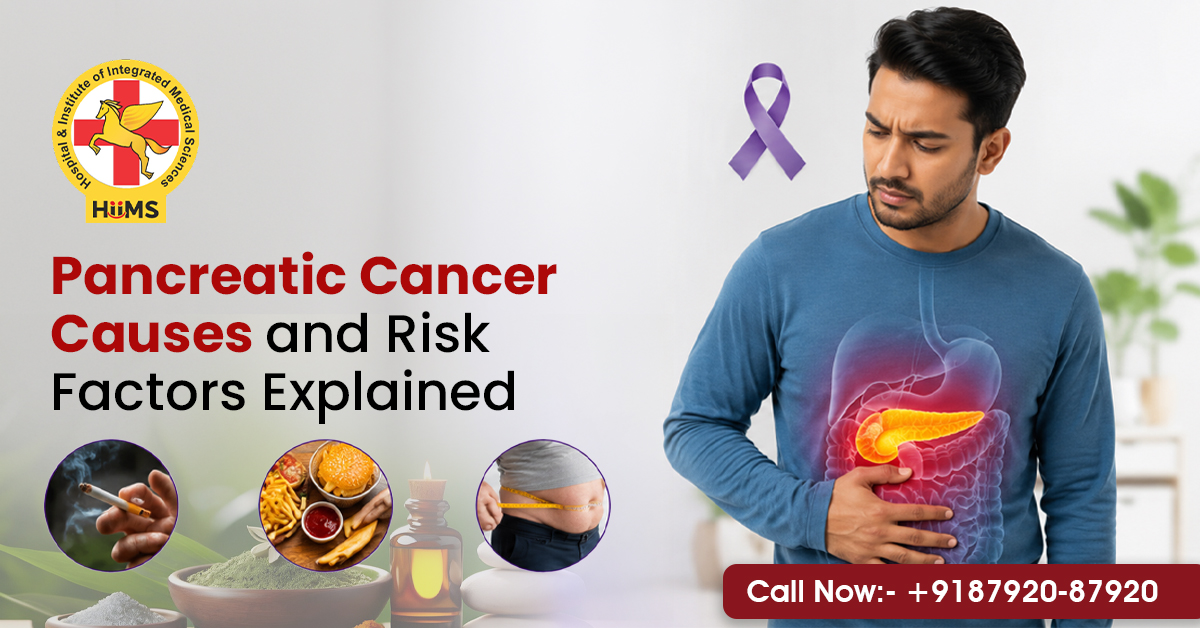

The pancreas is a small organ located behind the stomach, but it has an important role in everyday health. It produces enzymes that help digest food and hormones such as insulin that help control blood sugar. When abnormal cells in the pancreas start growing and multiplying beyond normal control, pancreatic cancer can develop.
The exact reason this happens is not the same for every person, which often makes people wonder what causes pancreatic cancer in the first place. Certain health conditions, inherited changes, tobacco use, excess body weight and other factors can raise the chances, but having a risk factor does not mean that cancer will definitely develop. Understanding these connections can help people take their health more seriously and discuss concerns at the right time.
In this blog, we will look at pancreatic cancer causes, important risk factors and the Ayurvedic approach to maintaining overall pancreatic wellness.
What Happens Inside the Pancreas When Cancer Develops?
Healthy cells follow an organised process. They grow when the body needs them, divide to create new cells and eventually die when they are no longer required. Cancer can develop when changes occur in the DNA that controls these activities. The altered cells may continue growing when they should stop and may survive longer than normal cells, eventually forming a tumour.
This also explains why doctors do not point to one single cause in every patient. Some changes develop during a person’s lifetime, while certain genetic changes can be inherited. Therefore, a risk factor should be understood as something that can increase the possibility of disease, not as proof that it directly caused cancer.
Can One Thing Alone Cause Pancreatic Cancer?
It is difficult to connect pancreatic cancer to one particular habit or health problem. Different factors may play a part, and their effect can vary from one person to another. That is why doctors consider several parts of a person’s health when looking at the causes of pancreatic cancer, instead of blaming a single food or lifestyle choice.
What Are the Main Pancreatic Cancer Causes?
There is no single reason that applies to everyone, but some conditions and exposures are closely associated with a higher risk.
Long-Term Inflammation of the Pancreas
Chronic pancreatitis means that the pancreas remains inflamed for a long period. Repeated inflammation can affect pancreatic tissue and is recognised as an important risk factor for pancreatic cancer. People with a history of chronic pancreatitis should therefore discuss their condition and any continuing symptoms with a healthcare professional.
Smoking and Tobacco Exposure
Smoking is among the better-established avoidable pancreatic cancer risk factors. Tobacco contains harmful chemicals that can damage cells, and people who smoke have a higher risk of developing pancreatic cancer than those who have never smoked. Moving away from tobacco is therefore an important step for long-term health.
Diabetes and Pancreatic Health
Type 2 diabetes has been linked with a higher risk of pancreatic cancer. Still, diabetes alone does not explain why cancer develops in a particular person. Other things, including weight, family history and general metabolic health, can also matter when doctors assess the person’s overall risk.
Family History and Inherited Changes
Some families have a higher occurrence of pancreatic cancer because certain genetic changes can be passed from one generation to another. A strong family history or an inherited condition may therefore increase an individual’s risk and may make a discussion with a doctor about genetic counselling appropriate.
Pancreatic Cancer Risk Factors That Can Increase Your Chances
Some pancreatic cancer risk factors cannot be changed, while others are connected with everyday choices and overall health. Age is one important factor because the likelihood of pancreatic cancer increases as people grow older. Family history and inherited genetic conditions also fall into the category that a person cannot control.
Excess body weight is another recognised factor. Smoking, chronic pancreatitis and diabetes are also linked with increased risk. Certain workplace chemical exposures may contribute as well, particularly with prolonged exposure.
Which Risk Factors Can You Actually Change?
Not every risk can be removed, but some daily choices are within your control. Avoiding tobacco, maintaining a healthy body weight, staying physically active and following a balanced eating pattern can contribute to better overall health. These steps cannot guarantee protection from cancer, yet they can help reduce certain avoidable risks and support healthier living.
Can Understanding Risk Factors Help You Act Earlier?
Knowing the pancreatic cancer causes and related risks can make people more attentive to changes in their health. Persistent abdominal or back discomfort, unexplained weight loss, jaundice or noticeable changes in digestion deserve medical attention, although these symptoms can occur with many other conditions as well. Pancreatic cancer can be difficult to detect early, so unusual or continuing changes should not simply be put down to routine tiredness or ageing.
Understanding Pancreatic Health at Jeena Sikho HiiMS Muzaffarnagar
At Jeena Sikho HiiMS Muzaffarnagar, the focus is on understanding the individual rather than following the same plan for everyone. Ayurveda gives importance to digestion, daily routine, food habits and the balance of the body as part of overall wellness. Alongside appropriate medical evaluation, qualified practitioners can guide personalised Ayurvedic and lifestyle practices according to a person’s health condition. Such guidance should complement necessary cancer care rather than replace medical diagnosis or treatment.
Conclusion
The causes of pancreatic cancer are not limited to one habit, food or health condition. Changes within pancreatic cells can develop through different pathways, while factors such as smoking, chronic pancreatitis, diabetes, excess body weight, age and family or genetic history can influence risk.
Some risk factors are simply beyond our control, while others are connected with the way we live each day. Avoiding unhealthy habits and getting the right medical advice can make a difference to overall health. A qualified Ayurvedic practitioner can also guide suitable changes in diet and daily routine based on the person’s individual needs.
At Jeena Sikho HiiMS Muzaffarnagar, you can also opt for an online video consultation (VOPD) to discuss your health concerns with expert doctors and understand the next appropriate step for your care.

FAQs
Q1: What are the common risk factors for pancreatic cancer?
Smoking, chronic pancreatitis, diabetes, excess body weight, increasing age and family or genetic history are among the recognised factors linked with higher risk.
Q2: Does having diabetes mean a person will develop pancreatic cancer?
Diabetes is associated with a higher risk, but many people with diabetes never develop pancreatic cancer, so the relationship is not a simple cause-and-effect connection.
Q3: Can smoking affect pancreatic health?
Regular tobacco use is a well-established risk factor for pancreatic cancer, making quitting an important step towards reducing avoidable health risks.
Q4: Does family history matter in pancreatic cancer?
A strong family history may indicate increased risk, particularly when pancreatic cancer or certain inherited conditions occur among close relatives.
Q5: How can a person support overall pancreatic health?
Avoiding tobacco, maintaining a healthy weight, staying active, eating a balanced diet and discussing persistent health changes with a doctor can support better overall health.