
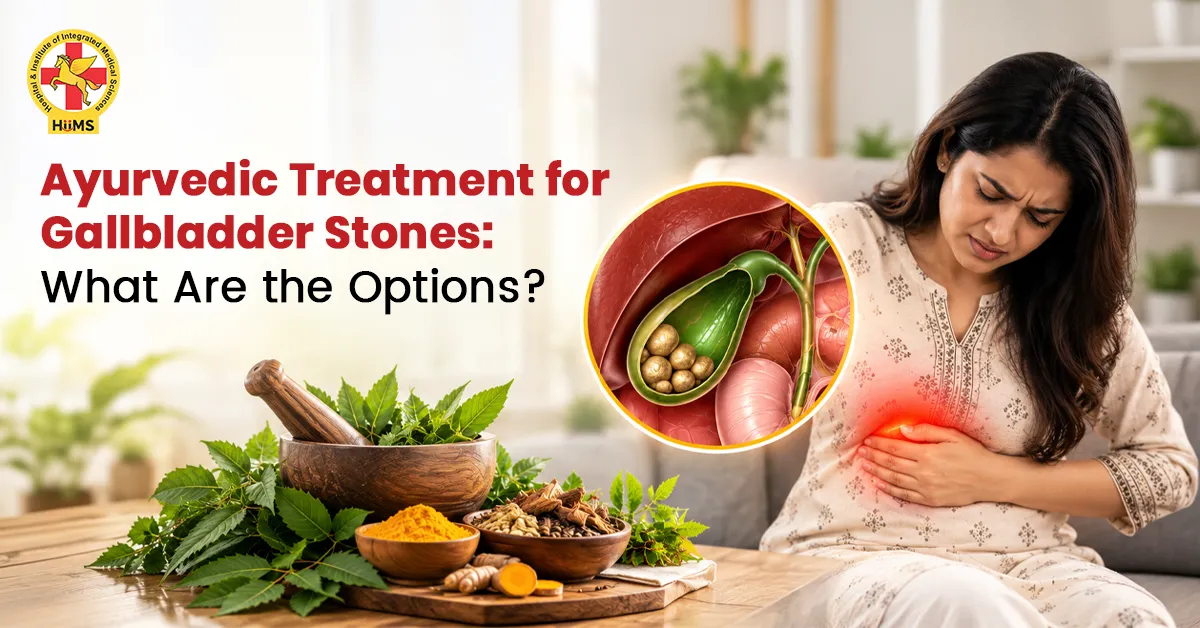

Gallbladder stones are common, and many people find them by chance on a routine ultrasound. When this happens, surgery is often the first word they hear. However, it is not the only option people ask about. Ayurvedic treatment for gallbladder stones focuses on digestion, diet, and the root cause.
In fact, gallstones are quite common in North India. A large survey in Uttar Pradesh and Bihar interviewed over 22,000 adults. Scans found gallbladder problems in about 6 in every 100 people. Moreover, gallstones were nearly three times more common in women (5.59%) than in men (1.99%).
Rich, oily food and long gaps between meals are common too. So more people now look for root-cause care for gallstones. This blog explains the causes, signs, care options, and how Ayurveda helps.
What Are Gallbladder Stones?
The gallbladder is a small, pear-shaped organ under the liver. It stores bile, a fluid that helps the body digest fat.
Sometimes bile has too much cholesterol in it. As a result, it hardens into stones. These can be as small as grains of sand or as large as a marble. Most are made of cholesterol. A few are dark pigment stones.
Many stones cause no trouble at all. That is why doctors call them silent stones. Others, however, block the flow of bile and cause pain.
Causes of Gallbladder Stones
Gallstones form slowly, over years. A few things raise the risk:
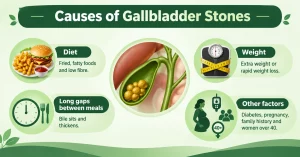
- Diet: Fried, fatty foods and too little fibre make bile heavier.
- Weight: Extra weight raises cholesterol in bile. On the other hand, crash diets and rapid weight loss can also cause stones.
- Long gaps between meals: When the gallbladder doesn’t empty often, bile sits and thickens.
- Other factors: Diabetes, pregnancy, and family history also play a part. Besides, women over 40 face a higher risk.
Signs of Gallbladder Stones to Watch For
When stones block bile flow, symptoms appear. These include pain in the upper right abdomen, often after a heavy meal. Also, the pain may spread to the back or right shoulder. In addition, bloating, gas, and nausea are common.
Some signs of gallbladder stones require urgent medical care. Go to a hospital right away if the pain lasts for hours or comes with fever and chills. Similarly, yellow eyes or skin and dark urine need quick care.
Common Treatment Options and Their Limits
Doctors usually suggest one of three paths. With silent stones, they often just watch and wait. If the stones are small and made of cholesterol, doctors may give bile acid tablets. However, painful or tricky stones often need surgery to remove the gallbladder.
Still, each option has its limits. Surgery takes out the organ itself. After it, some people notice changes in digestion. Tablets, meanwhile, take months and suit only some stones. Also, the stones can come back.
That is why many people look for a natural treatment for gallbladder stones. They want care that helps digestion and lowers the risk of new stones.
Gallbladder Stone Treatment in Ayurveda: The Root-Cause View
Ayurveda calls gallstones Pittashmari. The word means stones made from Pitta, or bile. It links them to high Pitta and sticky Kapha. Thus, bile becomes heavy and slow. In addition, weak agni, or digestive fire, leads to ama. This sticky waste adds to the problem.
So ayurvedic treatment for gallbladder stones has three goals. First, it corrects digestion. Second, it keeps bile flowing smoothly. Third, it aims to prevent new stones.
A 2025 case report followed one patient. After 45 days of Ayurvedic care the stone shrank from 12.6 mm to 6.8 mm. This was just one case, but the results were encouraging.
Ayurvedic treatment for gallstones works best with regular ultrasound follow-ups. Jeena Sikho HiiMS in Muzaffarnagar builds its gallbladder care on this root-cause idea.
Want to know how Ayurveda supports gallbladder health? Talk to our team.

Ayurvedic Treatment for Gallstones in Muzaffarnagar at Jeena Sikho HiiMS
Jeena Sikho HiiMS is an integrated hospital, which brings root-cause gallbladder care to muzaffarnagar. It combines Ayurveda, Naturopathy, and modern science. First, doctors check your scan and liver test reports. They also check your pulse, tongue and digestion. Then they plan your care. The plan depends on stone size, symptoms, and your health.
Panchakarma
Panchakarma helps clear extra Pitta and ama from the body.
- Snehapana and Swedana: These are preparation steps. Medicated ghee and gentle heat loosen ama. They also prepare the body for the cleanse.
- Virechana: This planned cleanse clears the bowels. In doing so, it removes extra Pitta and supports smooth bile flow. Ayurveda sees it as the key step for Pittashmari.
- Basti: In some cases, Basti helps balance Vata and supports digestion.
The doctor picks the right steps for you after a check-up.
Herbal Support
Ayurveda has long used certain herbs for the liver and bile:
- Kutki: This bitter herb supports the liver and healthy bile flow
- Bhumi Amla: It supports the liver and better digestion
- Punarnava: It helps ease swelling and keeps fluids in balance
- Triphala: It keeps bowels regular and cleans gently
- Varuna and Gokshura: Ayurveda has long used these for stones
Take these herbs only with a doctor’s advice.
pH-Balanced Diet
Equally, food plays a big role here. At Jeena Sikho HiiMS, the pH-balanced diet is a plant-based plan. It uses fresh, whole, unprocessed foods instead of packaged ones. Each meal has two plates. Plate 1 holds raw, seasonal produce. Plate 2 holds normal home-cooked meal or a millet recipe.
Breakfast (7:00 to 9:00 AM)
- Plate 1: 3 to 5 types of seasonal fruit.
- Plate 2: A home meal or millet recipe such as poha, daliya or upma.
Lunch (1:00 to 2:00 PM)
- Plate 1: A salad of 3 to 5 types of seasonal vegetables.
- Plate 2: A home meal or millet recipe, such as khichdi, chapati, dhokla or daliya.
Dinner (before sunset)
- Plate 1: A salad of fruits and vegetables, with 3 to 5 types.
- Plate 2: A bowl of homemade vegetable soup.
The portion of Plate 1 depends on your body weight. The HiiMS team sets it for each person. Fixed meal times also mean no long gaps between meals. The plan works best with regular activity, good sleep, and stress management.
Lifestyle Balance and Yoga
Likewise, daily habits help keep digestion and bile flow steady.
- Yoga: Pawanmuktasana, Bhujangasana and Ardha Matsyendrasana support digestion. Gentle Kapalbhati can also help, but skip it during pain.
- Walking: A 30-minute walk each day helps with weight and digestion.
- Weight: Lose weight slowly and steadily. In contrast crash diets can cause kidney stones.
- Dinner: Eat an early, light dinner before sunset.
Follow-Ups and Monitoring
Regular scans and liver tests help track stone size. Generally, most people need a scan every few months. This way, the doctor can compare them and see what is working. Then the doctor changes your plan as needed.
Ayurvedic treatment for gallbladder stones supports the body, but some cases need surgery. For instance, stones with infection, jaundice, pancreas swelling, or repeated attacks need a surgeon’s view. The doctor makes a plan after a check-up, and results vary.
Conclusion
Gallstones are common, especially in women. They are closely linked to diet, weight, and digestion. Options range from “watch and wait” to surgery. Alongside these, Ayurveda works on the root cause with Virechana, herbs, diet, and daily habits. At the same time warning signs always need urgent care. Overall, Ayurvedic treatment for gallbladder stones supports long-term digestion and bile flow.
Book a VOPD (video consultation) with Jeena Sikho HiiMS Muzaffarnagar experts for holistic guidance. The doctor will guide you on therapies, diet, routine and next steps.

FAQs
1. Can gallbladder stones dissolve without surgery?
Some small cholesterol stones may shrink with medicines or diet changes. However larger or complicated stones often need surgery, so follow your doctor’s advice.
2. What should I avoid eating with gallstones?
Avoid fried, oily and packaged food, heavy sweets, and long gaps between meals.
3. Is Virechana safe for gallstone patients?
Virechana is planned only after a doctor’s check-up. The doctor decides if it suits your stone size and health.
4. Can gallstones come back?
Yes, new stones can form if diet and digestion stay the same. Regular meals, a healthy weight, and follow-ups help lower this risk.
5. Where can I get Ayurvedic treatment for gallstones in Muzaffarnagar?
Jeena Sikho HiiMS in muzaffarnagar offers root-cause gallbladder care. It combines Ayurveda, Naturopathy, and modern science.