

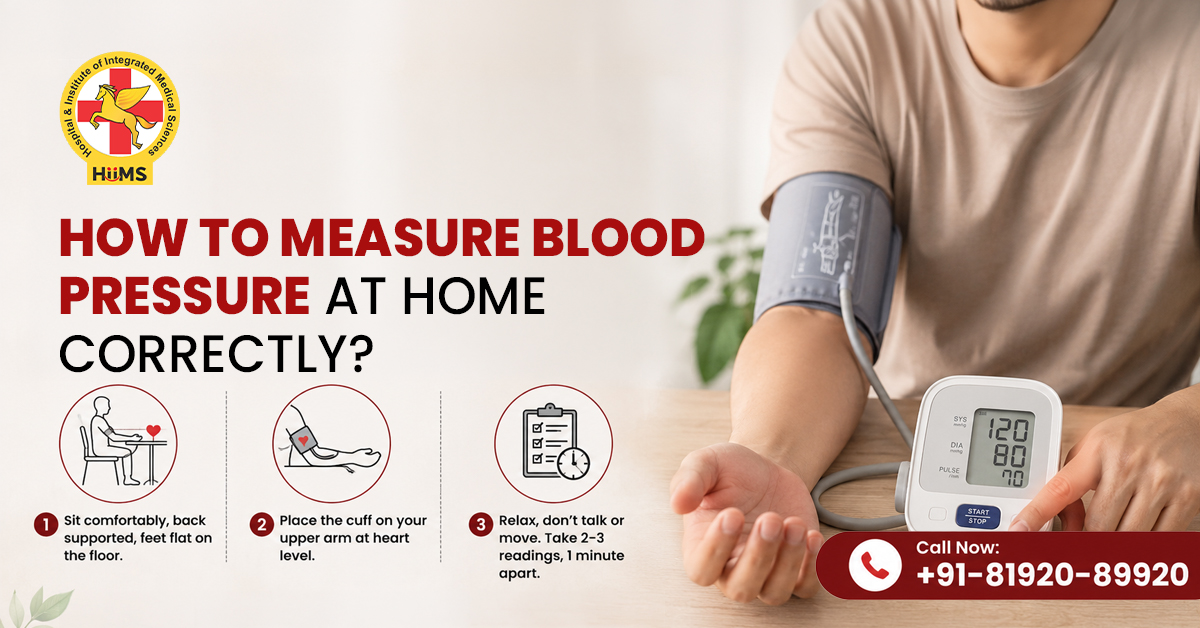
A single high reading at the doctor’s office doesn’t always tell the full story; sometimes it’s just nerves, what doctors call white coat hypertension. Knowing how to measure blood pressure properly at home gives you a far more accurate, day-to-day picture of what’s actually going on.
But there’s a right way and a wrong way to do this, and small mistakes, a full bladder, talking during the reading, a badly fitted cuff, can throw off your numbers more than you’d expect. Here’s exactly how to do it right.
Why Bother Measuring Blood Pressure at Home at All?
Doctors care less about one isolated reading and more about your average over several days. Home readings genuinely help catch patterns your doctor might miss during a single visit, and they can also flag whether high readings only happen in a clinical setting, which affects a surprising number of people.
What You Need Before You Start
Getting blood pressure measurement at home right starts with the right equipment. A validated upper-arm monitor is the gold standard, wrist and finger devices tend to be less reliable. Make sure the cuff actually fits your arm, the inflatable part should wrap around roughly 80% of your upper arm. A cuff that’s too small will genuinely push your reading higher than it should be.
How to Measure Blood Pressure at Home: Step by Step
Here’s the actual process, in order:
- Avoid caffeine, exercise, or smoking for at least 30 minutes before measuring, all three can temporarily raise your reading.
- Empty your bladder first. A full bladder alone can raise your reading by 10-15 mmHg, more than most people realise.
- Sit quietly for 5 minutes in a calm space, no phone, no conversation, before you even start.
- Sit correctly. Back supported, feet flat on the floor, legs uncrossed.
- Rest your arm on a flat surface at heart level. Prop it on a pillow if needed, an arm that’s too low or too high skews the reading.
- Wrap the cuff on bare skin, not over a sleeve, with the bottom edge positioned just above the bend of your elbow.
- Stay still and silent during the actual measurement, talking can raise your reading noticeably.
- Take two readings, about a minute apart, and don’t panic if the first one’s slightly higher than the second, that’s completely normal.
Common Mistakes That Throw Off Your Reading
A few habits quietly sabotage accurate readings more often than people expect:
- Measuring right after a stressful conversation or a rushed moment
- Talking or checking your phone mid-reading
- Using a cuff that doesn’t actually fit your arm size
- Taking just one reading and treating it as gospel instead of averaging a few
What’s the Correct Way to Measure Blood Pressure If You’re on Medication?
The correct way to measure blood pressure when you’re on medication involves timing it consistently, ideally once before your morning dose and again roughly 12 hours later.
This gives your doctor a clearer picture of how well your medication’s actually working through the day, rather than just a single snapshot that might miss important fluctuations.
How Often Should You Check Blood Pressure at Home?
For most people managing hypertension twice daily, morning and evening, with two or three readings each time, gives a genuinely useful picture.
Measure at roughly the same time each day for consistency, and bring your monitor to your doctor’s office once a year to check it against their equipment, home devices can drift out of calibration over time without you noticing.
Is There an Ayurvedic Angle to Manage What You Measure?
Once you know how to check blood pressure at home accurately and consistently, the next question is usually what to actually do about the numbers. Ayurveda looks at high BP through the lens of stress, digestion, and circulation working together, rather than just the number itself.
At Jeena Sikho HiiMS Muzaffarnagar, this typically means combining dietary correction, stress management, and herbal support alongside whatever your doctor’s already prescribed, never as a replacement for consistent monitoring or medication.
Conclusion
Getting accurate readings at home really comes down to a few consistent habits: quiet rest beforehand, correct posture, a properly fitted cuff, and taking more than one reading each time.
Once you’ve got reliable numbers to work with, it’s a lot easier to have a genuinely useful conversation with your doctor or explore how Ayurvedic support could fit alongside your existing care. If you want guidance on managing what your readings are actually telling you, feel free to book a VOPD consultation with Jeena Sikho HiiMS Muzaffarnagar and talk it through with our team.

FAQs
1. Why is my home blood pressure reading different from my doctor’s office reading?
It could be white coat hypertension, or simply that home conditions, quiet, familiar surroundings, tend to give a more relaxed, accurate baseline.
2. Does it matter which arm I use to measure my blood pressure at home?
Not usually, but it’s worth checking both arms once initially and using whichever gave the higher reading going forward.
3. Does a full bladder affect my blood pressure reading?
Yes, really, it can increase your reading by 10-15 mmHg, so it is worth emptying the bladder prior to measuring.
4. Are wrist blood pressure monitors accurate?
They’re generally less reliable than validated upper-arm monitors, though they can work as an alternative if an upper-arm cuff doesn’t fit well.
5. How long should I wait after exercise before checking my blood pressure?
At least 30 minutes, exercise temporarily raises blood pressure and can give you falsely high reading.