
Doctor says “cirrhosis”, and suddenly every relative has a remedy to suggest. A kadha from one person, a herbal packet from another, and no clear idea of what is safe. It helps to slow down and sort this out first.
Here we look at what cirrhosis is, how it is managed day to day, and where Ayurveda fits in. If you really want to know about Ayurvedic care for liver cirrhosis, we will tell you what it can offer, what research says so far, and which precautions matter. Your liver specialist’s advice always comes first.
What is Liver Cirrhosis?
Cirrhosis means the liver has developed scar tissue after long-term damage. Scar tissue does not do the work of normal liver cells, so over time the liver finds it harder to clean the blood, make proteins and help digest food.
The liver is good at coping, which is why cirrhosis can stay quiet for years before it shows up as tiredness, swelling or a change on a routine test.
Want to discuss your problem?
Causes of Liver Cirrhosis
Many different things can scar the liver. The most common ones are
- Heavy alcohol use,
- Long-term hepatitis B or C infection,
- Fatty liver linked to weight,
- Diabetes
- High cholesterol
- Autoimmune liver conditions
- Bile duct problems
- Some inherited conditions
- Certain medicines.
The pattern in India is mixed. A study of 716 hospitalised cirrhosis patients at Dayanand Medical College and Hospital in Ludhiana, published in the Journal of Gastrointestinal Infections, found alcohol behind 49.2% of cases, hepatitis C behind 29.4% and fatty liver behind 13.6%. Hepatitis B accounted for 3.9%. It is one hospital in North India, so numbers will differ elsewhere, but it shows why knowing the causes of liver cirrhosis in your own case matters. The cause decides what the doctor focuses on first.
Liver Cirrhosis Symptoms: What You May Notice
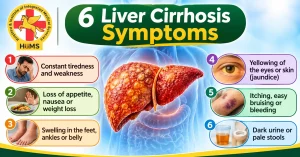
Early cirrhosis often gives no clear signs. When liver cirrhosis symptoms do show up, they usually include:
- Constant tiredness and weakness
- Loss of appetite, nausea or weight loss
- Swelling in the feet, ankles or belly
- Yellowing of the eyes or skin (jaundice)
- Itching, easy bruising or bleeding
- Dark urine or pale stools
Please see a doctor at once if you vomit blood, pass black stools, feel confused or very sleepy, or have a fever with belly pain. These need urgent medical attention, not home remedies.
Stages of Liver Cirrhosis: Compensated and Decompensated
Doctors usually describe the stages of liver cirrhosis in two broad steps. In compensated cirrhosis, the liver is scarred but still manages its work, and many people feel fairly well. In decompensated cirrhosis, complications appear, such as fluid in the belly (ascites), bleeding from swollen veins in the food pipe, jaundice or confusion caused by a build-up of waste in the blood.
Specialists also use scores such as Child-Pugh (classes A, B, and C) and MELD, which are calculated from blood tests such as bilirubin, albumin, and INR, along with signs like ascites. Knowing which stage you are in matters, because what is safe for a person at an early stage may not be safe at a later one. Always ask your doctor for your stage and score.
How Cirrhosis Is Managed Day to Day
Management has one main aim: to keep the liver from getting more damaged and to keep complications under control. In practice, this usually means:
- Dealing with the cause: stopping alcohol completely, antiviral medicines for hepatitis B or C where needed, and bringing weight, sugar and cholesterol into range for fatty liver
- Watching for complications: regular blood tests, a liver ultrasound at intervals your doctor sets, and an endoscopy to check the swollen veins in the food pipe
- Managing fluid: low salt, and water tablets if your doctor prescribes them, when there is swelling in the belly or feet
- Eating enough: small, regular meals with enough protein, since people with cirrhosis tend to lose muscle quickly when they eat too little
- Staying away from strain on the liver: no over-the-counter painkillers like diclofenac or ibuprofen, and no herbal products without review
- Staying protected: vaccines such as hepatitis A and B, as your doctor advises
Everything here is decided by your own doctor, since the right plan changes with your stage.
The Ayurvedic Approach to Liver Health
In Ayurveda, the liver is called Yakrit and is linked with Pitta and with digestion (agni). The Ayurvedic approach to liver health looks at the whole person: what you eat, how well you digest it, your sleep and stress, and your daily routine.
In cirrhosis, this usually means food, lifestyle and gentle therapies for comfort and general well-being, alongside your regular medical care. In cirrhosis, no herb should be started on your own, even a popular one.
Benefits of Ayurvedic Care for Liver Cirrhosis: What It May Offer
Ayurveda does not undo scarring, and we do not present it that way. What it may offer is support in the areas that make daily life easier:
- A structured routine for meals, sleep and rest, which many people find hard to keep on their own
- Guidance on easy-to-digest food that fits your stage, which may help with appetite and how you feel after eating
- Gentle therapies and breathing or yoga practices that may help with stress, sleep and general comfort
- A chance to sit with a doctor who goes through your habits, herbs and home remedies, and tells you what to stop or check first
These are supportive benefits, and they work better when your liver specialist and Ayurveda doctor know about each other’s advice.
Ayurvedic Care for Liver Cirrhosis: Therapies, Diet and Daily Routine
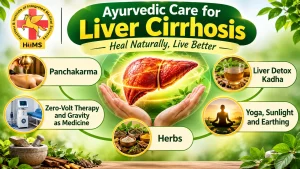
At Jeena Sikho HiiMS Andheri, we offer Ayurvedic support for cirrhosis along with your medical care, not instead of it. Under Acharya Manish Ji’s guidance, this is what we may suggest:
- Panchakarma: Vamana (guided vomiting), Virechana (guided purging), Basti, Nasya and Raktamokshana (bloodletting). In cirrhosis, several of these may not be suitable, especially with ascites, low platelets, weakness or bleeding risk, so the doctor decides case by case and may advise against them.
- Liver Detox Kadha: a 7-day routine we offer to support natural cleansing processes. It is a fresh green juice made with neem, mint, coriander, curry, pipal, guava and banyan leaves, 1 inch of raw turmeric and one seasonal fruit, taken each morning. It is paired with 1.5 tsp of apple cider vinegar twice a day and half-size meals.
- Zero-Volt Therapy and Gravity as Medicine: naturopathy routines that include body positions meant to support circulation.
- Herbs: such as turmeric, guduchi and manjistha, chosen by the doctor after reviewing your reports.
- Yoga, sunlight and earthing: light daily practices for stress and routine.
Food follows Acharya Manish Ji’s two-plate pH-balanced diet. Plate 1 is raw food, like seasonal fruit or a fresh salad. Plate 2 is a cooked meal such as a millet dish or roti with dal and vegetables, and dinner is taken before sunset. The doctor adjusts salt, protein and portions to your stage, since people with ascites often need less salt.
Have a liver checkup for free from HiiMS Andheri Doctors,
Precautions to Follow With Ayurvedic Care for Liver Cirrhosis
- Please check with your liver specialist before the kadha and before any fasting. In cirrhosis, skipping meals or eating too little protein can weaken the body, and raw juices need food safety care.
- Apple cider vinegar can irritate the stomach, and herbs can affect the liver, so show every herb, kadha and supplement to your doctor before you start it.
- Tell the Ayurveda doctor about every medicine you take, and tell your liver specialist about every therapy you try.
- Heat, oil or purging therapies are not right for everyone, especially with swelling in the belly, low platelets or weakness.
- Keep taking your prescribed medicines, and keep your tests on schedule.
Conclusion
Cirrhosis is a long-term condition, and the steps that help most are simple: finding the cause, following your doctor’s plan, eating well and avoiding anything that strains the liver.
Ayurvedic care for liver cirrhosis can add diet and daily routine support when it is planned around your reports and reviewed by your doctor. Please do not stop any prescribed medicine on your own.
Can’t visit in person? Book a VOPD with Jeena Sikho HiiMS and go over your liver reports with a doctor on video call.

FAQs
Q1. Can I take Ayurvedic medicines along with my regular medicines?
Only after your doctors know about both. Some herbs interact with medicines or affect the liver, so get each one reviewed first.
Q2. Is turmeric safe in cirrhosis?
Turmeric in everyday cooking is generally fine. Concentrated capsules or extracts are different, so ask your doctor before using them.
Q3. Do I need to cut down on protein?
Usually not. Many people with cirrhosis need enough protein to keep muscle, but the amount depends on your stage, so follow your doctor’s advice.
Q4. Is fatty liver the same as cirrhosis?
No. Fatty liver is fat buildup and is often an early stage. Cirrhosis is scarring. Fatty liver that stays uncontrolled for years can lead to cirrhosis, which is why it needs attention.
Q5. How often should I get tested?
It depends on your stage, but many people need blood tests every few months and scans or an endoscopy at set intervals. Your liver specialist will set the schedule.