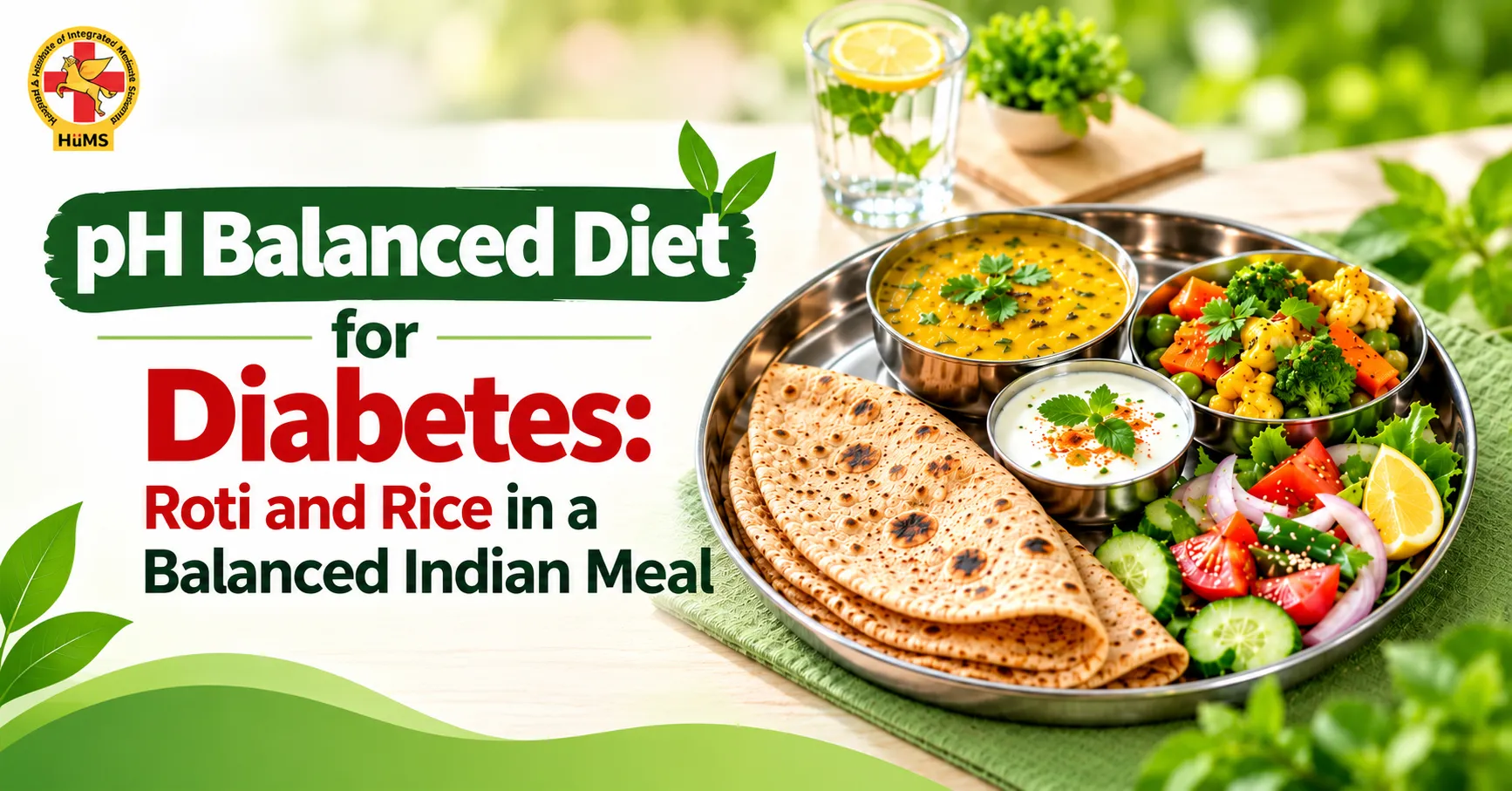

Can you imagine an Indian meal without roti or rice? From dal chawal at lunchtime to hot rotis with sabzi at dinner, these foods are a part of our everyday routine. But when diabetes enters the picture, even a simple meal can bring questions. Should you stop eating rice? Is roti a better choice? And what about the much-discussed pH-balanced diet? Can eating alkaline foods really help manage blood sugar?
The answer may be simpler than you think. You do not always have to give up your favourite foods. What matters is how much you eat, which foods you pair them with, and how balanced your plate is. A balanced diet for diabetes should include fibre rich vegetables, protein, and suitable portions of grains.
What Is a pH Balanced Diet?
A pH-balanced diet, on the other hand, involves eating food that is rich in vegetables, fruits, legumes, nuts, and unprocessed foods. Such a diet emphasises reducing consumption of heavily processed foods, sugar-sweetened beverages, and excessive amounts of refined grains. The concept of a pH diet involves maintaining a balance of acid and alkali in the body through food. Food doesn’t affect the pH of our blood. This is naturally maintained by the lungs and the kidneys.
Does a pH-Balanced Diet for Diabetes Help?
A pH-balanced diet for diabetes may be able to help improve the overall quality of the diet. Adding fibre-rich vegetables, whole grains, pulses and proteins can help form a balanced diet. Some food habits that need to be followed by people who have diabetes include:
- Choosing whole grain foods instead of depending solely on refined flour.
- Inclusion of vegetables in their lunch and dinner.
- Consuming whole fruits instead of packaged fruit juices.
- Inclusion of proteins such as dal, chana, paneer or tofu.
- The intake of carbohydrates must be maintained properly.
A balanced diet for diabetes is one which needs to be planned as per the medications, physical activity and food preference of the individual. Not all individuals require a restrictive diet.

Can People With Diabetes Eat Roti and Rice?
Yes, it is feasible for those who are experiencing diabetes to take both roti and rice in their diet. Both roti and rice are sources of carbohydrates that produce glucose in the body. The practice of excluding such foods from their diet is not good for them. What is needed is to have the foods in controlled amounts, along with other foods like vegetables and proteins.
1. Choose Whole Grain Roti
Whole wheat atta contains more fibre than refined flour and can be a suitable everyday option. Barley and millet-based rotis may also be included if they suit your dietary needs.
A few practical tips:
- Prefer whole wheat or suitable millet-based rotis.
- Avoid adding excessive ghee or butter.
- Keep roti portions consistent with your meal plan.
- Combine roti with dal, curd, or cooked vegetables.
2. Choose Rice in Suitable Portions
Rice can also be part of an Indian diet for diabetics. Brown rice and other less processed varieties may provide more fibre than polished white rice. However, choosing brown rice does not mean portion sizes no longer matter.
Try measuring your rice portion instead of serving it directly from a large bowl. Combine it with dal, vegetables, and a suitable protein source. Avoid eating a large quantity of rice along with several other carbohydrate-rich foods in the same meal.
3. Can You Eat Roti and Rice Together?
You do not always need to choose between roti and rice. If you enjoy both, divide your carbohydrate portion between them.
For example, you can have a smaller portion of rice with one small roti, dal, and cooked vegetables instead of taking full portions of both grains. The exact quantity should depend on your individual meal plan.
How to Build a Balanced Diet for Diabetes
The diabetes plate method is a simple way to make your meal planning easy. The method allows you to consume all different food groups in an easy manner. The American Diabetes Association suggests some practical ways to balance your meals. A general plate can be segregated into three portions:
- Half of the plate: Non-starchy vegetables: Spinach, cauliflower, cabbage, cucumber, beans, bottle gourd and capsicum are examples of non-starchy vegetables.
- One quarter of the plate: Proteins: According to your food choices, you can eat dal, chana, rajma, sprouts, tofu, paneer and curd for proteins.
- One quarter of the plate: Carbohydrates: For the carbohydrate part of your meal, you can eat roti, rice or any grain of choice. In case you choose both roti and rice, you will have to divide this portion of your plate into two.
The above is only a general guideline. The size of the portions might change according to your medication, blood glucose level, and nutritional needs.
Foods to Include in an Indian Diet for Diabetics
A varied eating pattern can make meals more nutritious and easier to follow. Consider including:
- Vegetables: Spinach, cabbage, beans, cucumber, bottle gourd, and cauliflower.
- Whole grains: whole wheat, barley, millets, and other less processed grains.
- Pulses: Moong dal, masoor dal, chana, and rajma.
- Fruits: Guava, apple, orange, and papaya in suitable portions.
- Nuts and seeds: Almonds, walnuts, flaxseeds, and pumpkin seeds.
- Protein sources: Paneer, tofu, curd, and pulses.
Try to limit sugary drinks, packaged juices, sweets, and foods made mainly with refined flour. Whole fruits are generally a better choice than fruit juices because they retain their fibre.
Sample Indian Meal Plan for Diabetes
Here is a general example of how you can organise your meals:
| Meal | Food options |
| Breakfast | Vegetable dalia or besan chilla with curd |
| Mid-morning | One whole fruit in a suitable portion |
| Lunch | Small portions of roti and rice with dal and vegetables |
| Evening snack | Roasted chana or a small handful of nuts |
| Dinner | Vegetable khichdi with curd or roti with dal and vegetables |
This is just an example of a meal plan. The times and sizes of meals need to be adjusted depending on each person’s requirements. Individuals who take insulin or other medications for diabetes should discuss any changes in carbohydrate intake with their health care provider.
Understanding the PH-Balanced Diet Approach at Jeena Sikho HiiMS
Jeena Sikho HiiMS follows a food-focused wellness approach that includes its pH-balanced diet concept. This approach emphasises natural food choices and a planned eating routine. It includes an initial plate of fruits or raw salad, followed by a cooked meal, according to the prescribed dietary plan.
The approach encourages people to become more aware of their food habits. People with diabetes can have different nutritional needs depending on their medication, blood glucose levels, age, activity, and other health conditions. Before following a restrictive diet or changing your regular meals, seek guidance from a qualified healthcare professional.
Conclusion
A diet for diabetes need not involve giving up all the traditional Indian meals. Rotis and rice can still be consumed daily depending on how portions have been set and combined with other food items. There is promotion for a pH-balanced diet at Jeena Sikho HiiMS, where the food intake is focused on maintaining one’s health. But then again, dieting must also be right for each person’s individual requirement.

FAQs
1. Is a pH-balanced diet good for diabetes?
A pH-balanced diet is not a proven diabetes treatment. However, vegetables, pulses, whole grains, nuts, and whole fruits can be included in a balanced eating pattern.
2. Can people with diabetes eat rice every day?
Many people with diabetes can include rice in their meals. Portion size, food combinations, and individual blood glucose responses should be considered.
3. Which roti is better for people with diabetes?
Whole wheat roti and suitable millet-based rotis can be included in a balanced meal. The overall carbohydrate quantity and portion size remain important.
4. Should people with diabetes avoid fruits?
No. Whole fruits can be included in suitable portions. Whole fruits are generally preferable to fruit juices because they contain fibre.
5. Can a pH-balanced diet replace diabetes medication?
No. A pH-balanced diet cannot replace prescribed diabetes medicines or professional medical care. Always discuss dietary changes with your healthcare professional.