

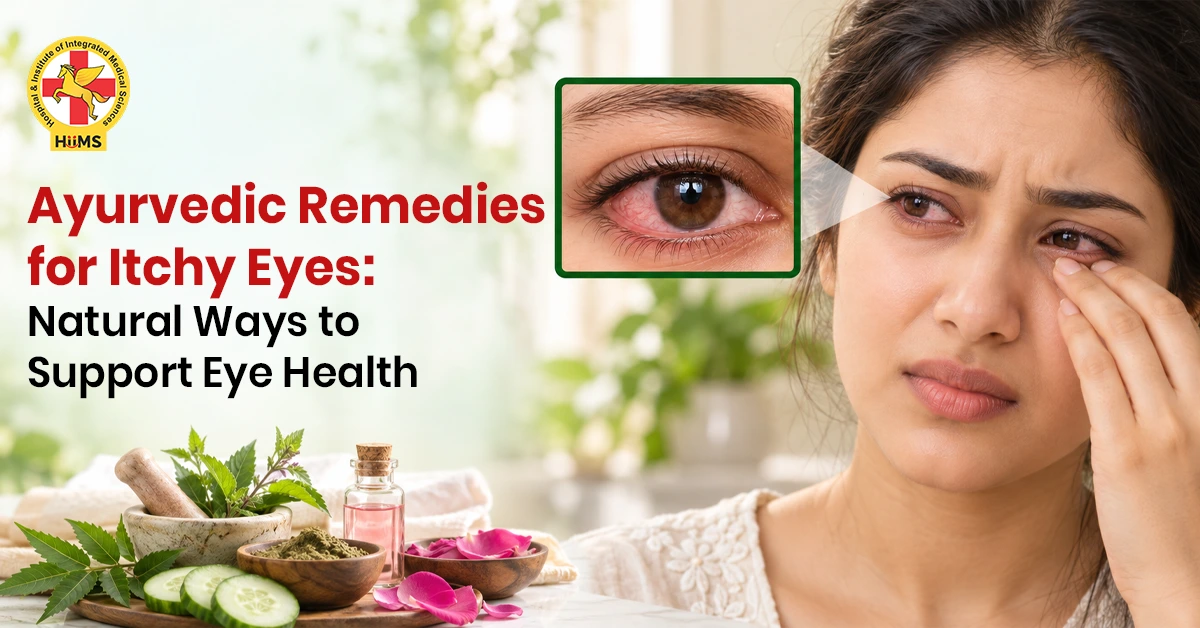
Eye itching can begin with the mild discomfort, but repeatedly rubbing the eyes may increase the irritation. Dust, smoke, pollen, long screen hours, dry air, lack of sleep and seasonal changes are some of the common reasons behind eye irritation.
Sometimes, itching may also occur with redness, watering or a dry feeling in the eyes. Ayurveda gives importance to daily habits, food, proper rest and keeping the body in balance.
This approach can also be useful when looking at simple ways to support comfortable and healthy eyes. Ayurvedic remedies for itchy eyes do not mean putting every herb or homemade preparation directly into the eyes.
Some traditional eye practices need to be done only under the guidance of a trained Ayurvedic practitioner.
In this article, we will discuss some gentle Ayurvedic and natural approaches that may support eye comfort. We will also look at simple changes in diet, screen habits and daily routine that can become a part of natural eye care.
These measures are meant to support eye health and should not replace proper evaluation when eye symptoms are severe or continue for a long time.
Common Reasons Behind Itchy Eyes
Eye itching can have different causes, so understanding the possible reason is important before choosing any care method. Common causes include,
- Dust and air pollution
- Seasonal allergies and pollen
- Dryness of the eyes
- Long hours spent looking at mobile phones or computers
- Smoke and strong smells
- Touching or rubbing the eyes frequently
- Poor sleep and tiredness
- Certain eye infections
When itching is caused by simple irritation, changes in daily habits may provide comfort. However, severe redness, swelling, pain, discharge or changes in vision should not be ignored.
Ayurvedic Remedies for Itchy Eyes
Ayurveda has traditionally given importance to eye care through food, daily habits and specialised practices. Some clinical studies have also explored Ayurvedic approaches for dry eye and other eye-related concerns.
Triphala and Eye Wellness
Triphala is a well-known Ayurvedic preparation made from three fruits and has traditionally been used in Ayurvedic health care. A clinical study by American Optometric Association (AOA) on triphala eye drop on 151 patients explained the benefits of triphala based eye drop. It also explored Triphala-based eye care for computer-related eye discomfort, with some improvement reported in the 141 participants.
Supportive Ayurvedic Eye Practices
Ayurvedic eye care may include the specialised practices such as Netra Parisheka, which is traditionally performed under the guidance of a trained practitioner. These traditional ayurvedic practices are very effective, and it is said by an article published on National Library of medicine about effectiveness of Netra parisheka.
Give the Eyes Proper Rest
Long hours of screen use can leave the eyes feeling tired, dry and uncomfortable, making regular breaks an important part of natural eye care. Look away from the screen at regular intervals and give your eyes enough rest during the day.
Keep the Eyes Away From Irritants
Dust, smoke, pollen and strong fragrances can irritate sensitive eyes, so keeping the surroundings clean and avoiding the known irritants may help. Avoid rubbing itchy eyes because repeated rubbing can increase the irritation and discomfort.
Together, these simple habits can support the Ayurvedic remedies for itchy eyes and help maintain everyday eye comfort.
Food Habits That May Support Eye Health
Food is an important part of Ayurveda. A balanced diet can provide the nutrients that support general health, including the eyes.
Include a variety of fresh foods in daily meals such as,
- Green leafy vegetables
- Carrots and other colourful vegetables
- Amla and seasonal fruits
- Nuts and seeds in the suitable amounts
- Whole grains
- Adequate water throughout the day
Instead of depending on one food for eye health, it is better to maintain a varied and balanced diet. Ayurveda for eye health also gives importance to digestion and regular eating habits.
Simple Daily Habits for Comfortable Eyes
Some basic habits, followed regularly, can help reduce the daily eye discomfort and support better eye health. As per the CDC, things like keeping the hands clean, avoiding eye rubbing and shielding the eyes from sun exposure are good practices to follow.
- Wash the face gently with clean water.
- Keep hands clean before touching the eyes.
- Avoid rubbing the eyes.
- Take regular screen breaks.
- Get enough sleep.
- Keep towels and pillows clean.
- Protect the eyes from dust and sunlight.
- Drink enough water.
Regular rest, cleanliness and simple daily care can become an important part of natural eye care and also these can help you prevent vision loss.
Ayurvedic Approach to Eye Care
Ayurveda looks at health as a connection between food, routine, digestion, rest and overall balance. From this view, caring for the eyes is not limited to using a particular herb or preparation.
Ayurveda for eye health may include suitable food, proper sleep, sensible screen use and guidance from an Ayurvedic practitioner when specialised care is needed. Some research has reported promising findings with selected Ayurvedic eye care approaches.
This is why it is better to choose simple supportive habits first and seek professional advice before using any herbal preparation directly around the eyes.
When Should You Seek Professional Guidance?
Mild itching caused by dust or tiredness may settle after removing the irritation and giving the eyes proper rest. But persistent symptoms need more attention.
Professional guidance is especially important when,
- Eye itching continues for several days.
- There is strong redness or swelling.
- The eyes produce unusual discharge.
- There is pain or strong sensitivity to light.
- Vision becomes blurred or changes suddenly.
- Symptoms keep returning.
People often search for the itchy eyes remedies online and start using household ingredients without knowing the possible risks. This is not always safe. Traditional eye medicines and self-medication are also reported in research, which makes proper guidance important.
The right eye itching treatment depends on the reason behind the symptoms. A practitioner can help identify the cause and suggest suitable care instead of relying on guesswork.

Conclusion
Itchy eyes can often be linked to the simple everyday things like dust, too much screen time, dryness, tiredness or even seasonal changes.
Ayurvedic remedies for itchy eyes usually focus on gentle habits, balanced food, proper sleep and staying away from irritants, all of which can help the eyes feel more comfortable.
Ayurveda also offers a traditional way forward through diet, daily routine and specialised care, but this should always be done under proper guidance. It is best to avoid putting any homemade herbal mixture directly into the eyes.
For guidance suited to you, Jeena Sikho HiiMS can help you understand which wellness practices may work best for your needs.
If the itching does not go away, or comes along with pain, swelling or changes in vision, it is important to get it checked by a professional in time.
FAQs
Q1. Why do my eyes feel itchy all of a sudden?
It usually happens because of dust, smoke, allergies, dryness or too much screen time all at once.
Q2. Can dust and pollution really cause eye itching?
Yes, dust and polluted air are among the most common reasons for the eye irritation and itching.
Q3. Can Ayurveda help with itchy eyes naturally?
Ayurvedic care focuses on the healthy food, good rest and simple practices that may help maintain eye comfort under proper professional guidance.
Q4. Are seasonal allergies a common reason for itchy eyes?
Yes, for many people, eye itching is often related to pollen and seasonal changes.
Q5. Should I see a doctor if my eyes itch for many days?
Yes, if itching continues for several days, professional evaluation is important.
Disclaimer: The information provided on this blog is for general educational and informational purposes only. It is not intended to replace professional medical advice, diagnosis, or treatment. Always consult a qualified healthcare professional before making any changes to your diet, lifestyle, or treatment plan. Individual results may vary.