

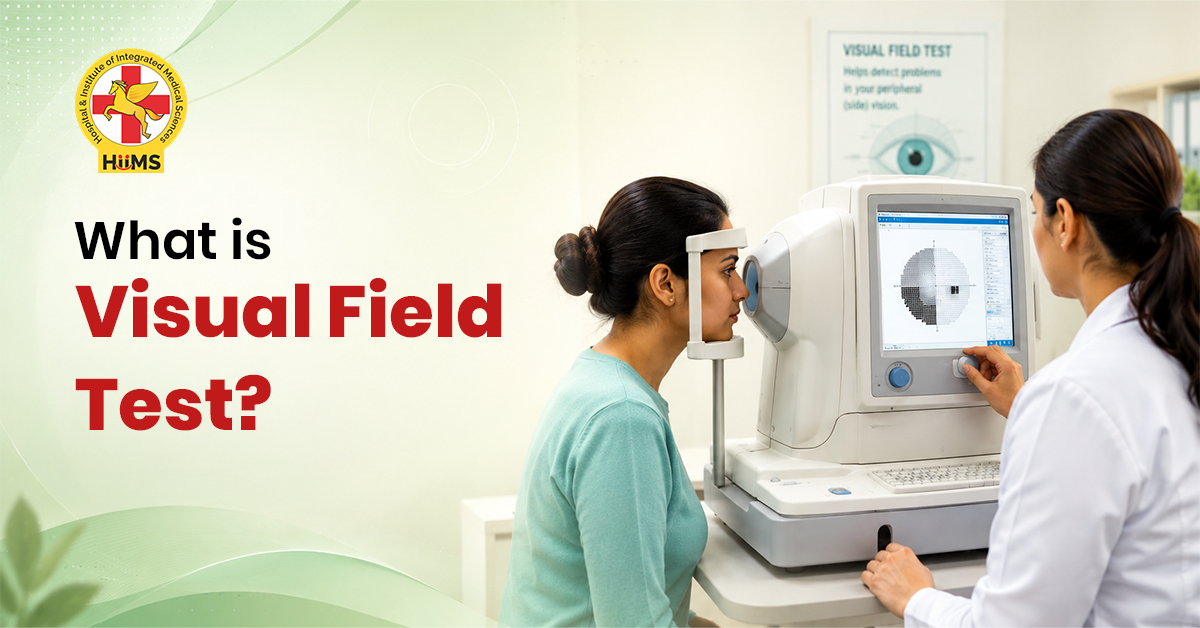
Most people measure their sight by how well they can read a sign down the road or text on a phone screen. But healthy vision involves far more than just looking straight ahead at things. Your eyes also rely heavily on side vision like the space you see above, below, and to the sides while keeping your eyes fixed on a single point.
Checking this full range of sight requires a quick, simple check-up called a visual field test. Eye care specialists use visual field testing to map your entire range of vision. This simple test helps spot hidden eye and health conditions long before you ever notice symptoms. Continue to read to know how this test works, why it is so important and what you can expect during the procedure.
What Is a Visual Field Test?
A visual field test is a practical eye examination that measures how much area your eyes can cover without moving them. While standard eye charts evaluate how sharp your central vision is, they completely miss what happens at the outer edges of your gaze.
Your vision is divided into two primary areas:
Central Vision: The sharp, focused vision used when reading, driving or looking directly at a person’s face.
Peripheral Vision: The side vision that allows you to move around rooms, avoid obstacles, and see movement around you.
A dedicated peripheral vision test checks these outer boundaries. It identifies tiny blind spots you might not even notice. It discovers the little blind spots that you may not even see. Because normally your brain fills in the missing spots to make your vision look smooth.
Why Is a Visual Field Test Important?
Most eye conditions develop slowly without causing any pain or sudden loss of vision. Routine visual field testing detects subtle changes before significant damage occurs.

Detecting Glaucoma Early
The primary visual field test purpose in everyday eye care is to monitor for glaucoma. Glaucoma is a condition caused by fluid pressure building up inside the eye, which damages the main nerve connecting the eye to the brain. This damage almost always steals your side vision first. Because central vision remains clear in the early stages, a specialized test is the only way to catch nerve loss early enough to save your sight.
Identifying Brain and Nerve Conditions
Your visual pathway travels from your eyes all the way to the back of your brain. Consequently, patterns of vision loss revealed by a visual field test provide valuable information about overall nerve and brain health. Mapped blind spots can help doctors identify:
- Strokes or blood flow issues affecting the brain
- Brain tumors or abnormal growths pressing on the optic nerves
- Inflammation or injury along the main nerve pathways
Tracking Condition Progress
For individuals already diagnosed with eye or nerve conditions, taking this test regularly allows doctors to monitor whether treatments are working or if adjustments are needed to keep your sight stable over time.
Common Types of Visual Field Tests
Your eye doctor will pick a quick test to check your peripheral vision, depending on what you need.
Automated Static Perimetry: This is the most common machine-based check. You look into a bowl-shaped device and press a button every time you notice a faint light flashing in your side vision.
Frequency Doubling Technology: A fast screening tool that uses flickering patterns to check how quickly your light-sensing nerve cells respond.
Confrontation Test: A basic manual check where your doctor wiggles fingers at the outer edges of your vision during a routine exam to see when you spot them.
Understanding the Visual Field Test Procedure
The visual field test procedure is completely non-invasive, painless and requires no special preparation or numbing drops.
Setup and Seating: You sit down in a curved, bowl shaped machine in a dimly lit room and place your chin and forehead in padded supports.
Testing One Eye at a Time: One eye is covered with an eye patch so that each eye can be tested separately.
Target focus: You focus straight ahead at a fixed central light. It is important to keep your eyes still and not chase the flashing lights with your eyes.
Responding to Signals: When a tiny point of light flashes into your peripheral vision you press a handheld button. These lights vary in brightness from clear to very faint.
The entire procedure for the visual field test usually takes only 5 to 10 minutes per eye.
How to Get Accurate Visual Field Test Results
Because this check relies on your active participation, staying relaxed helps ensure your final visual field test results are clear and reliable.
Blink Naturally: There’s no need to keep your eyes open without blinking. Blinking also helps keep your eyes moist and prevents eye fatigue so that you get a better result on your visual field test.
Avoid Guessing: press the response button only when you really see a flash of light. If you press the button when you think a light should appear it confuses the machine and changes your final visual map.
Take Breaks: If you feel your eyes are getting dry or tired during the visual field test procedure, let the technician know. You can stop the machine whenever you want to have a little break
Conclusion
Taking care of your eyes involves far more than simply updating your glasses prescription every few years. A visual field test is one of the safest, simplest, and the most powerful preventive tools available in modern eye care. By creating a complete map of both your central and side vision, this non-invasive check can catch subtle signs of nerve damage, elevated eye pressure, and even serious neurological conditions long before you notice any clear symptoms or vision loss.
Protecting your sight relies entirely on early detection and timely treatment. If you have noticed any minor changes in your daily vision, talk to an eye doctor today. Scheduling a routine eye exam that includes a side vision check is a quick step that safeguards your vision, independence and overall quality of life for many years to come. 
FAQ
Q1. What is the main purpose of a visual field test?
It maps your full range of central and side vision to catch hidden eye and nerve conditions before you notice any vision loss.
Q2. Is a visual field test painful or dangerous?
No, the test is completely safe and painless. It requires no numbing drops or direct physical contact with your eye.
Q3. How long does a typical visual field test take?
The entire procedure is very quick, usually taking only 5 to 10 minutes per eye to complete.
Q4. Why do I need a visual field test if my vision feels completely fine?
Conditions like glaucoma steal your peripheral vision so slowly that you cannot feel or see the loss until significant, permanent damage has already occurred.
Q5. Do I need to stop wearing my normal glasses or contacts for the test?
No. Your eye care technician will tell you if you need to wear your regular prescription glasses or if special trial lenses will be used during the test.
Disclaimer: The information provided on this blog is for general educational and informational purposes only. It is not intended to replace professional medical advice, diagnosis, or treatment. Always consult a qualified healthcare professional before making any changes to your diet, lifestyle, or treatment plan. Individual results may vary.