
Skin cancer is one of those conditions that many people hear about, but don’t always understand clearly. It often starts quietly. A small spot, a mole, or a patch on the skin that doesn’t seem serious at first. In many cases, people ignore it, thinking it will go away on its own.
But the skin reflects what’s happening in the body, and small changes should not be overlooked. Recognising early skin cancer signs can help in taking timely steps.
There are different types of skin cancer, and each one behaves differently. Knowing the 3 main types of skin cancer, their symptoms, and available skin cancer treatment options can make things easier to handle and less confusing.
Understanding the Types of Skin Cancer
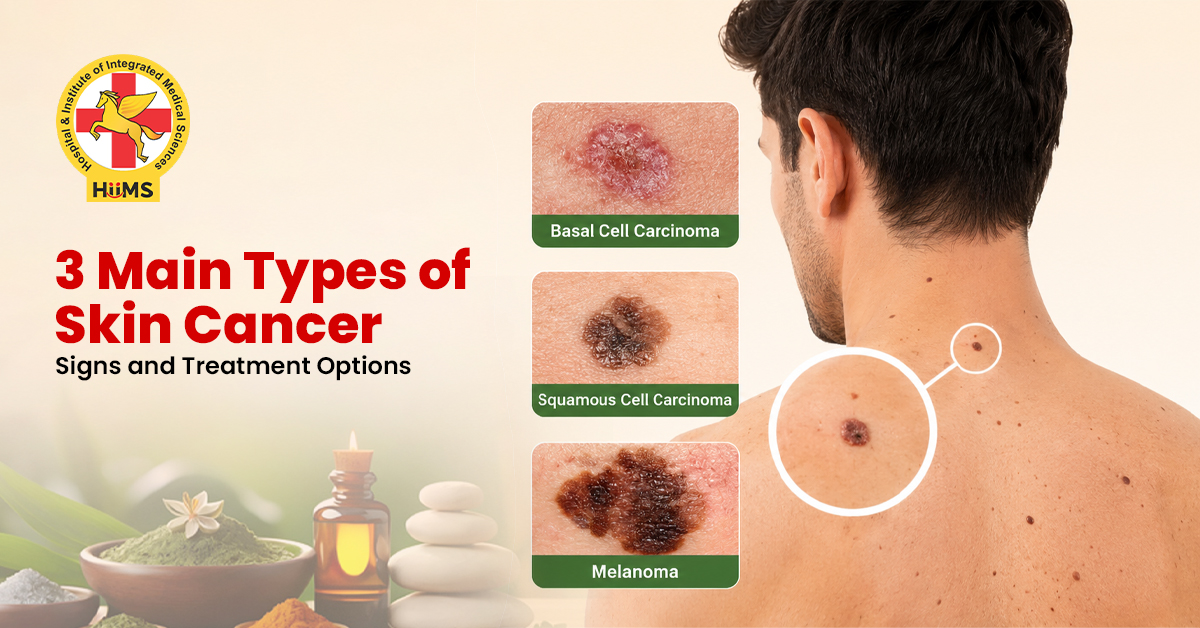
Skin cancer occurs when the skin cells start growing uncontrollably. UV damage to the skin cells usually causes this, but other factors are thought to contribute. The 3 common types of skin cancer are:
1. Basal Cell Carcinoma (BCC)
The most common form of skin cancer usually appears on the skin in the form of a small, shiny bump or pale patch. It tends to grow relatively slowly and spreads to other areas very rarely, but will eventually cause tissue damage in nearby areas if ignored for long enough.
2. Squamous Cell Carcinoma (SCC)
Often appears on the skin as a firm red lump or a scaly, rough patch; it can grow quickly and may spread to other areas if caught early. Symptoms need to be spotted for effective treatment to avoid damage to underlying tissues and structures.
3. Melanoma
The least common form of skin cancer but also the most serious; it often begins as a mole that starts to change its size, shape or colour.
It can spread to other parts of the body if not treated early. This is why noticing skin cancer signs at the right time becomes very important. 
Common Skin Cancer Signs You Should Not Ignore
Skin cancer does not always cause pain. Many early signs are visible changes on the skin. You may notice:
- A new mole or growth.
- Changes in an existing mole.
- Irregular borders or uneven colour.
- A sore that does not heal.
- Itching or bleeding in a skin patch.
These skin cancer signs may seem small at first, but if they continue, it’s better to get them checked.
Skin Cancer Symptoms That Often Get Missed
Some symptoms are subtle and easy to overlook.
- Slight darkening or discoloration.
- A patch that feels rough or dry.
- Mild irritation that keeps returning.
- Small bumps that slowly grow.
In many cases, people ignore these signs, thinking they are harmless. But persistent skin cancer symptoms should not be neglected.
Skin Cancer Treatment Options
Your skin cancer treatment option may vary greatly depending on type, size, and stage. It is possible that one specific form of treatment is not effective in every individual. Some of the treatment choices for early stage may consist of;:
- Small removal of the area concerned.
- Some cases may have topical medicine application.
At Jeena Sikho HiiMS you may find care to be managed by the overall condition of the patient rather than the skin condition. The approach to treatment can include lifestyle support.
The effective selection of a suitable skin cancer treatment may provide you with a range of better outcomes.
Lifestyle Support and Prevention
Along with treatment, daily habits also play a role in skin health. Some simple steps include:
- Avoiding excessive sun exposure.
- The wearing of protective clothing.
- Maintaining a clean and moisturised skin barrier.
- Sticking to a routine.
When Should You See a Doctor?
It is easy to ignore small skin changes, but delaying can make things worse. You should consult a doctor if:
- A mole changes in appearance.
- A wound does not heal.
- Skin irritation keeps returning.
- Any unusual growth appears.
Early consultation helps in choosing the right skin cancer treatment options before the condition progresses.

Conclusion
Having knowledge about the various types of skin cancer and the early signs of skin cancer will further enable you to get it treated early. Some may spread slowly, but some are aggressive and fast growing; treating early becomes extremely important and effective with skin cancer treatment options and the necessary medical advice.
You can reach out at +91 82704 82704 or care@jeenasikho.com to book a consultation and avail for VOPD
FAQs
Q1. What are the 3 main types of skin cancer?
The three principal forms of skin cancer are basal cell carcinoma, squamous cell carcinoma, and melanoma.
Q2. What are common skin cancer signs?
There are several characteristic symptoms of skin cancer: an altered mole or new spot on the skin, a sore that will not heal.
Q3. Is it possible for some symptoms of skin cancer to not show on the skin? Mostly all symptoms show on the skin, but some can be not very easy to notice.
Q4. It’s possible for skin cancer to be treated if caught early? There are several treatments available which are very successful if the skin cancer is detected early.
Q5. Is it possible to minimize your risk of getting skin cancer? Minimising the sun’s exposure and wearing protection. Checking your skin regularly will help to minimize your risk.
Disclaimer: The information provided on this blog is for general educational and informational purposes only. It is not intended to replace professional medical advice, diagnosis, or treatment. Always consult a qualified healthcare professional before making any changes to your diet, lifestyle, or treatment plan. Individual results may vary.