

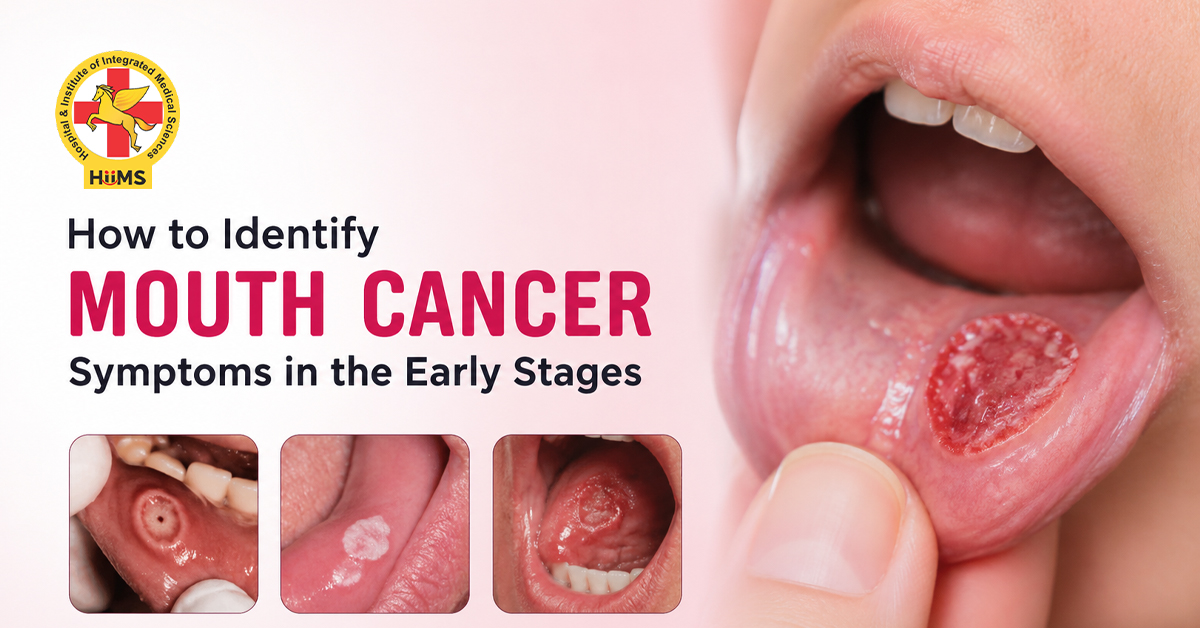
Many people ignore the minor changes inside the mouth because they feel normal. A small ulcer, mild pain, or a white patch usually does not raise concern at first. However, these small signs can sometimes be linked to something deeper. Understanding mouth cancer symptoms early can make a big difference in how a person manages their health. In today’s fast life, eating habits, stress, tobacco use, and poor oral care have increased the risk of mouth cancer in many people. Still, awareness is low, and early signs often go unnoticed. This is where simple observation becomes important.
At Jeena Sikho HiiMS, the focus is often on understanding the body’s signals rather than ignoring them. According to Ayurvedic thinking, the body gives small hints before any major imbalance develops. Recognising these hints can help a person stay more aware and careful. This blog will help you understand the early symptoms of oral cancer in a simple and clear way, so you can notice them in time and take the right steps.
What is Mouth Cancer?
Mouth cancer refers to the unusual growth in any part of the mouth. It can affect the lips, tongue, gums, inner cheeks, or even the roof of the mouth. It usually starts slowly. In the early stage, it may not cause strong pain, which is why many people ignore it. Over time, if not noticed, it can become more serious. That is why knowing mouth cancer symptoms early is not something to delay or overlook.
Early Warning Signs of Oral Cancer You Should Not Ignore
In the beginning, the body shows small but noticeable changes. These are often the first oral cancer symptoms that people miss.
1. Mouth Ulcers That Do Not Heal
Most mouth ulcers go away within a week or two. But if an ulcer stays for more than two weeks, it should not be ignored.
This is one of the most common symptoms of oral cancer seen in the early stage.
2. White or Red Patches
Unusual white or red patches inside the mouth are important signs. They may appear on the tongue, gums, or inner cheeks.
These patches usually do not cause pain, so people often overlook them in the beginning. Because of this, they can go unnoticed for a long time. Still, they are counted among the early symptoms of oral cancer.
3. Lumps or Thick Areas
If you feel a lump or thick area inside your mouth, it needs attention. It may not hurt at first, but it can slowly grow over time.
Such changes are also counted among the early symptoms of oral cancer.
Daily Activity Changes That May Signal Oral Cancer
Certain signs become noticeable only while doing routine activities.
Difficulty in Chewing or Swallowing
If eating food becomes uncomfortable or painful without any clear reason, it may be a sign.
People often think it is due to a sore throat or minor issue, but it can be related to oral cancer.
Change in Voice or Speech
A change in the voice or difficulty in speaking clearly can also be a sign.
Though it may not always be serious, it is still one of the possible oral cancer symptoms.
Pain and Numbness: Important Mouth Cancer Symptoms
Pain does not always show up in the early stage, but if it starts, you should not ignore it.
Persistent Pain
Ongoing pain in the mouth, tongue, or jaw that does not improve should not be ignored. In the beginning, it feels light, but later it can grow little by little.
Numbness
A feeling of numbness in any part of the mouth or lips can also be a warning sign. This is another important point to remember while identifying mouth cancer symptoms.
Unusual Bleeding That Should Not Be Ignored
If there is bleeding in the mouth without injury, it should be checked. Sometimes, people think it is due to brushing or minor gum issues. But repeated bleeding without a clear cause can be linked to the cancer of the mouth.
Lifestyle Habits That Affect Oral Health and Cancer Risk
Certain daily habits can slowly affect oral health and increase the chances of developing oral cancer symptoms.
1. Tobacco Use
Smoking or chewing tobacco is one of the biggest reasons behind cancer of the mouth.
2. Alcohol Consumption
Regular alcohol use also increases the risk.
3. Poor Oral Hygiene
Not maintaining proper oral care can also lead to problems over time.
4. Unhealthy Food Habits
Very spicy, processed, or stale food can disturb oral health. From an Ayurvedic view, such habits can disturb the internal balance and slowly lead to the visible signs like oral cancer symptoms.
Simple Steps to Notice Early Symptoms of Oral Cancer
Noticing the small changes in your mouth early can help you stay aware before things get serious.
- Check Your Mouth Regularly: Sometimes just look inside your mouth. Any small change in shape or color can be important.
- Do Not Ignore Small Signs: A small ulcer staying for long time should not be taken lightly.
- Maintain Oral Cleanliness: Regular brushing, cleaning tongue and rinsing properly helps a lot.
- Follow a balanced lifestyle: Simple eating, proper water intake and daily routine keeps the body in balance.
At Jeena Sikho HiiMS, daily balance is seen as important. Even small habits, when done every day, can bring gradual change.
When Should You Seek Attention?
You should not wait too long if you notice any of these signs:
- An ulcer that does not heal even after two weeks.
- White or red patches
- Pain or numbness
- Difficulty in chewing or speaking
These may look small, but they can be the early signs of oral cancer. It is always wiser to stay alert rather than ignore them.

Conclusion
Not every small change in the mouth is serious, but ignoring repeated signs is not a wise choice. Early mouth cancer symptoms are often simple and easy to notice if you stay aware. Changes like ulcers that are not healing, odd kind of patches, or a little pain while eating should not be ignored. These signs may seem simple, but at times they indicate something more serious. At Jeena Sikho HiiMS, the approach is simple: listen to your body and act early. Balanced living, small habits, and awareness helps you stay on the safer side.
FAQs
1. Is a mouth ulcer always a sign of mouth cancer?
No, most ulcers are normal, but if they do not heal within the two weeks, they should not be ignored.
2. Are oral cancer symptoms painful in the beginning?
Most early oral cancer symptoms are painless, and this is the main reason they are often missed in the beginning.
3. What causes mouth cancer?
The common causes include tobacco use, alcohol consumption, and the poor oral hygiene.
4. Are white patches in the mouth serious?
They can be one of the early oral cancer symptoms and should be observed carefully.
5. Can a healthy lifestyle help in preventing oral cancer symptoms?
When you focus on clean eating and don’t ignore your oral care, it slowly starts supporting your overall health in a natural way.