
Food habits, work routines and daily movement have changed considerably over time. Meals are often quick, long working hours can keep the body inactive, and packaged or sugary foods can become an easy choice when the day gets busy. These habits can gradually affect the way the body handles fat and sugar, including how the liver stores and processes them.
When extra fat starts building up in liver cells, an ultrasound may report grade 1 fatty liver, even when a person feels generally well. This is considered an early stage, which makes it a useful time to look more closely at food, movement, weight, metabolic health and daily routine. Understanding the reason behind the condition is just as important as knowing what to do next.
In this blog, you will learn what grade 1 fatty liver means, what can cause it, which dietary habits matter, and how an Ayurveda-focused approach may fit into its management.
What Is Grade 1 Fatty Liver?
When an ultrasound or other imaging test shows a small build-up of fat in the liver, the report may describe it as grade 1 fatty liver. Here, “grade 1” refers to the mild fatty changes visible on the scan and generally represents the earliest grade of fatty liver. It does not, by itself, tell us exactly how much fat is present or whether the liver has developed permanent damage.
Fatty liver is often seen in people carrying excess weight, but weight is not the only factor. Problems with blood sugar and fat metabolism, including insulin resistance, type 2 diabetes, raised triglycerides and abnormal cholesterol levels, may also contribute. Alcohol, certain medicines and some medical conditions can also contribute, so the cause should not be assumed from an ultrasound report alone.
Many people have no clear symptoms at this stage. Some may notice tiredness or discomfort in the upper-right part of the abdomen, but these symptoms can occur for several reasons and cannot confirm fatty liver on their own.
Can Grade 1 Fatty Liver Improve?
In many cases, early fatty liver may improve when the reasons behind the excess fat in the liver are identified and managed properly. Better food choices, regular physical activity, gradual weight management when needed, and appropriate control of blood sugar and cholesterol can all form part of the process.
An ultrasound grade gives useful information, but it does not explain everything about your liver health. Finding out why the fat has accumulated gives a clearer direction for grade 1 fatty liver treatment.
What Causes Grade 1 Fatty Liver?
The condition usually develops through a combination of factors rather than one particular food or habit.
Unbalanced Food Habits
Eating sugary foods and drinks too often, along with fried food, refined flour and packaged meals, can put extra calories into the daily diet. Large portions and frequent snacking can make this worse over time.
Long Hours of Inactivity
When most of the day is spent sitting at a desk, travelling or resting at home, there may be very little physical activity left in the routine. If this continues for months, it can contribute to weight gain and other metabolic changes that are associated with fatty liver.
Excess Weight and Metabolic Changes
Extra body fat, particularly around the abdomen, can increase the likelihood of fat building up in the liver. Metabolic changes such as insulin resistance and type 2 diabetes, along with raised triglycerides or abnormal cholesterol levels, may increase the likelihood of fat accumulating in the liver.
Alcohol, Medicines and Other Causes
Alcohol can cause a different form of fatty liver, while some medicines and certain health conditions can also affect the liver. Rapid weight loss or severe undernutrition may sometimes be associated with liver fat as well. This is why proper evaluation is so important before deciding on a treatment plan.
What Symptoms Can Occur With Grade 1 Fatty Liver?
One reason fatty liver is often discovered during a routine check-up is that it may not produce noticeable symptoms. A person may feel normal even though an ultrasound shows fatty changes.
When symptoms do occur, they can include ongoing tiredness or mild discomfort in the upper-right abdomen. Blood tests may also show changes in liver enzymes, although abnormal liver enzymes are test findings rather than symptoms. Because these signs are not specific, a medical evaluation is needed to understand what they actually mean.
What to Eat When You Have Grade 1 Fatty Liver?
Food becomes one of the most practical places to start making changes. A suitable grade 1 fatty liver diet should focus on balanced meals that are easier to maintain rather than extreme restrictions.
Choose More Fresh and Minimally Processed Foods
A balanced eating pattern can include vegetables, fruits, whole grains, pulses and suitable protein sources, while highly processed foods and foods high in added sugars and unhealthy fats are better limited. Home-cooked food can also make it easier to control oil, sugar and portion sizes.
Reduce Foods That Add Excess Sugar and Fat
Limit sugary beverages, sweets, deep-fried foods, packaged snacks, refined flour-based foods and heavily processed meals. Alcohol should also be avoided or restricted according to professional advice.
Pay Attention to Portions and Meal Routine
Even nutritious food can become excessive when portions are consistently large. Eating at fairly regular times and avoiding frequent heavy late-night meals can make a daily routine easier to manage.
A useful grade 1 fatty liver diet is therefore less about finding one “liver-cleansing” food and more about building a pattern that supports healthy weight and metabolic function.
Grade 1 Fatty Liver Treatment: An Ayurveda-Focused Approach
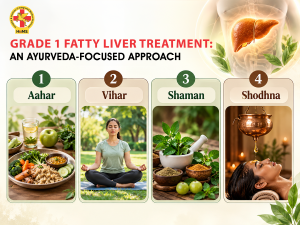
An Ayurveda-focused approach to grade 1 fatty liver treatment looks beyond a single herb or therapy and considers the factors that may be affecting liver health. Ayurveda traditionally considers digestion, food habits, daily routine and the individual’s overall condition while planning care.
Aahar: Improving Food Habits
Diet remains a central part of the approach. Fresh, balanced meals, appropriate portions and a consistent eating routine can help reduce the dietary burden associated with poor metabolic health.
Vihar: Bringing Movement Into Daily Life
Small changes in the daily routine can make physical activity easier to maintain. Walking regularly, taking breaks from long periods of sitting and getting sufficient sleep are practical places to start. For those who can practise them safely, yoga and pranayama may also become part of the routine.
Shaman: Individualised Ayurvedic Support
Ayurvedic herbs or formulations may be considered after assessing the person’s health, digestion, existing conditions and medicines. They should not be selected or taken casually simply because a product is promoted for liver health.
Shodhan: Therapies When Appropriate
Ayurvedic cleansing therapies such as Panchakarma may be considered for selected individuals after proper assessment. The therapy, timing and suitability can vary from person to person, so professional supervision is important.
Simple Habits That Can Support Liver Health
Once dietary and treatment changes begin, everyday consistency becomes equally important. Along with changes in food, it is important to keep moving, work towards a healthy weight and keep blood sugar and cholesterol under control when needed. If you drink alcohol, avoid excessive intake, and take medicines only as prescribed. Any herbal product should also be discussed with a healthcare professional before you start using it. At Jeena Sikho HiiMS, an Ayurveda-focused approach can bring these areas together by looking beyond a single test report and considering diet, lifestyle and individual health needs while planning care. If your ultrasound has shown fatty liver, taking the next step with appropriate guidance can help you understand what may be contributing to the condition and which changes are suitable for you.
Conclusion
Grade 1 fatty liver is an early finding, but it is still worth taking seriously because it can point towards changes in diet, activity or metabolic health that need attention. The focus should not be on a single food, supplement or quick solution. Changing the way you eat through a balanced grade 1 fatty liver diet can be a useful first step. Staying active, maintaining a healthy weight and keeping track of your health can make these changes more effective. Ayurveda can also take a wider look at your food habits, routine and individual needs before deciding which therapies are appropriate.
If you want personalised support for your liver-health concerns, you can opt for a VOPD consultation with the expert doctors at Jeena Sikho HiiMS and discuss an approach suited to your health needs.

FAQs
1. What does grade 1 fatty liver mean?
Grade 1 fatty liver means that a small amount of extra fat has been found in the liver, often during an ultrasound or another imaging test.
2. What foods are better for fatty liver?
Fresh vegetables, seasonal fruits, whole grains, pulses and balanced home-cooked meals can form part of a suitable eating pattern.
3. Which foods should be limited with fatty liver?
Sugary drinks, sweets, fried foods, highly processed snacks and excessive alcohol are generally better limited.
4. How is grade 1 fatty liver usually found?
It is often identified during an abdominal ultrasound or health evaluation, sometimes when a person has no noticeable liver-related symptoms.
5. Can lifestyle changes help with fatty liver?
Regular physical activity, balanced eating, gradual weight management and control of related metabolic conditions can help improve liver health.