
Your liver works all day. It filters blood, breaks down food, and stores energy. Yet most people only learn about liver problems by chance, during a routine scan. Ayurvedic liver care starts with knowing the early signs. It also starts with better daily habits. In short, good Ayurvedic liver health depends on both.
An Indian meta-analysis found that about 38.6% of adults have non-alcoholic fatty liver. For this reason, this blog explains the causes. It also covers the Ayurvedic view of the liver and how Jeena Sikho HiiMS in Meerut supports liver health.
What Does the Liver Do, and Why Does It Get Strained?
The liver filters blood and processes what you eat. It also stores energy for the body. Because it works so hard, it can become strained over time.
Busy routines, sugary food, and less movement all add to the load. These habits are common in Meerut too. So more people now ask how to protect their liver before problems grow.
Early care makes a real difference for your liver. Connect with our experts and understand your next steps.

Causes and Early Signs of Liver Strain
Fat builds up in the liver slowly. These are the most common causes:
- Extra belly fat: Fat around the belly is closely linked to fat in the liver.
- Sugar and refined food: Sweets, maida and sweet drinks turn into fat in the liver.
- Regular alcohol: Even social drinking adds to the load.
- Diabetes and high cholesterol: Both raise the risk.
- Long hours of sitting: Less movement means the body burns less fat.
Most people feel nothing in the early stages. Some notice tiredness, bloating, or a heavy feeling in the upper right belly. However, yellow eyes or swelling in the belly or legs need a doctor soon.
These causes build up over time. Ayurveda explains them through digestion and the body’s natural balance.
Ayurvedic Liver Care: The Root-Cause View
Ayurveda calls the liver Yakrit. It links the liver closely to Pitta and digestion. Weak agni, or digestive fire, creates ama, a sticky waste. Ama slows the body down. As a result, it adds to the load on the liver. Too much Kapha and fat make the problem worse.
So this approach aims to correct digestion, reduce excess Kapha, and support the liver’s natural cleansing.
Strong digestion supports a healthy liver. Connect with our experts to see how this approach fits your needs.
Ayurvedic Liver Care at Jeena Sikho HiiMS Meerut
Jeena Sikho HiiMS, Meerut Jagriti Vihar, is an integrated Ayurvedic Liver Hospital in Meerut that combines Ayurveda, Naturopathy, Unani, Homeopathy, and modern science under one roof to provide root-cause support. Its approach follows the four pillars of Ayurveda: Aahar (diet), Vihar (daily routine), Shaman (herbal support) and Shodhan (cleansing). Each pillar supports the liver in a different way. Together, they address the root cause rather than only the symptoms.
Every plan starts with a careful check. Doctors review your liver reports, including ultrasound and liver function tests. They also check your pulse, tongue, and digestion. Why does this matter? Two people with similar reports can have very different causes. For example, one person may have fat linked to heavy, oily food. Another may have digestion weakened by stress and irregular meals. Knowing the cause helps the doctor choose the right steps. Then the plan can be adjusted at each follow-up.
Aahar: The pH-Balanced Diet
Natural liver care starts with the plate. The pH-balanced diet is fresh, simple, and mostly plant-based. It works in three main ways.
First, fiber from vegetables and whole grains slows the rise in blood sugar levels. As a result, less extra sugar is stored as fat in the liver. Second, dals and sprouts give protein without adding fat. Third, warm, lightly cooked food is easier to digest, which helps support agni.
Your doctor also limits sugar, maida, fried food, and packaged snacks. These foods add fat that the liver must handle. Meals come at fixed times, with an early, light dinner. The doctor adjusts this diet to your report, digestion and daily routine.
Shaman: Herbal Support
Ayurveda has long used certain herbs for liver health. Bhumi Amla is traditionally used to support the liver and digestion. Kutki is a bitter herb, traditionally used for healthy bile flow. Kalmegh is traditionally used for liver support and healthy digestion.
Ayurveda values bitter herbs because it sees them as balancing excess Pitta. Each herb is given in a form and dose chosen for you. Take them only under a doctor’s guidance. Some herbs can interact with medicines, so tell your doctor about every tablet you take.
Shodhan: Panchakarma
Shodhan means cleansing. Panchakarma is the classical Ayurvedic cleansing method. Before any cleansing, the body is prepared with medicated oil and gentle heat. This loosens ama and makes the procedure gentler. Each Panchakarma therapy works differently:
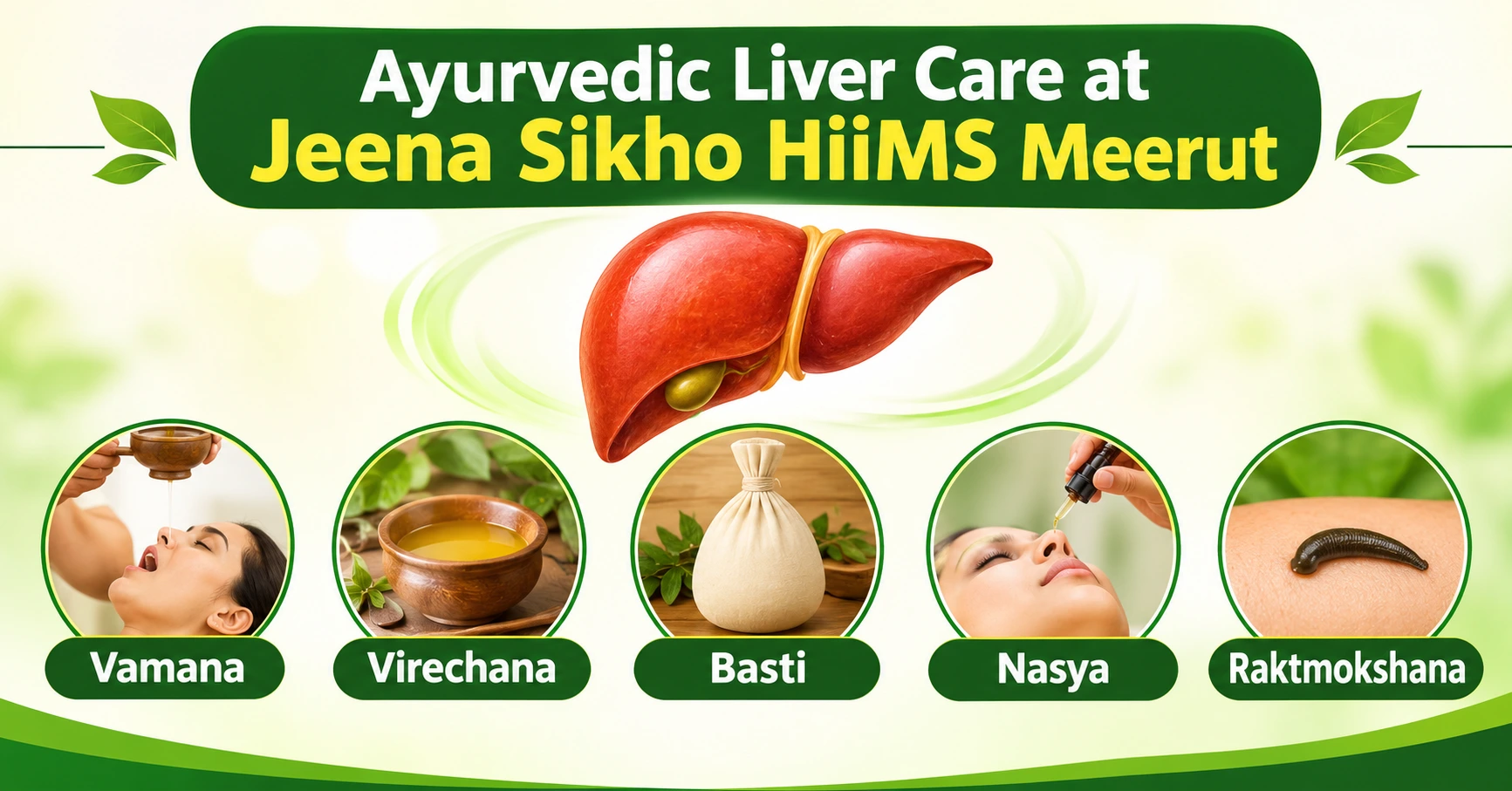
- Vamana: clears the stomach of extra Kapha. The doctor may choose it when Kapha is high.
- Virechana: clears the bowels and extra Pitta. It is planned carefully for each patient.
- Basti: a medicated enema that balances Vata. It supports digestion and bowel regularity.
- Nasya: medicated oil given through the nose. It is used for head and neck concerns.
- Raktmokshana: a classical procedure used for certain blood-related conditions.
The doctor chooses one, several or none after an assessment. It is planned after a check-up and monitored over time.

Vihar: Yoga, Exercise and Daily Routine
Daily movement helps the liver in a simple way. It uses up stored energy and helps the body handle sugar better. A review of exercise studies found that regular exercise reduced liver fat, even with little or no weight loss.
Walking is the easiest place to start. Aim for 30–45 minutes, at least five days a week. Strength work two to three times a week builds muscle, and this helps the body use sugar better.
Yoga adds a gentle stretch to the belly. Bhujangasana, Dhanurasana, and Ardha Matsyendrasana are common choices. Kapalbhati can help, but people with BP or heart problems should ask a doctor first. Pranayama and meditation calm stress. Stress affects digestion, so calm habits support the liver indirectly. Finally, sleep 7–8 hours each night. Poor sleep disturbs how the body uses energy.
Specialist Care in Meerut
Ayurvedic doctors at Jeena Sikho HiiMS, Meerut, give OPD consultations and regular follow-ups. Follow-ups matter because they track progress. Repeat reports show the doctor what is working. The hospital also offers inpatient care when needed. Anyone looking for an Ayurvedic Liver Specialist in Meerut can book a consultation and receive a plan built around their reports. Book your liver consultation at Jeena Sikho HiiMS, Meerut. Book an Appointment
Conclusion
Fatty liver is common and often silent. Even so, in its early stages, it can improve with less sugar, no alcohol, a fiber-rich diet, and regular exercise. Medical care handles serious conditions. Meanwhile, Ayurveda adds a root-cause view through diet, herbs, Panchakarma, and daily routine. Overall, Ayurvedic Liver Care works best with steady habits and regular check-ups.
Every liver report is unique, so your plan should be personalized to your needs. Talk to a Jeena Sikho HiiMS expert on a video call and get a clear plan for your liver. Book VOPD Now

FAQs
1. Can Ayurvedic Liver Care help with fatty liver?
Early fatty liver often improves with weight loss, diet and exercise. Ayurvedic Liver Care can add supportive care, but advanced scarring needs medical follow-up.
2. Which daily habits support Natural Liver Care?
Eat more vegetables, dals and whole grains. Cut back on sugar and alcohol, sleep well and walk daily.
3. Is there an Ayurvedic Liver Specialist in Meerut?
Jeena Sikho HiiMS at Meerut Jagriti Vihar has Ayurvedic doctors for consultations and follow-ups.
4. Can Ayurvedic liver care be used with liver medicines?
In many cases, it can, but only with a doctor’s guidance. Never stop a prescribed medicine on your own.
5. Does the Ayurvedic Liver Hospital in Meerut treat cirrhosis?
It offers supportive care alongside specialist treatment. Your doctor will assess your condition and plan your care.