
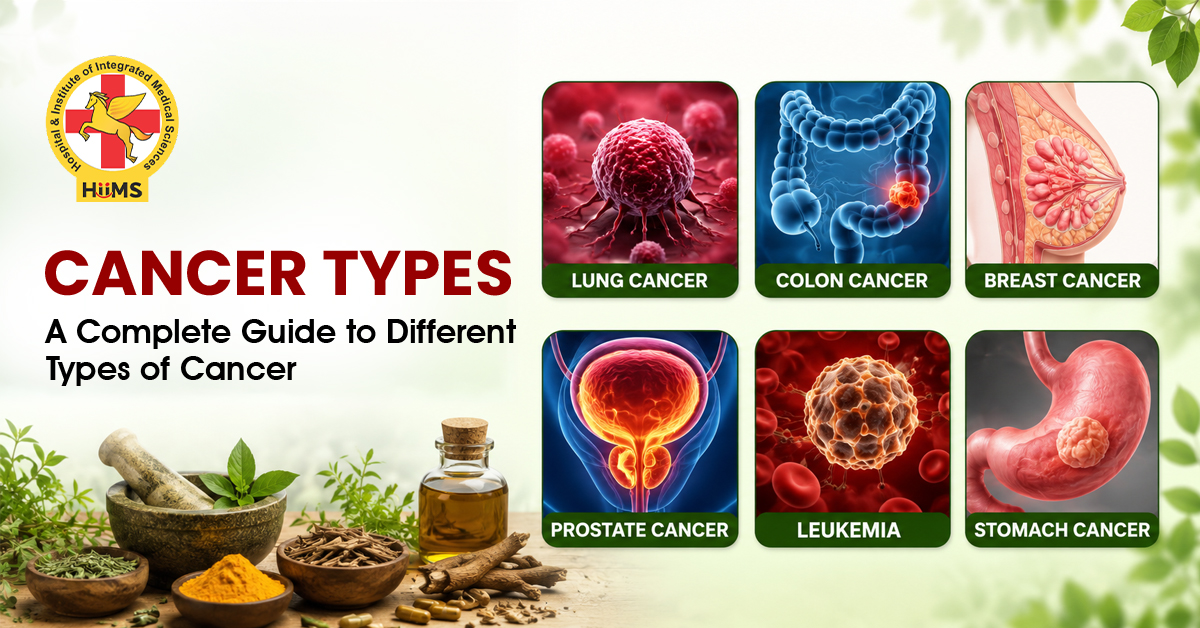
Cancer is one of the most talked-about health conditions, but many people still do not understand that it is a collection of different diseases. There are many cancer types, and each one can affect the body in a different way. Some grow slowly, while others spread quickly. Knowing the different forms of cancer can help people notice the warning signs early and seek healthcare advice on time.
Along with modern medical care, many people also look for natural ways to support their overall health. According to Ayurveda, good health is supported by healthy food, a balanced lifestyle, stress management, and natural therapies. At Jeena Sikho HiiMS, this holistic approach is encouraged as supportive care along with the proper expert guidance. This guide explains the list of cancers, how they are grouped, and why knowing about them can help improve health awareness.
What Are Cancer Types?
The ‘cancer types’ are classified according to the area of the body where the cancer begins and the type of cells in which it develops. Cancer starts when some cells begin to grow in an uncontrolled way. These cells may form a lump called a tumor or spread to other parts of the body.
Doctors identify the cancers according to the organ they affect or the type of cell from which they develop. Understanding the types of cancer helps doctors plan suitable care and allows people to understand their condition better.
Why Is Cancer Classification Important?
Every cancer is different. Some respond well to one form of care, while others need a different approach. This is why cancer classification plays an important role; it helps doctors,
- Identify where the cancer started.
- Understand how quickly it may grow.
- Decide the most suitable care plan.
- Monitor the condition over time.
- Explain the condition clearly to the patients and families
Knowing the correct cancer categories also helps people understand what to expect during their healthcare journey.
Common Cancer Types and Their Overview
There are many common cancer types seen around the world. Some of the most frequently diagnosed include the following:
Breast Cancer
Breast cancer begins in the breast tissue. It can affect both women and men, although it is much more common in women. Regular screening and paying attention to the changes in the breast can support early detection.
Lung Cancer
Lung cancer starts in the lungs and is often linked to smoking, although non-smokers can also develop it. Long-lasting cough, chest discomfort, or breathing problems should always be properly evaluated.
Colorectal Cancer
Colorectal cancer affects the colon or rectum. Changes in bowel habits, blood in stool, or unexplained weight loss should never be ignored.
Prostate Cancer
Prostate cancer develops in the prostate gland and is commonly seen in older men. Regular health checkups become more important with increasing age.
Skin Cancer
Skin cancer develops when abnormal cells grow in the skin. Protecting the skin from excessive sunlight and checking unusual skin changes can help with early detection.
These are among the most common cancers, but many other forms can also affect different parts of the body.
Cancer Types According to the Body Part Affected
Doctors often describe the cancer by body part because the location where cancer begins affects its diagnosis and management. Some examples include,
- Brain cancer
- Liver cancer
- Kidney cancer
- Stomach cancer
- Pancreatic cancer
- Ovarian cancer
- Cervical cancer
- Blood cancer
- Bone cancer
- Thyroid cancer
Each condition has its own symptoms, risk factors, and health care plan.
Different Types of Cancer Based on Cell Origin
Another way doctors group different types of cancer is by the kind of cells where they begin.
Carcinoma
Carcinoma is the most common form of cancer. It starts in the cells that cover the skin or line internal organs.
Sarcoma
Sarcoma begins in connective tissues such as bones, muscles, fat, blood vessels, or cartilage.
Leukemia
Leukemia affects the blood-forming tissues, especially the bone marrow. It usually does not form solid tumours.
Lymphoma
Lymphoma develops in the lymphatic system, which is an important part of the body’s immune system.
Myeloma
Myeloma starts in the plasma cells, which help the body fight infections.
These groups help the healthcare professionals identify the disease more accurately.
Rare Cancer Types You Should Know About
Not every cancer is commonly seen. Some rare cancer types affect only a small number of people. Because they are uncommon, diagnosis may sometimes take longer; examples include
- Eye cancer
- Adrenal gland cancer
- Thymus cancer
- Soft tissue sarcoma in certain locations
- Neuroendocrine tumours
Although rare, these conditions also require timely doctor attention and proper evaluation.
How Ayurveda Can Support Overall Well-Being
Cancer management should always begin with the proper medical evaluation and professional guidance. Along with the standard medical care, Ayurveda encourages overall wellness by focusing on balance and healthy living.
- A balanced daily routine.
- Fresh and healthy eating habits.
- Stress management through yoga and meditation.
- Good sleep habits.
- Natural therapies based on the individual’s health needs.
- Supporting digestion and the overall body balance.
At Jeena Sikho HiiMS, Ayurvedic care focuses on improving the overall well-being with personalised guidance, healthy lifestyle practices, and supportive care while encouraging the patients to continue appropriate health consultation whenever required.
Ways to Improve Cancer Awareness
Improving the knowledge of types of cancer can help people make better health decisions. Some simple ways include,
- Go for regular health checkups.
- Do not ignore unusual symptoms.
- Avoid tobacco in every form.
- Eat a balanced diet with fresh fruits and vegetables.
- Stay physically active.
- Maintain a healthy body weight.
- Limit the alcohol intake.
- Manage stress through healthy habits.
Encourage the family members to learn about cancer prevention and early detection. Better cancer awareness often leads to earlier healthcare evaluation and improved health outcomes.
Conclusion
Understanding the different cancer types can help people become more aware of the changes they should not ignore. Since every type of cancer is different, timely medical evaluation and informed health decisions remain important.
Along with the appropriate medical care, Ayurveda may support overall wellness by encouraging healthy eating, daily routines, stress management, and lifestyle changes based on individual needs. At Jeena Sikho HiiMS, the care is provided with a holistic approach that focuses on the individual’s well-being. If you need guidance, you can book a VOPD consultation and talk to experienced Ayurvedic professionals.
FAQs
Q1. What are the most common types of cancer?
The cancers most often seen include breast cancer, lung cancer, colorectal cancer, prostate cancer, and skin cancer.
Q2. Can cancer affect any part of the body?
Yes. Cancer can develop in almost any organ or tissue, including the brain, lungs, liver, kidneys, bones, blood, skin, and digestive system.
Q3. Why is it important to know about different cancer types?
Understanding different cancer types helps people recognize possible warning signs, seek timely medical advice, and make informed healthcare decisions.
Q4. Can cancer spread to other parts of the body?
Yes. Some cancers may spread from their original location to other parts of the body. This process is known as metastasis.
Q5. What is the purpose of cancer awareness?
Cancer awareness helps people understand risk factors, recognize early symptoms, follow healthy lifestyle habits, and seek timely medical evaluation when needed.