

Colorectal cancer is something many people don’t notice in the beginning, making early detection of colorectal cancer more challenging. Normally, it begins with subtle changes in digestive function and bowel movements, which can be easily overlooked. Some individuals experience abdominal discomfort, and others have stool patterns that are not normal. However, many people may not even be aware that they have developed colorectal cancer because it begins by showing minimal signs.
These signs include changes in the digestive process or the bowels. The person may experience pain or irregularities in their bowel movement, but they may choose to disregard these signs. But as time goes on, these signs could lead to the development of colorectal cancer. Hence, knowledge about the colorectal cancer symptoms, causes, and treatments becomes crucial.
This blog serves to provide a colon cancer overview and help you gain knowledge about its causes, symptoms, and the various colorectal cancer treatments.
What is colorectal cancer?
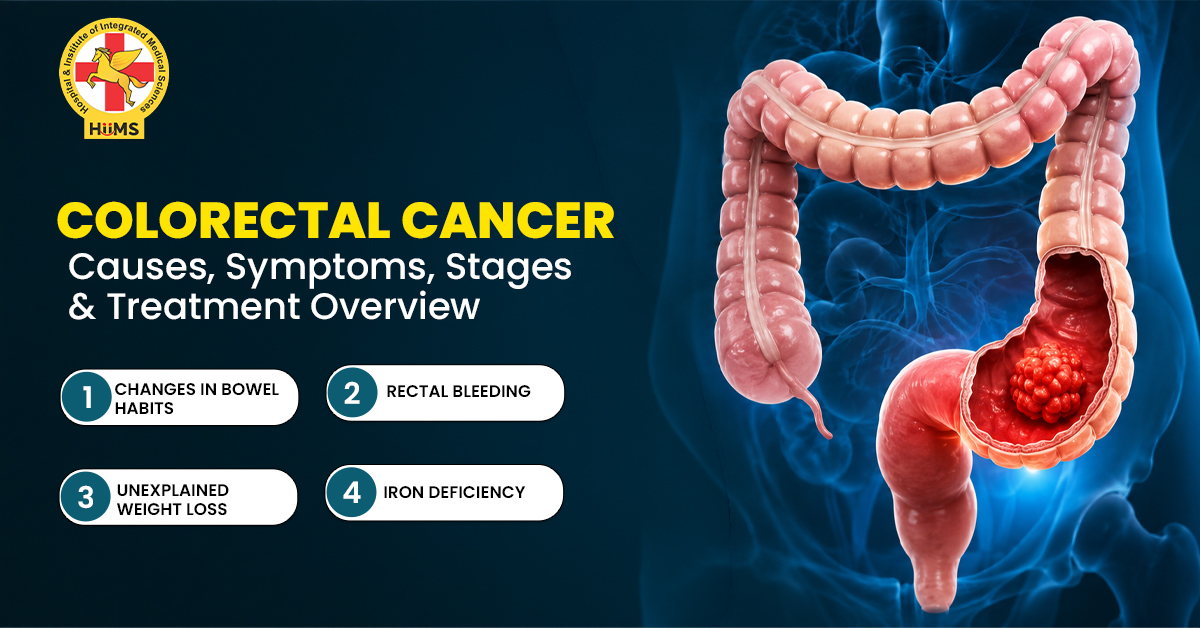
Colorectal cancer arises in either the colon or the rectum, which are both segments of the large intestine. This cancer usually begins from small polyps within the lining.
These may not cause any issue at first, but over time, some of them can turn into cancer. This process is usually slow, which is why early detection can make a big difference.
Causes of Colorectal Cancer
There is no single reason behind it. Multiple factors can increase the chances of developing it. Some common causes of colorectal cancer include:
- Low fiber and high processed food intake.
- Poor digestion over long periods.
- Lack of physical activity.
- Family history.
- Smoking or alcohol use.
- Long-term inflammation in the intestine.
Lifestyle plays a major role here, which is why we often link prevention with daily habits.
Colorectal Cancer Symptoms
In the early stage, symptoms can be very mild or even unnoticed. As the condition progresses, people may start noticing clear signs. Some common colorectal cancer symptoms are:
- Changes in bowel habits.
- Constipation or loose stools repeatedly.
- Blood in stool.
- Unexplained weight loss.
- Weakness or low energy.
- Abdominal discomfort or cramps.
These symptoms can also happen in other conditions, which is why proper testing is important instead of guessing.
Stages of Colorectal Cancer
The stages of colorectal cancer describe how far the cancer has spread.
- Stage 0 – Early stage, limited to the inner lining.
- Stage 1 – Spread slightly deeper into the colon wall.
- Stage 2 – Growth has increased but not spread to lymph nodes.
- Stage 3 – Spread to nearby lymph nodes.
- Stage 4 – Spread to other parts of the body.
Treatment decisions are usually based on these stages.
Why Ayurveda is Considered for Long-Term Support
Instead of only targeting the disease, Ayurveda looks at the body as a whole. The idea is simple: when the body becomes stronger internally, the recovery experience also changes.
That is why a lot of people opt for holistic colorectal cancer care or Ayurveda for colon cancer because they wish to concentrate on the long-term. This is what we do at Jeena Sikho HiiMS.
- Panchakarma Therapy
Panchakarma is used for internal cleansing and detox support. The process is not rushed. It is planned according to the patient’s condition and strength. - Golden Therapy
The Golden Therapy involves external application through the use of herbs. It is often looked into to help aid in the process of detoxification and increase general comfort. - Detox Juice Intake
Intake of fresh juices such as the Cancer Detox Juice aids in hydration and digestion. They also offer more energy throughout the day. - Fasting
This process is carried out with utmost care under supervision. This helps to take some pressure off the digestive system. - Herb Therapy
Some of the herbs that have been known to be helpful are giloy, ashwagandha, neem, and turmeric. These are linked with digestion, strength, and internal balance in traditional practices. These methods are not used randomly. Everything is planned based on the individual’s condition.
Why Many People Prefer This Approach
The difference people often notice is that this approach does not rush results. Its objective is geared towards aiding the body to achieve stability over a period of time.
This explains why most individuals consider Ayurvedic medicine to be a long-term form of therapy.
Why Choose Jeena Sikho HiiMS
At Jeena Sikho HiiMS, we do not limit our focus to the disease alone.
- The condition of the body is observed carefully.
- Treatment is planned in stages.
- The atmosphere is peaceful and conducive.
- The focus is not just on symptom alleviation but on enhancing the general well-being of the individual.
There are many treatment options available, but not all focus on long-term balance. This area is where this approach stands differently.
Conclusion
Understanding colorectal cancer, its symptoms, and treatment options helps in making better decisions. Modern treatments are important in many cases, especially when the disease has progressed. On the other hand, systems such as Ayurveda can be considered when thinking about achieving balance over time.
The important point is not to postpone a diagnosis and select an approach according to your own situation, rather than be driven by confusion and fear. To learn more, you may contact Jeena Sikho HiiMS through Video call consultation or mail on care@jeenasikho.com

FAQs
Q1. What is colorectal cancer, and how do we understand it easily?
It is cancer that develops within the colon or rectum through prolonged growth.
Q2. How are some of the earliest signs of colorectal cancer?
The early signs of colorectal cancer involve changes in stool movement, pain, and blood in the stool.
Q3. Can colorectal cancer be cured?
The chances of curing depend on the progression stage of the cancer.
Q4. How does Ayurvedic medicine assist in colorectal cancer?
Ayurvedic treatment is often considered for its supportive nature.
Q5. What are some of the major factors that cause colorectal cancer?
A poor diet, lifestyle, and other digestive conditions can cause colorectal cancer.
Disclaimer: The information provided on this blog is for general educational and informational purposes only. It is not intended to replace professional medical advice, diagnosis, or treatment. Always consult a qualified healthcare professional before making any changes to your diet, lifestyle, or treatment plan. Individual results may vary.