

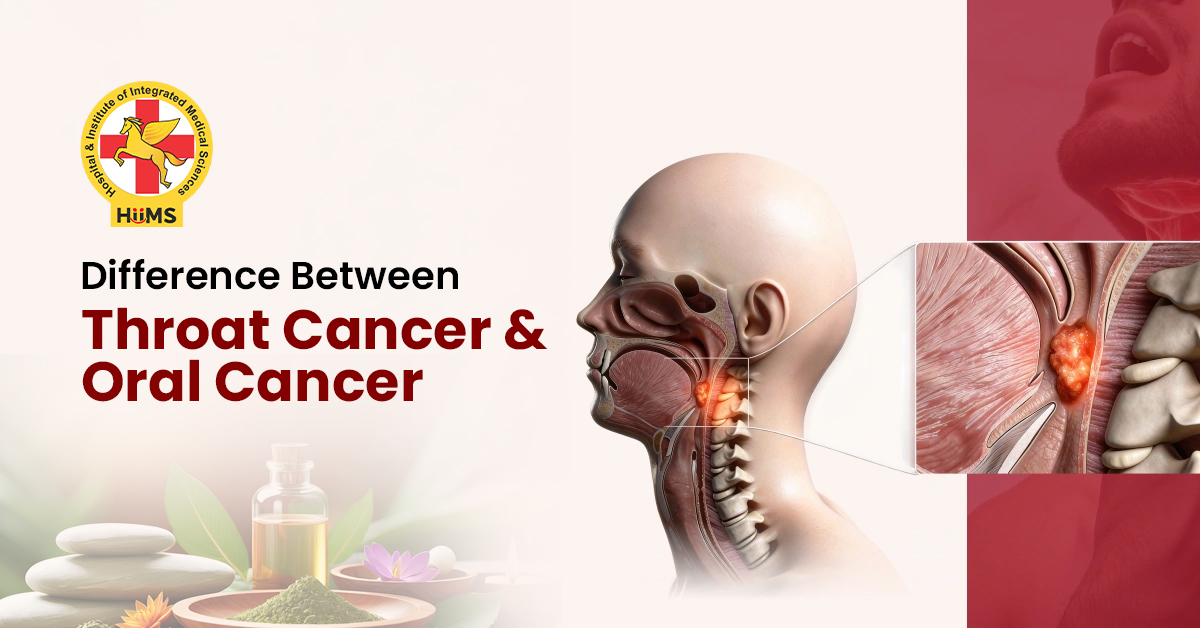
People often hear the words ‘mouth cancer’ and ‘throat cancer’ together and assume they point to the same problem, but that is not the case. The two conditions are very close to each other, which is why the confusion happens so easily, yet the first signs, the affected area, and the way they start are not the same.
A small sore inside the mouth, a patch that does not heal, a hoarse voice, or trouble while swallowing may all seem like minor issues in the beginning, but they can carry very different meanings. That is why understanding throat cancer vs oral cancer is so important, because the sooner a person notices the pattern, the sooner the right step can be taken.
In this blog, you will get a clear idea of how both conditions differ, what signs deserve attention, what may cause them, and why early care should never be ignored or put aside.
Understanding Cancer in Simple Words
Cancer starts when certain cells in the body stop following the normal pattern and start growing in an unchecked way. These cells do not stay quiet for long. They may spread into nearby tissues and, in some cases, move to other parts of the body too. In the mouth and throat region, this process can begin slowly, and that is exactly what makes it hard for many people to notice early. A person may think it is only an ulcer, a throat infection, or a small irritation from food, while the actual problem keeps growing in the background.
What is Oral Cancer?
Oral cancer starts in the mouth. It can appear on the lips, gums, tongue, cheeks, roof of the mouth, or the floor under the tongue. In many people, it starts with something small and easy to ignore, like a sore that does not heal, a patch that looks different from the rest of the mouth, or a lump that feels unusual when touched. These changes may not always hurt at first, which is one reason they are missed.
The early oral cancer symptoms are often visible if a person looks carefully, but most people do not check the inside of the mouth unless discomfort becomes strong. A white patch, a red patch, bleeding from the mouth, or pain while chewing should not be brushed aside as a simple mouth problem if it keeps coming back.
What is Throat Cancer?
Throat cancer develops deeper inside the area used for speaking, swallowing, and breathing. It may affect the pharynx, the voice box, the tonsils, or the back part of the tongue. Unlike oral cancer, this area is not easy to see in daily life, so the problem may stay hidden for a longer time.
Many throat cancer symptoms start in a way that sounds ordinary. A sore throat that keeps returning, a change in the voice, or a feeling that something is stuck in the throat can be mistaken for a cold or acid reflux. That is why throat cancer often gets noticed later than oral cancer. When a lump appears in the neck or swallowing becomes difficult, the signs usually become harder to ignore.
Throat Cancer vs Oral Cancer: Main Difference Explained
The clearest difference between throat cancer vs oral cancer is where they start. Oral cancer starts in the visible parts of the mouth, while throat cancer begins deeper in the throat area. Because of that, oral cancer is often easier to spot during a dental checkup, whereas throat cancer may need a more careful health care assessment.
The signs in both conditions usually feel different from each other. In oral cancer, people often notice sores inside the mouth, patches that look unusual, swelling, loose teeth, or pain while chewing food. In throat cancer, the problem is more connected with speaking and swallowing. Some people feel irritation near the ear, swelling in the neck, or a strange feeling in the throat that does not clear properly, even after some time. Even the daily pain feels different. Oral cancer can make eating and brushing painful, while throat cancer may make speaking and swallowing difficult.
Common Oral Cancer Symptoms People Often Ignore
A lot of people wait too long because the first signs do not look serious. A sore that does not heal for many days, a thick patch inside the mouth, numbness, or bleeding without a clear reason may not feel serious in the beginning. Even then, these changes should not be ignored, especially when they keep coming back or slowly begin affecting a larger area. Some people also notice that their jaw does not move as freely as before or that a tooth becomes loose without a clear dental reason. These are the kinds of signs that should not be ignored.
Common Throat Cancer Symptoms That Should Not Be Ignored
The signs of throat cancer can quietly blend into everyday discomfort. A person may keep clearing the throat, feel pain while swallowing, or notice that the voice has become rough and does not sound normal. Sometimes the person feels a lump in the neck or a strange pressure in the throat that does not go away. Ear pain can also appear even when the ear itself seems fine. When these throat cancer symptoms continue for more than a short time, they deserve proper healthcare monitoring.
Throat Cancer Causes vs Oral Cancer Causes
The causes of both cancers are often connected to long-term habits. Tobacco use is one of the strongest risk factors in both cases, whether someone smokes it or chews it. Alcohol can add more strain to the tissues and increase the risk further. In throat cancer, HPV infection also plays an important role in many cases, especially in deeper throat areas. Poor oral hygiene, unhealthy eating habits, and constant irritation inside the mouth over a long period may also increase the risk linked to oral cancer causes.
In simple words, repeated exposure to harmful habits slowly affects the health of these tissues.
Who May Be at Higher Risk?
Smoking, tobacco chewing, regular alcohol use, and not keeping the mouth clean for a long time can slowly increase the chances of these problems in some people. People living with HPV infection or low immunity may also need to stay more careful about long-term throat and mouth health. Higher risk does not always mean a person will develop a serious problem, but it does mean small warning signs should not be ignored for too long. Sometimes a minor change looks normal in the beginning, yet when it stays in the same area for weeks, it deserves proper medical attention.
Can Early Detection Improve Recovery?
Early detection often gives doctors more room to act and helps the person receive care before the issue becomes advanced. This is especially important because both oral cancer symptoms and throat cancer symptoms can begin quietly. Checking the mouth, throat, and overall health on time may help in noticing unusual changes before they become more serious.
Conclusion
The main difference in throat cancer vs oral cancer depends on where the condition begins, the kind of symptoms a person notices, and how it affects normal daily activities. Oral cancer generally develops in visible areas inside the mouth, while throat cancer affects deeper parts of the throat and often creates problems with swallowing, speaking, or changes in the voice in the early stages.
Paying attention to long-lasting sores, patchy areas, throat pain, or voice changes can save valuable time. Healthy habits, regular checkups, and early health care guidance are always valued more than waiting and hoping the problem will go away at their own.
For expert help or need guidance related to any health concern, you can also opt for an online video consultation (VOPD) for your health issue with the doctors at Jeena Sikho HiiMS.

FAQs
Q1. How does oral cancer usually begin?
It often starts as a sore, patch, or small lump in the mouth that does not heal in the usual time.
Q2. Which signs are more common in throat cancer?
A long-lasting sore throat, hoarse voice, swallowing trouble, and a lump in the neck are common warning signs.
Q3. Why are throat cancer and oral cancer confused so often?
They affect nearby areas, and some early symptoms overlap, so many people assume they are the same problem.
Q4. Can lifestyle habits raise the risk of both cancers?
Tobacco, alcohol, poor oral hygiene, and weak daily health habits can increase the risk over time.
Q5. What should a person do if the symptoms stay for weeks?
A proper healthcare checkup should be taken without delay, especially when the change does not settle on its own.