

A sore throat that stays on longer than it should, a voice that sounds a little rough, or the feeling that swallowing is not as easy as before can often seem ordinary at first. Many people keep moving through the day and hope it will settle on its own, especially when the discomfort is mild.
But the throat is one of those places where small changes are more important than they appear to be. When a problem keeps returning, it is worth understanding the deeper reason instead of only treating the surface sign. This is where knowing the throat cancer causes becomes important, because awareness can help people notice risk early and make better choices for their health.
In this blog, you will learn the main reasons behind throat cancer, the habits and conditions that raise risk, and the simple warning signs that should never be ignored before it starts affecting a bigger way.
What Is Throat Cancer?
Throat cancer starts when certain cells in the throat, voice box, or tonsils stop behaving normally and start growing in an uncontrolled way. These changes do not appear all at once. They usually build slowly, which is why early discomfort is so easy to miss. The throat carries air, food, and voice through one small passage, so even a minor problem can affect daily life more than people expect.
So, What Causes Throat Cancer?
There is no single answer when we talk about throat cancer causes. In many cases, several things work together for years before the problem becomes visible. Long-term irritation, harmful habits, certain infections, and even the environment can slowly affect throat tissues. Once the lining of the throat keeps facing this kind of stress, the cells may begin changing in unhealthy ways.
That is why doctors often look at the full picture instead of one habit alone. The body usually gives small clues first, and those clues matter.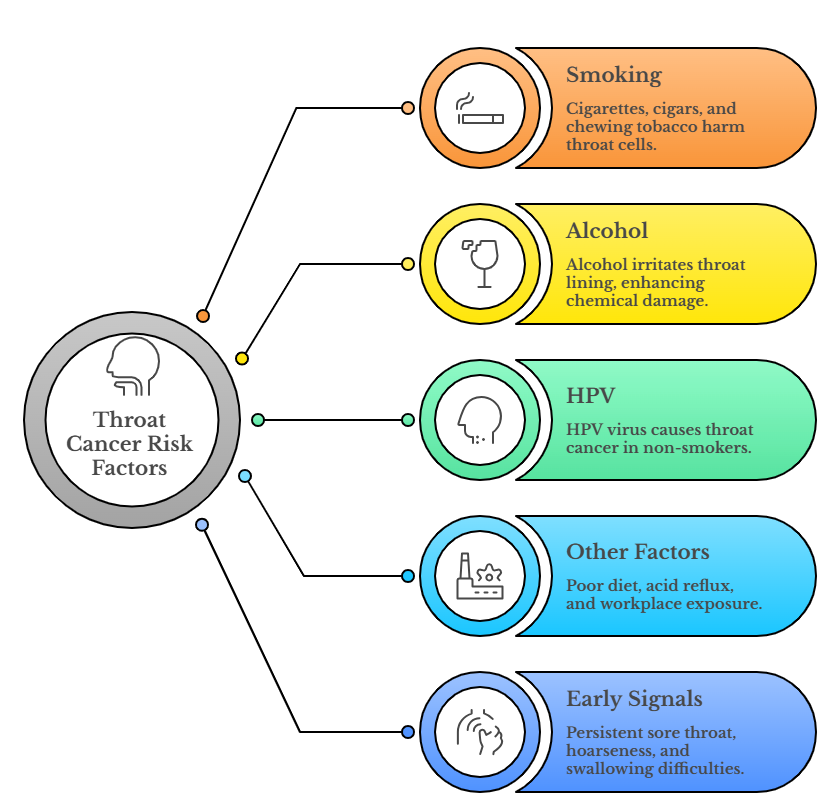
Smoking and Throat Cancer: The Strongest Link
The connection between smoking and throat cancer is one of the clearest links in medical care. Cigarettes, cigars, pipes, and chewing tobacco all expose the throat to harmful chemicals. These substances irritate the lining again and again, and with time, they can damage healthy cells.
Many people think only smoking is important, but chewing tobacco can be just as harmful for the throat and mouth area. The damage may not show right away, which is what makes it more dangerous. Regular use, along with years of exposure, raises the chance of cell changes much more than people realise.
Alcohol and Its Effect on the Throat
Alcohol can irritate the throat lining and make it easier for harmful substances to cause damage. The risk becomes stronger when alcohol and tobacco are used together, because the throat faces repeated stress from both sides.
This is one reason throat cancer risk factors are often discussed together instead of separately. Habits that seem harmless in the moment can build pressure over time, especially when they become regular. A person may not notice the impact early, but the throat often carries that burden silently.
HPV Throat Cancer and Why It is Important
Another important concern is HPV throat cancer. HPV is a common virus, and many people never realise they carry it. Some types of this virus affect the throat and slowly change the cells over time.
This is important because HPV throat cancer can also appear in people who do not smoke or drink. That makes it different from the older picture of throat cancer that people often imagine. It reminds us that risk is not always tied to one obvious habit. Sometimes a person may seem healthy on the outside, yet still carry an infection that affects the throat later.
Other Throat Cancer Risk Factors People Often Overlook
Not every risk comes from tobacco or alcohol. A poor diet, especially one low in fresh fruits and vegetables, may reduce the body’s ability to repair damage. Long-term acid reflux can also repeatedly irritate the throat. This ongoing irritation may not feel serious at first, but it can become one of the quieter throat cancer risk factors.
Workplace exposure also plays an important role in it. Dust, fumes, and chemicals from certain industries can put constant pressure on throat tissues. These are not always discussed enough, yet they play a part in the wider picture of causes of throat cancer.
Early Body Signals That Should Not Be Ignored
A throat problem does not always start with severe pain. It may start with a sore throat that never fully leaves, a voice that becomes hoarse for weeks, or the uneasy feeling that food is not going down smoothly. Some people also notice a small lump in the neck or discomfort that keeps returning without a clear reason.
These signs do not always mean cancer, but they should never be pushed aside for too long. The earlier they are checked, the better the chances of understanding what is happening.
When Should You Actually See a Doctor?
If a throat problem doesn’t settle even after two to three weeks, it’s better to get it checked by a doctor. This matters more when it keeps coming back or just doesn’t feel like a usual cold or simple irritation. Early attention gives more clarity and helps avoid delay. For guided support related to your concern, you can opt for a VOPD (online video consultation) with expert doctors at Jeena Sikho HiiMS.
Conclusion
Understanding throat cancer causes gives people a clearer way to look at their own habits and overall health. It also makes the warning signs feel less confusing, because the body often starts showing subtle signals long before a serious problem becomes obvious. Being aware of these early changes can also support timely decisions around cancer treatment, making care more effective and less overwhelming.
The main point is simple: avoid the things that strain the throat, pay attention to changes that do not settle, and do not wait too long to seek expert advice when something feels different. Acting early not only saves time and reduces anxiety but also improves the chances of better outcomes with the right cancer treatment at the right stage.
FAQs
Q1. What are the most common causes of throat cancer?
The most common causes include tobacco use, alcohol intake, HPV infection, poor diet, and long-term throat irritation.
Q2. How does smoking and throat cancer connect?
Smoking exposes the throat to harmful chemicals again and again, which can slowly damage healthy cells and raise risk.
Q3. Can HPV throat cancer affect people without smoking habits?
HPV throat cancer can develop even in non-smokers, which is why infection-related risk should not be overlooked.
Q4. What are the early signs linked to throat cancer risk factors?
Persistent hoarseness, swallowing trouble, sore throat, and a lump in the neck are common signs that need attention.
Q5. When should a throat problem be checked by a doctor?
A throat issue that lasts beyond two to three weeks should be checked, especially if it keeps coming back or feels unusual.