

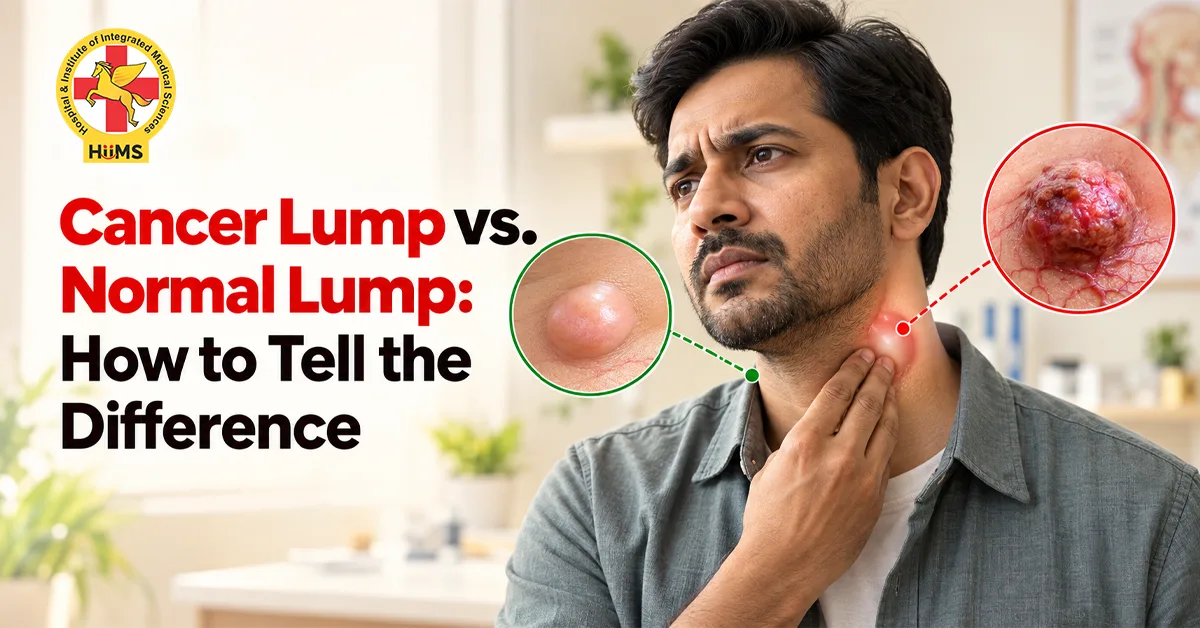
Finding a lump on your body can be scary. It’s natural to worry that it could be something serious. But here’s something important to know first: most lumps people find are not cancer.
This blog explains the general patterns doctors look for when comparing a cancer lump vs a normal lump. A 2012 study published in the Indian Journal of Surgical Oncology looked at 120 breast lumps and found clear differences in how benign and malignant lumps usually feel, including differences in texture, mobility, and shape that this blog walks through in detail.
What Is a Lump, and Why Do They Happen?
A lump is simply an area of swelling or a growth you can feel under your skin. Lumps can form for many reasons. Some are cysts (fluid-filled sacs), some are lipomas (harmless fat growths), some come from infections, and some are swollen lymph nodes fighting off illness. Only a smaller number come from abnormal cell growth, which is what we call cancer.
This is exactly why looking at specific features matters more than fear or guessing. Not every lump needs panic, but every new lump deserves attention. Found a new lump? Don’t wait and wonder.
Cancer Lump vs Normal Lump: Key Differences
Doctors often look at a few physical features first before any scan or test. Here’s what research shows about the difference between cancerous and benign lump types.
- Texture: Benign lumps often feel soft, smooth or rubbery. Cancerous lumps often feel hard or firm. In the 2012 study, about 60% of malignant lumps felt hard, while most benign lumps felt soft.
- Mobility: Benign lumps usually move a little when you press them. Cancerous lumps are often fixed in place and don’t move much. In that same study most benign lumps were mobile while a much larger share of malignant lumps were fixed.
- Edges: Benign lumps typically have smooth, well-rounded edges. Cancerous lumps often have irregular, uneven edges. The study found irregular margins in a large share of malignant lumps, compared to very few benign ones.
- Growth pattern: Benign lumps often stay the same size for months or years. Cancerous lumps tend to grow steadily over weeks or months.
- Pain: Many people believe “if it doesn’t hurt, it’s not cancer.” This isn’t reliable. Another study, published in the National Journal of Medical Research in 2014, found that pain was actually a common symptom in malignant cases too. So pain, or the lack of it, cannot tell you the answer on its own.
Some benign lumps feel firm. Some early cancers feel soft. That’s exactly why a lump needs to be examined properly, not just judged by feel alone.
How to Tell If a Lump Is Cancer? Warning Signs to Watch For
While no single sign confirms cancer certain features should push you to get checked sooner rather than later:
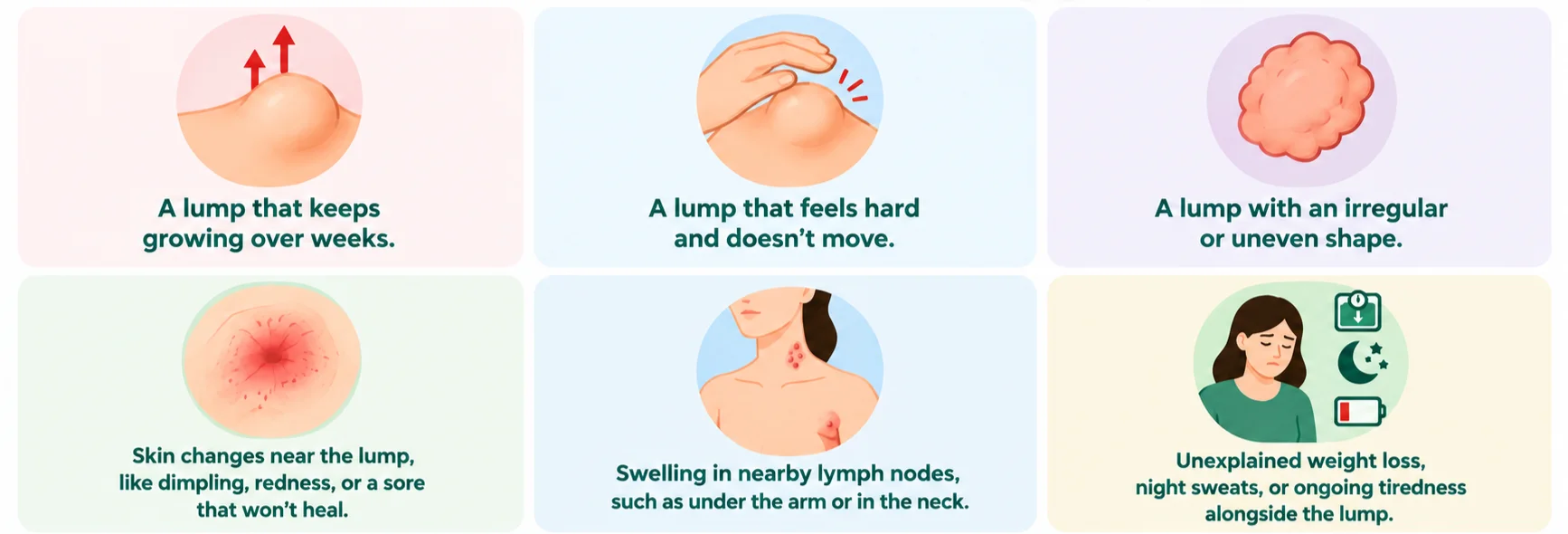
- A lump that keeps growing over weeks
- A lump that feels hard and doesn’t move
- A lump with an irregular or uneven shape
- Skin changes near the lump, like dimpling, redness, or a sore that won’t heal
- Swelling in nearby lymph nodes, such as under the arm or in the neck
- Unexplained weight loss, night sweats, or ongoing tiredness alongside the lump
Together, they’re a strong reason to get an ultrasound, mammogram, or other imaging done soon, rather than waiting.
Cancer Lump Symptoms Beyond the Lump Itself
Sometimes a lump doesn’t come alone. Watch for these alongside it
- Ongoing pain in or around the area, not just occasional discomfort
- Changes in skin colour or texture over the lump
- More than one lump appearing, especially in the lymph nodes
- Unusual discharge particularly with breast lumps
- A new lump appearing in someone with known risk factors, like a family history of cancer, older age or a past cancer diagnosis
Noticing more than just a lump? Get a full check-up.

Diagnosis: How Doctors Actually Tell the Difference
A physical exam is only the first step. Doctors also rely on imaging, like an ultrasound, mammogram, CT or MRI depending on where the lump is. Often, they’ll also do a biopsy, where a small sample of tissue is examined under a microscope. This is the only way to know for certain.
No home check, self-exam or online description can replace this process. If you’re worried, the safest step is always a proper expert evaluation.
Supportive Care Alongside Cancer Treatment: How Jeena Sikho HiiMS Can Help
Jeena Sikho HiiMS Kurukshetra is an integrated hospital combining Ayurveda, Naturopathy, homoeopathy, Unani, and modern science. The hospital works on the root cause of disease and provides effective natural supportive care for the side effects of modern treatment.
What HiiMS offers as supportive care:
- pH-balanced diet is a plant-based diet that creates an alkaline environment inside the body, where harmful cells cannot thrive. It also helps maintain strength and appetite during treatment.
- Herbs are traditionally used to support general well-being and ease treatment side effects. Panchakarma removes toxins from body, cleansing it from the inside.
- Golden Therapy, an Ayurvedic herbal paste made from ingredients like neem, banyan, peepal, and turmeric used as part of HiiMS’s broader wellness-support offerings.
- Mind & Body Healing provides emotional and stress support through yoga, meditation, and counselling during a difficult diagnosis and treatment journey.
Conclusion
Most lumps are not cancer. Many come from harmless causes like cysts, lipomas or swollen lymph nodes and often feel soft, move easily and stay the same size over time. Cancerous lumps, on the other hand, tend to feel firm, stay fixed in place, have irregular edges and grow steadily.
If you find a new lump or notice one changing, don’t ignore it. Visit your nearby Jeena Sikho HiiMS or book a VOPD (video consultation) to consult an expert from home.

FAQs
Q1. Can a cancerous lump feel soft?
Yes, sometimes. Most cancerous lumps feel hard but not always. This is why texture alone can’t confirm or rule out cancer.
Q2. Does a painful lump mean it’s not cancer?
No. Research shows pain can occur with both benign and malignant lumps, so pain, or its absence isn’t a reliable sign either way.
Q3. How fast do cancerous lumps usually grow?
Cancerous lumps often grow steadily over weeks to months while benign lumps tend to stay the same size for much longer. Growth pattern is one of the more noticeable differences.
Q4. Can a lump go away on its own?
Some benign lumps like cysts, can shrink or disappear over time. A cancerous lump typically does not shrink on its own and tends to keep growing.
Q5. What tests confirm whether a lump is cancer?
Imaging like an ultrasound, mammogram or CT/MRI is usually the first step followed by a biopsy in many cases, where a tissue sample is examined under a microscope. This is the only way to confirm cancer for certain.