

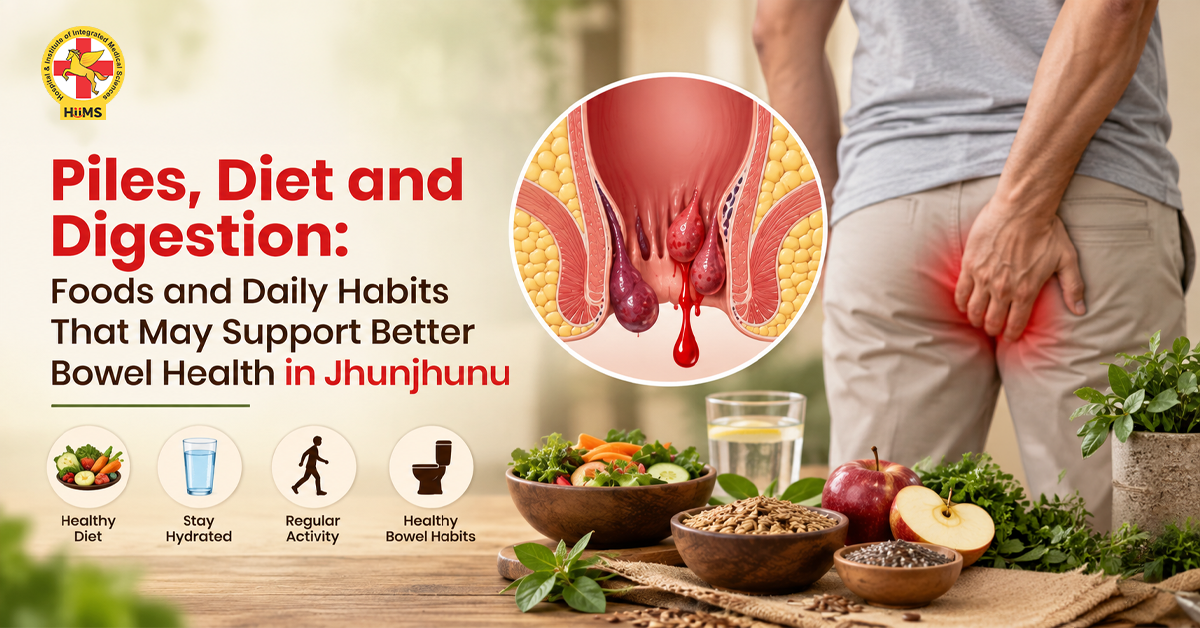
Piles are a problem people rarely talk about, even with close family. A person may feel itching or pain while passing stool or see a little blood, and still wait for weeks before asking for help. In a dry district like Jhunjhunu, summers are long and hot, and many people drink less water than the body needs. Long hours of sitting and a diet of refined flour and fried snacks can add to the trouble. Over time, the gut slows down and the stool turns hard.
This is why the search for piles treatment should also include attention to food choices, digestion, and everyday bowel habits. Piles are swollen veins in and around the anus. According to the National Institute of Diabetes and Digestive and Kidney Diseases (NIDDK), certain toilet habits, constipation, a low fibre diet, and ageing may cause them. The good news is that small changes in food and habits can bring real comfort. Piles Treatment in Jhunjhunu at Jeena Sikho HiiMS works on the root cause of the condition, not only on the symptoms. This blog explains, in simple words, how food, water and daily habits work together and how Ayurveda looks at the whole picture of digestion.
How Piles and Digestion Are Connected
Food moves through the digestive tract, a long tube in the body. If meals lack fibre and water intake is low, the stool becomes dry and hard. Passing it needs force, and that force puts pressure on the veins near the anus.
This is the simple link behind piles and digestion. A weak or sluggish gut often shows up first as gas, heaviness or irregular motions. Piles may follow later.
In clinical practice, doctors often observe that many people ignore these early signs. They treat the bleeding or pain, but nobody asks about food, water, sleep or toilet habits.

For personalised guidance, speak to a qualified Ayurvedic doctor who can understand your digestion and suggest suitable care options.
What Research Tells Us About Piles in India
A large Indian survey, the CHORUS study published in the Indian Journal of Surgery, looked at 2,511 people who visited doctors for piles. Its list of participating doctors includes centres in Jaipur and Jodhpur.
Another study, in the Journal of Population Therapeutics and Clinical Pharmacology, looked at 240 adults in a semi-urban centre in Madhya Pradesh. Most had a low fibre diet (69.6%), and many had chronic constipation (57.5%) or a sedentary lifestyle (59.6%). Low fibre, constipation and inactivity were also linked to more severe piles.
Constipation and piles often go together, and hard stools are a common starting point. Food, water and movement are habits a person can change, which is why they matter so much.
How Diet Can Support Piles Management
A good piles diet is not complicated. It means eating more fibre and drinking enough water.
Here are some easy foods for piles that suit an Indian kitchen:
- Whole wheat roti, jowar or bajra instead of maida
- Moong dal, chana and other pulses
- Green leafy vegetables, lauki, tori and carrots
- Fruits like papaya, guava, pear and apple with the skin
- Soaked raisins or figs in the morning
- Buttermilk, coconut water and plenty of plain water
Add fibre slowly, because a sudden jump can cause gas and bloating.
On the other hand, some foods may add to constipation. Chips, fast food, ice cream and packaged snacks have little fibre. Very spicy food and alcohol may also irritate the gut in some people.
According to the ICMR National Institute of Nutrition, about 30 grams of fibre for every 2,000 calories eaten in a day is considered a safe level for Indian adults. Whole grains, pulses, vegetables and fruits are easy ways to reach it.
Daily Habits That Support Healthy Bowel Habits
Food is only half the story. The way we sit, walk and go to the toilet matters too.
Try these healthy bowel habits:
- Go when the urge comes. Do not hold it for later.
- Do not strain or sit for a long time on the toilet.
- Walk for 30 minutes daily, and stand up often during desk work.
- Drink water throughout the day, especially in summer.
- Keep regular meal times and sleep hours.
These steps also work as piles prevention. They protect the veins from repeated pressure.
The Ayurvedic View of Piles
Ayurveda calls piles Arsha. It links them closely with Agni, the digestive fire. When Agni is weak, food is not digested well, and the bowels turn irregular.
So Ayurveda looks at the whole person. It asks about food, water, sleep, stress and routine, and it does not chase the symptom alone.
Some people find that creams and stool softeners bring only short relief, and the trouble returns if the habits stay the same. Procedures can also mean pain and rest time. That is one reason many families prefer to begin with natural care and lifestyle change.
Natural Piles Treatment in Jhunjhunu at Jeena Sikho HiiMS
Piles Treatment in Jhunjhunu at Jeena Sikho HiiMS works on the root cause of the condition, and care begins with listening. Doctors first understand your history, food habits and daily routine to find what is causing the trouble, before discussing suitable options.
The approach may include:
- Diet guidance based on your digestion
- Suitable herbal support chosen after assessment
- Yoga and simple lifestyle changes
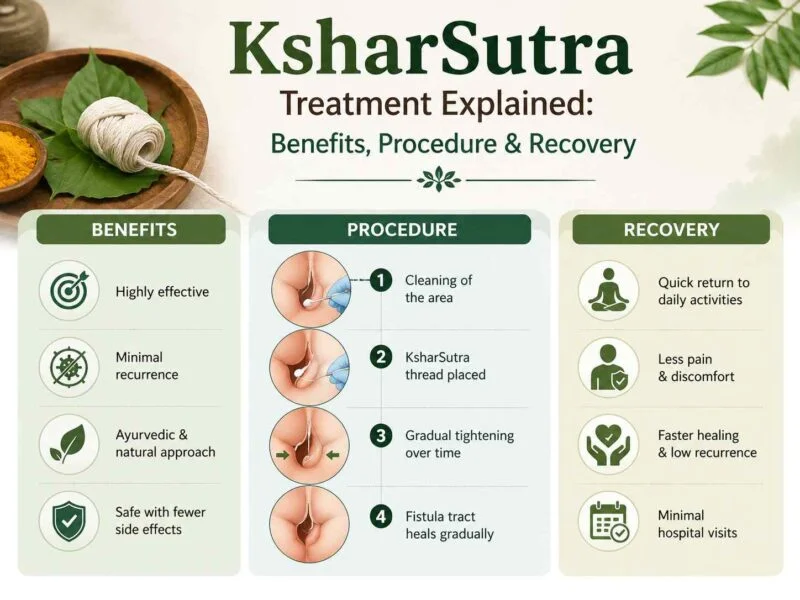
Along with these steps, Kshar Sutra therapy may also be considered. In this therapy, a medicated thread coated with herbal alkaline ingredients is tied around the pile mass and changed at regular visits. It is used in Ayurveda for certain types of piles, and a doctor decides if it suits you after an examination.
Results differ from person to person, so any plan should be made with a qualified doctor.
What to Keep in Mind
Care for piles works best when it is safe, personal and guided by a qualified doctor. Keep these points in mind:
- See a doctor if bleeding is heavy, lasts long or comes with weight loss.
- Do not copy another person’s medicine or diet.
- Do not stop any prescribed medicine without advice.
- Bleeding is not always piles, so get it checked.
These simple steps help you care for your health in a responsible and practical way.
Conclusion
Piles are closely tied to what we eat, how much water we drink and how we treat our gut every day. Fibre-rich food, enough fluids and steady habits can support bowel health and ease the load on the veins. Ayurveda adds a personal and gentle view of digestion.
At Jeena Sikho HiiMS, care for Piles Treatment in Jhunjhunu starts with understanding you, not just the symptom. If you want to talk to a doctor, you can book a Free consultation from home and share the concerns without any hurry.

FAQs
1. Which foods may help with piles?
Whole grains, pulses, green vegetables, fruits with skin and plenty of water may help keep stools soft.
2. Why does constipation make piles worse?
Hard stools need straining, and this puts extra pressure on the veins near the anus.
3. Does Ayurveda look at digestion for piles?
Yes, Ayurveda links piles closely with weak digestion and looks at food, water, sleep and routine together.
4. Can daily habits lower the chance of piles?
Regular meal times, daily walking and not holding the urge to pass stool may help protect the veins.
5. When should I see a doctor for piles?
See a doctor if bleeding is heavy, lasts long or comes with weight loss, as bleeding is not always piles.