
Most people do not think much about their heart until something unusual starts to happen. A little breathlessness while climbing stairs, a strange heaviness in the chest, or tiredness that seems to stay even after resting, these things generally seem to be ordinary at first. Since the signs seem minor, many people tend to overlook them and simply carry on with their usual daily routine.
The problem is that the body often shows early signs when something inside is not working properly. When blood flow to the heart becomes limited, certain heart blockage symptoms may start appearing slowly. They do not always look severe or painful in the beginning, which is why many people mistake them for common issues like stress or digestion related problems.
Recognizing these early warning signs helps people respond in time and deal with the problem before it turns into something more serious. Doctors at a good heart hospital often say that awareness and timely consultation with a heart specialist can make a major difference.
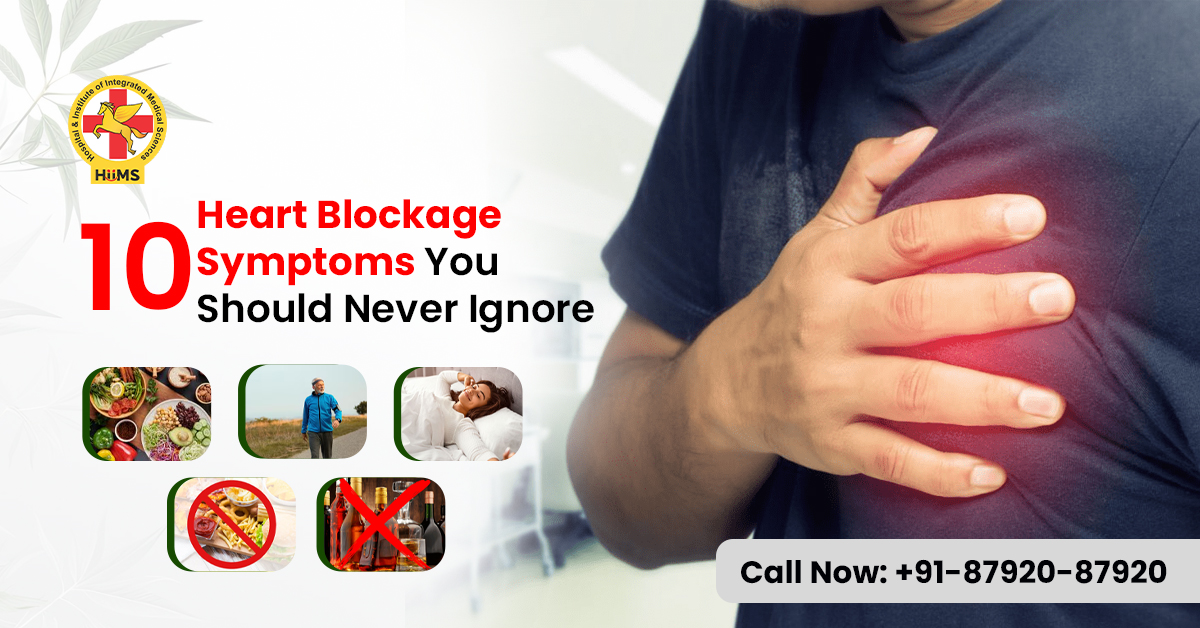
In this blog, we will look at 10 common heart blockage symptoms, understand why they appear, and learn when healthcare attention becomes necessary.
Understanding Heart Blockage and How It Develops
In most people, heart blockage tends to develop slowly over time rather than appearing all of a sudden. With time, cholesterol and fatty material begin to build up inside the arteries that carry blood to the heart. As this buildup increases, the arteries slowly become narrow.
If this narrowing stays for a long period, the amount of blood reaching the heart muscle slowly starts to reduce. The heart continues doing its job, but during physical work or stress it may not get enough oxygen.
Because of this reduced blood flow, some heart blockage symptoms may start appearing while people go about their normal daily activities.
Why People Often Ignore Early Heart Blockage Symptoms
One common reason people overlook early warning signs is that the symptoms do not appear severe. A person may feel mild chest discomfort and assume it is acidity. Another person may experience tiredness and blame it on a long day at work.
People often stay so busy with daily work that they overlook these symptoms for a while. Many delay visiting a heart specialist because they feel the discomfort will settle on its own.
10 Important Warning Signs That Should Not Be Ignored
- Chest Pain, Pressure, or Tightness: A heavy or squeezing sensation in the centre of the chest is one of the most recognized signs. It may appear during walking or physical effort and sometimes reduces after rest.
- Shortness of Breath During Simple Activities: Breathlessness while climbing stairs or walking short distances may indicate that the heart is not pumping blood efficiently.
- Unusual or Continuous Fatigue: Feeling tired throughout the day even without doing any kind of heavy work, can occur when the body receives less oxygen.
- Pain Spreading to Arm, Neck, Jaw, or Back: Discomfort sometimes travels from the chest toward the arm, jaw, or upper back. This type of pain should not be ignored.
- Sudden Sweating Without Physical Activity: Cold sweating can sometimes appear even when a person has not exercised or been in heat, and it may happen when the heart is receiving less blood than usual.
- Dizziness or Feeling Light-Headed: Reduced circulation to the brain can sometimes cause dizziness or a faint feeling.
- Irregular Heartbeat or Palpitations: Some people may feel their heartbeat suddenly becoming fast or a little uneven. This can happen when the heart finds it difficult to keep a steady rhythm.
- Swelling in Feet, Ankles, or Legs: When the heart does not pump blood properly, fluid may start collecting in the lower part of the body.
- Nausea or Upper Stomach Discomfort: Some heart blockage symptoms can feel like indigestion or acidity, which is why many people tend to overlook them.
- Reduced Stamina During Routine Activities: A slow decline in stamina or difficulty performing daily tasks may indicate that the heart is under pressure.
When These Symptoms Require Immediate Healthcare Attention
Certain situations need quick medical attention. Severe chest pain, heavy sweating, breathing difficulty, or pain spreading to the arm or jaw should not be ignored.
In such situations, doctors may recommend immediate treatment to prevent further complications. Seeking help from a qualified heart specialist ensures proper diagnosis and timely care.
At Jeena Sikho HiiMS Gurugram, doctors carefully check the symptoms and then guide patients toward suitable treatment plans that help support heart health in the long run.
Conclusion
Heart problems hardly start without warning. The body, in most of the cases provides signals that something needs attention. Recognizing heart blockage symptoms early allows people to seek proper health care before the condition becomes serious.
When discomfort, breathlessness, or unusual tiredness keeps appearing again and again, it is better not to brush it aside, as these signs may slowly lead to more serious problems. Getting checked at a trusted Heart hospital like Jeena Sikho HiiMS Gurugram and speaking with an experienced Heart specialist can help doctors identify the issue early.
At Jeena Sikho HiiMS Gurugram, patients receive careful evaluation and guidance aimed at improving overall heart health through proper medical supervision.
If you notice persistent symptoms or unusual physical changes, you can contact us at +91 82704-82704 or email care@jeenasikho.com.
FAQs
Q1. What are the common early heart blockage symptoms?
Ans. People sometimes report feeling chest heaviness or breathlessness during activity, along with tiredness, dizziness, and a noticeable drop in stamina.
Q2. When should someone consult a heart specialist?
Ans. Health care consultation becomes important when symptoms appear repeatedly or worsen during routine activities.
Q3. Can heart blockage symptoms feel like digestion problems?
Ans. Some heart-related discomfort appears as upper stomach heaviness or nausea and may resemble acidity.
Q4. Why is early diagnosis important in heart disease?
Ans. Early detection helps doctors begin treatment sooner and prevents serious complications.
Q5. How can a heart hospital help detect heart blockage?
Ans. Doctors first review the symptoms and then carry out certain tests to understand what is happening and decide the suitable treatment.