

Many people feel a burning chest pain after eating a heavy meal. Most of us call this simple stomach trouble, but understanding acidity vs GERD helps us recognise when occasional discomfort may point to a more persistent digestive problem. In daily life, fast food, long working hours, and mental stress disturb our stomach peace. Today, stomach trouble is rising rapidly across Indian cities. Busy daily schedules, fried meals and lack of sleep ruin basic digestive health. Many adults take quick pills without thinking about the underlying cause. According to a research study published in the Indian Journal of Gastroenterology, the overall prevalence of GERD in India is around 15.6%, driven largely by urban lifestyles.
When stomach liquid moves up into the food pipe, it creates a painful burning sensation. A burn that shows up once in a while is usually harmless. When it keeps returning, GERD may be the reason. Doctors often meet patients who think it is just acidity, so they use the wrong medicines for weeks or months. Knowing what is actually happening in your body helps you choose a safer path. At Jeena Sikho HiiMS Gurugram, the focus is on natural gut recovery using pure Ayurvedic remedies, better food choices and a steady daily routine.
Understanding Acidity and GERD
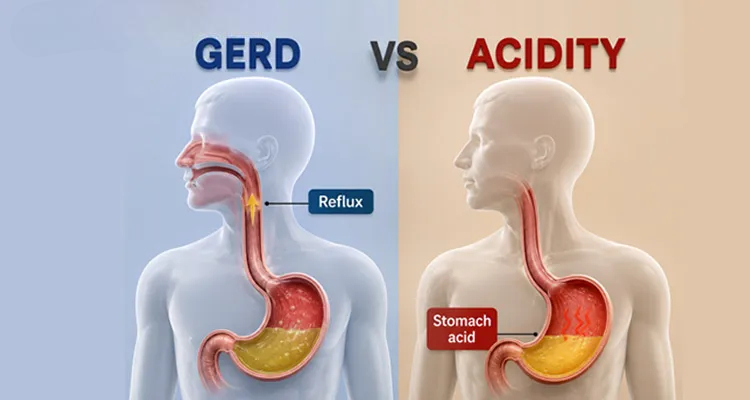
Acidity and GERD may feel similar, but the reasons behind the discomfort and how often it occurs are not the same.
What Is Acidity?
A burning sensation in the upper stomach or chest, often linked to meals and digestive discomfort, is commonly called acidity. Occasional episodes may follow the spicy foods, a heavy meal, or lying down soon after eating.
What Is GERD?
GERD (gastroesophageal reflux disease) refers to stomach contents repeatedly flowing back into the food pipe and causing irritation. This can lead to frequent heartburn, sour liquid in the mouth and sometimes difficulty swallowing.

Acidity vs GERD: What Is the Difference?
Paying attention to your symptoms can help you identify the problem and decide when to seek medical advice. Here is a simple comparison.
| Health Factor | Acidity | GERD |
| Frequency | Happens once in a while after bad meals | Occurs multiple times every week |
| Key Symptoms | Burning stomach and mild burping | Severe heartburn, chest discomfort and dry cough |
| Duration | Lasts a few hours | Lasts for months if ignored |
| Food Pipe Impact | No permanent harm to the food pipe | Causes swelling and sore spots in the food pipe |
Patients frequently report that GERD symptoms include difficulty swallowing food, bad breath, chronic throat irritation, and liquid rising into the mouth during sleep.
What Causes Acidity and GERD?
Both problems start in the gut, but their triggers are not the same. Knowing the causes behind acidity vs GERD helps you fix the right habit.
Common Acidity Causes
The main acidity causes include:
- Skipping meals or leaving long gaps between meals
- Too much tea, coffee, or cold drinks
- Spicy, oily, and fried food
- Eating dinner very late at night
- Stress and poor sleep
Common GERD Causes
GERD causes often run deeper and build up over time:
- A weak muscle valve at the bottom of the food pipe
- Extra weight that presses on the stomach
- Smoking and alcohol
- Pregnancy
- Lying down right after a meal
- Long term stress that slows digestion
According to StatPearls on NCBI, obesity, pregnancy, smoking, and certain foods raise the risk of GERD. Not sure what triggers your burn?

Why Conventional Chemical Pills Are Not the Best Choice
When people feel burning, they often take antacids or acid blocker pills. These chemical pills reduce stomach acid quickly, but they only hide the problem temporarily.
Doctors often notice that the body’s own power to digest food grows weaker when a person takes acid blockers day after day. Research on PubMed and NCBI points out that long use of PPIs may affect the good bacteria in the gut. It may also reduce how well the body takes in certain nutrients and may put extra load on the kidneys.
The Ayurvedic Perspective: Root Cause Healing by Acharya Manish Ji
Ayurveda calls this condition Amlapitta. According to ancient wisdom, digestive troubles happen when the internal fire (Agni) becomes weak due to improper diet and lifestyle habits.
Instead of stopping natural body processes, natural healing balances the body heat (Pitta dosha). Clinical studies indexed on PMC NCBI demonstrate that structured Ayurvedic therapies effectively soothe gastrointestinal inflammation while protecting mucosal linings safely without recurring the side effects.
Natural Therapies and Lifestyle Steps for Recovery
A disciplined daily routine is what it takes to heal your gut for good:
- Dietary Alignment: Choose freshly cooked meals, herbal drinks, and fruits, and stay away from raw red chilies, too much tea, fermented items and deep fried snacks.
- Gentle Herbal Support: Amla, Mulethi and Shatavari are among the herbs used in Ayurvedic practice to support digestive wellness and overall gut health.
- Detoxification Methods: Natural therapies flush out accumulated toxins (Ama) from the stomach, so the food pipe valve can regain strength.
- Sleep Position: Keeping the head slightly elevated during sleep prevents digestive liquids from rising upward.
Small healthy habits build up over time, and doctors at Jeena Sikho HiiMS Gurugram guide every person toward the daily plan that works best for their body.
Conclusion
Understanding the acidity vs GERD can help you recognise the difference between occasional heartburn and repeated acid reflux. While healthy eating habits and lifestyle changes may ease some symptoms, persistent discomfort needs proper evaluation. Ayurvedic care and balanced nutrition may provide additional support when chosen according to the individual health needs.
Digestive discomfort should not stay with you for months. Reach out to Jeena Sikho HiiMS Gurugram and book an appointment. A qualified doctor will listen to your problem and explain your treatment choices, all without you leaving home.

FAQs
Q1. Can acidity turn into GERD?
Ans. Frequent acidity that nobody checks can slowly lead to the repeated reflux.
Q2. Why does heartburn get worse at night?
Ans. Lying flat lets stomach contents rise more easily, especially after a late dinner.
Q3. Is cold milk good for acidity?
Ans. It may feel soothing for a short while, but it does not fix the cause.
Q4. Is GERD common in India?
Ans. Studies show it is fairly common, especially among the people living in cities.
Q5. When should I see a doctor?
Ans. See a doctor if you have trouble swallowing, weight loss without reason, black stools, or a burn that will not settle.