

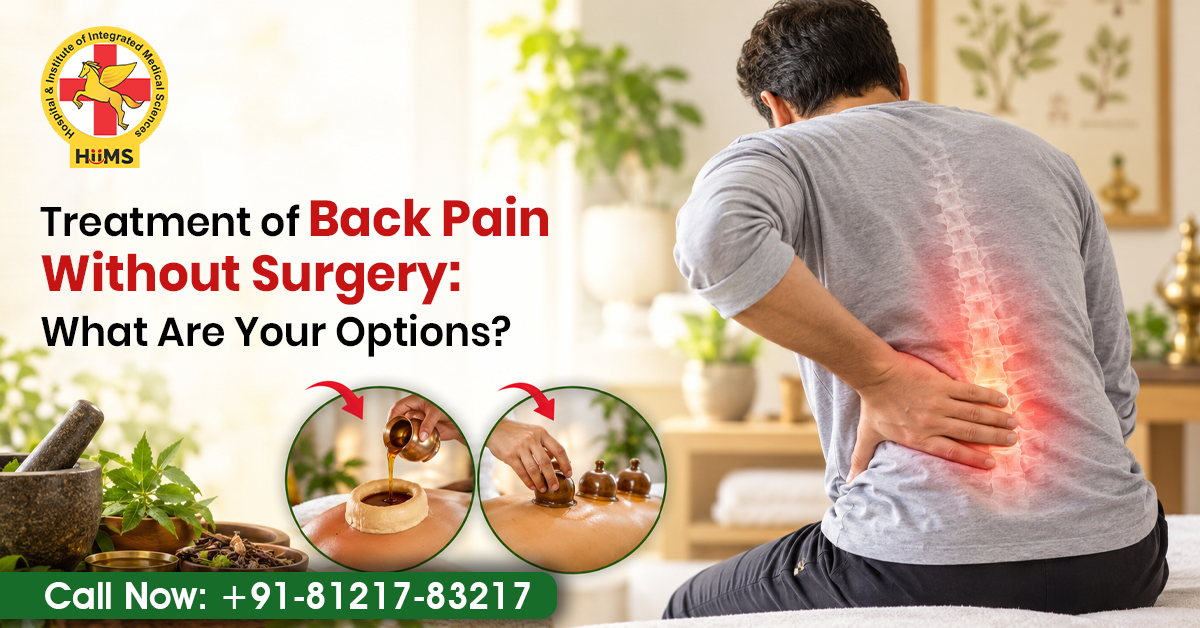
If your back has been acting up for weeks and you’re dreading the word “surgery” every time it comes up in conversation, take a breath. For most people, that’s not actually where things end up. The treatment of back pain almost always starts with simpler, non-surgical options first, and a lot of people find real relief without ever needing an operation.
Poor posture, sitting too long, a bad lift, or just years of wear and tear are usually behind most cases. This blog walks through what those non-surgical options actually look like, when you should see a back pain doctor, and where Ayurveda fits into the picture for people who’d rather avoid the surgical route altogether.
What’s Actually Causing Your Back Pain?
Before jumping into options, it helps to know what’s usually behind this. Back pain doesn’t always come from something dramatic; often, it’s just accumulated strain. Common causes include muscle strains, ligament sprains, disc issues, and simply poor posture held for too many hours a day.
It can come on suddenly after lifting something the wrong way, or it can build up slowly over months of sitting hunched at a desk. Some people feel it just in the lower back, while others notice it radiating down toward the leg, sometimes with numbness or tingling thrown in.
When Should You Actually See a Back Pain Doctor?
A lot of people push through mild back pain for weeks, assuming it’ll just fade on its own, and often it does. But there are moments where waiting isn’t the smart move.
If the pain has lasted more than a few days without improvement, if it’s affecting how you walk, or if you’re noticing numbness, tingling, or weakness spreading into your leg, that’s when it’s worth booking time with a back pain doctor instead of hoping it resolves quietly.

Non-Surgical Treatment of Back Pain: What Are Your Real Options?

Here’s the part most people actually came here for. The good news is that surgery genuinely is the last option, not the first, for the vast majority of back pain cases:
- Physical therapy and targeted exercises to strengthen core and back muscles
- Anti-inflammatory medication for short-term pain and swelling relief
- Posture correction and ergonomic changes at your workstation
- Guided stretching, yoga, or low-impact movement
- Ayurvedic therapies like oil massage, Panchakarma, and herbal support
Most people don’t land on just one of these, it’s usually a mix, tailored to what’s actually causing the pain in the first place. Places like Jeena Sikho HiiMS derabassi have actually built entire back pain programs around this non-surgical route, combining Ayurveda, Naturopathy, and modern diagnostic care under one roof, so patients aren’t stuck choosing between “just medicine” or “straight to surgery.”
What Does a Back Pain Specialist Actually Look At Before Suggesting Treatment?
This is a fair question, because not every back pain case gets treated the same way. A good back pain specialist won’t just hand you a painkiller and send you off. They’ll usually look at your posture, your daily routine, how long you’ve had the pain, whether it’s spreading anywhere, and your general lifestyle before deciding on a plan.
This matters because two people with “back pain” can be dealing with completely different root causes, even if the symptom sounds identical on paper.
How Ayurveda Approaches the Treatment of Back Pain
Ayurveda has its own lens on this, and it’s worth understanding if you’re leaning toward a more natural route. In Ayurvedic thought, back pain is largely related to an imbalance in the Vata dosha which controls bones, joints and nerves.
As Vata rises it often brings dryness, stiffness and general discomfort in the back and joints. Ayurvedic treatment of back pain is more than simply masking the pain; it is about herbal medicine, oil based therapies, detox routines and diet changes, all working together for something more lasting than a quick fix.
This is exactly where Jeena Sikho HiiMS derabassi approach comes in. Our back pain therapies include:
- Kati Basti is where a ring of herbal dough is placed on the lower back to hold warm herbal oil in place, allowing for deep and focused penetration into the affected area over time.
- We also use Potli (herbal poultice massage), Prishta Vasti, Lepam (herbal paste application) and swedan based fomentation therapies like Patre Pottali Swedan and Nadi Swedan to reduce inflammation, promote circulation and build the strength of the muscles that support your spine gradually rather than just numb the pain temporarily.
What Research Says About Ayurvedic Approaches to Back Pain
Ayurveda has also been explored as an approach to managing low back pain. A 2024 review on Ayurvedic approaches to low back pain discusses the use of therapies such as oil massage, steam therapy, herbal preparations, yoga, dietary changes, and lifestyle measures as part of an individualized approach. The review also highlights the importance of assessing a person’s lifestyle, physical condition, and other factors before deciding on a suitable treatment plan. The review suggests that Ayurvedic approaches may have a role in managing low back pain, while also noting the need for further research.
Why Massage for Back Pain Isn’t Just a One-Time Thing
A lot of people think of massage as something you do once when your back is really bad, and then forget about it. In Ayurveda, it doesn’t quite work that way.
Massage for back pain, and in particular Abhyanga, a warm herbal oil massage along the spine and lower back, is meant to be part of a larger, ongoing routine, not a one-time fix. If done consistently, it eases tight muscles, increases blood flow and quiets an overactive nervous system, which has more to do with chronic pain than people normally think.
Finding Ayurvedic Massage Near You – What Should You Expect?
If you’re searching for an Ayurvedic massage near you, it helps to know what a proper session actually looks like before you book one. It typically starts with a practitioner observing your posture, your pain pattern, and your general body type, before deciding on the right oils and technique for you specifically.
Sessions often begin light and get gradually more focused as your body adjusts, rather than diving straight into deep pressure work on day one.

Conclusion
Most back pain doesn’t need surgery, and honestly, most doctors will tell you the same thing: it’s usually the last resort, not the first step. Between physical therapy, posture correction, and Ayurvedic support like massage and herbal therapies, there’s a lot of ground to cover before that conversation even needs to happen.
If your back pain has been sticking around longer than it should, and you’d rather explore a natural, non-surgical path first, you can book a VOPD consultation with Jeena Sikho HiiMS Derabassi and get a proper assessment of what’s actually going on with your back.

FAQ’s
1) Can back pain go away without any treatment at all?
Mild back pain sometimes settles on its own within a few days, but if it’s lasting longer or getting worse, it’s better to get it looked at rather than just waiting.
2) Is Ayurvedic massage safe for chronic back pain?
Yes, if it is done with proper guidance. Sessions are generally scaled to your body’s response and built up slowly as you become more comfortable.
3) How long will it take to see results from non-surgical treatment?
It is contingent upon the cause but most people see slow improvement over a few weeks of consistent therapy and lifestyle changes.
4) What are the criteria for surgery in back pain?
Surgery is usually only advised if there are red-flag symptoms such as increasing numbness, bladder problems or marked weakness which is not responding to any other treatment.
5) Is sitting all day really the cause of back pain?
Yes, sitting for long periods in poor posture is one of the most common causes of back pain in our daily lives, particularly in people with desk jobs.
Disclaimer: The information provided on this blog is for general educational and informational purposes only. It is not intended to replace professional medical advice, diagnosis, or treatment. Always consult a qualified healthcare professional before making any changes to your diet, lifestyle, or treatment plan. Individual results may vary.