
There are 5 stages of liver scarring from inflammation to advanced scarring. Accurate staging is important for selecting the appropriate liver fibrosis treatment. Ayurveda eliminates the metabolic toxicity and does not just suppress the symptoms temporarily. This includes a pH-balanced diet, Panchakarma therapy, liver detox kadha and herbs like bhumyamalaki and punarnava for healthy functioning of the liver.
Receiving a diagnosis of liver scarring can bring a sudden wave of fear about your future. Conventional medicine often says advanced scarring is irreversible and offers only a lifetime of pills or a transplant. But your body is really asking for a deep reset. Real healing is not about lab numbers. It’s about changing the internal environment that created the damage. In this blog, we will look at how the stages of liver fibrosis progress and how an integrated approach helps heal your liver from the inside out.
What is Liver Fibrosis and What Are Its Main Progression Stages?
Liver fibrosis is the slow progression of dense, fibrous scar tissue in the liver. It occurs following chronic and repeated liver injury. Over the years the liver slowly changes from a soft, flexible organ into a hard one with dense scar tissue instead of healthy cells.
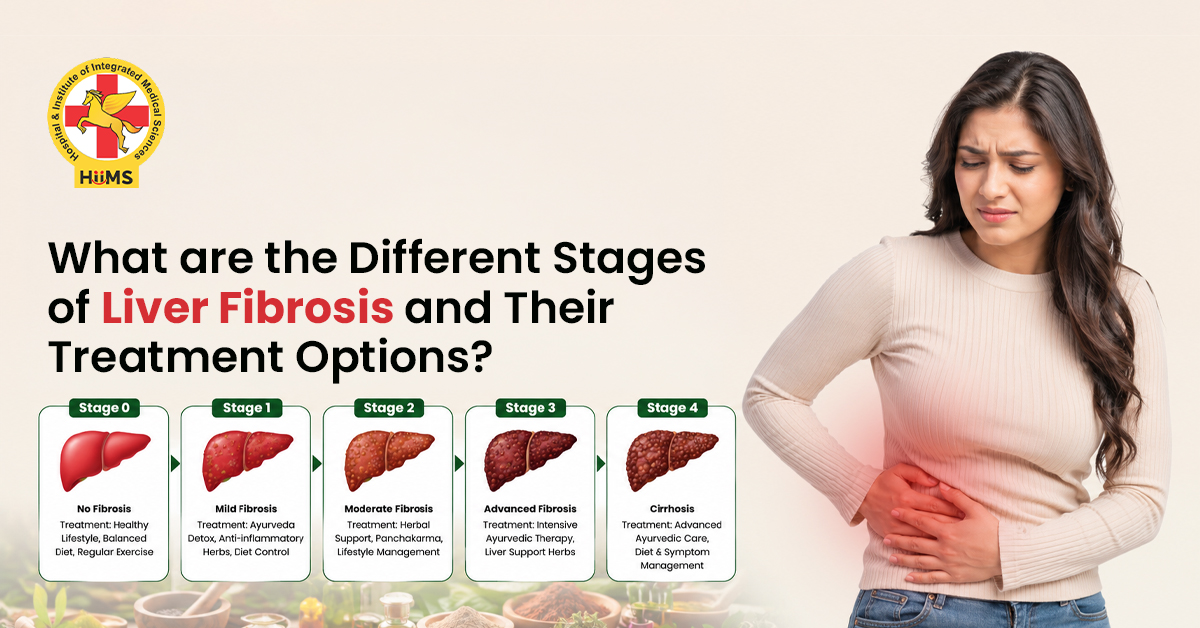
To figure out the best liver fibrosis treatment, a liver specialist splits the condition into five specific stages:
Stage F0 (No Fibrosis): Although the liver is inflamed from the fat accumulation or toxins, actual scar tissue has not yet started to form.
Stage F1 (Mild Fibrosis): This is the initial scarring stage. Only small areas of scar tissue appear around the portal areas of the liver. The surrounding tissue is healthy and so very easy to reverse.
Stage F2 (Moderate Fibrosis): At this stage the scar tissue begins to extend beyond the portal areas and forms scar bridges. The liver still works, but damage is progressing.
Stage F3 (severe fibrosis): In this, the scar tissue has spread to several areas of the liver. Healthy parts of the liver are replaced with thick bands of scar tissue. This makes it harder for the liver to do its job smoothly. The organ gradually loses its softness and blood circulation slows down.
Stage F4 (Cirrhosis): This is the final stage of cirrhosis. At this stage the soft tissue of the liver has been replaced by hard permanent nodules. Such structural damage can cut off the blood supply, disrupt the chemistry of the body and result in liver failure.
Understanding these structural shifts makes it clear that starting a natural liver fibrosis treatment during the early stages (F0-F2) ensures the highest chances of full cellular recovery.
What Long-Term Factors Lead to Chronic Liver Tissue Degeneration?
A liver doctor looks beyond the symptoms on the surface to stop the progression of liver scarring and get to the real root causes of long-term inflammation. The most common cause of long-term tissue damage is
Chronic Fatty Liver Disease: With time, excess fat builds up in the liver cells. The cells are under constant stress which can lead to inflammation and scarring.
Metabolic Overload & Toxic Accumulation: Cell burnout from an overworked liver filtering system due to constant exposure to environmental chemicals, artificial food preservatives, heavy alcohol use or long-term pharmaceuticals.
Uncontrolled Viral Hepatitis: In such chronic viral infections as Hepatitis B or C, the viruses continue to attack and kill healthy liver cells for years and scars are left.
Poor Cellular Nutrition: A diet high in acidic foods, along with the absence of vital micronutrients, reduces the natural ability of the liver to repair itself from daily wear and tear.
Jeena Sikho HiiMS Liver Fibrosis Treatment: Core Therapies & Natural Cleansing
Standard medical protocols often focus on managing secondary symptoms, but true liver disease treatment requires clearing out metabolic waste and creating an internal environment where cells can naturally regenerate. At Jeena Sikho HiiMS, the integrated liver care protocol combines clinical detoxification with targeted natural therapies to support the reversal of early-stage scarring and help stabilise advanced liver tissue while promoting overall liver health.
pH-Balanced Diet
The foundation of this care involves moving away from heavy, acidic, processed, and oily foods toward a highly alkaline, plant-based lifestyle. Consuming raw fruits, vegetables, and sprouts lowers total body inflammation and minimises the metabolic workload on the liver. This allows its energy to shift from processing heavy toxins to actively repairing damaged cells.
Panchakarma & Internal Cleansing
Special detoxification protocols such as Virechana (therapeutic purgation) flush out excess biological heat and deep-seated waste directly from the gallbladder and liver pathways. This clears the channels, reducing the inflammatory load on the liver.
The 7-Day Liver Detox Kadha
An essential part of the cleansing routine is a fresh, morning green juice blend made from specific botanical leaves. It combines a small handful of neem leaves, mint leaves, a small bunch of coriander, curry leaves, pipal leaves, guava leaves, and banyan leaves, blended with a one-inch piece of raw turmeric and a seasonal fruit. Drinking this for seven consecutive days helps cleanse and strengthen liver cells.
Herbs for Cellular Repair
Certain herbs are included in the routine to boost the detox effects.
- Bhumyamalaki: Actively repairs damaged cells and helps to lower high liver enzymes.
- Punarnava: Reduces water retention in the body and reduces swelling in the liver tissue.
- Kutki: It helps in smooth secretion of bile and prevents further hardening of the tissues.
- Kalmegh: Fights cellular oxidative stress and acts as a natural protective shield to regenerate liver cells.
Naturopathy, Yoga and Pranayama
Postural therapies, such as hot water immersion and head-down tilts, are used to optimise blood flow to the vital abdominal organs, thus speeding tissue repair. Additionally, some breathing exercises (Pranayama) and meditation lower cortisol levels and liver inflammation due to stress.
Conclusion
True liver vitality is dynamic; even when facing advanced stages of fibrosis, shifting toward a clean, alkaline lifestyle gives your body the peace it needs to halt tissue scarring. For individuals dealing with complex or progressive liver conditions, long-term recovery requires a personalised, medically mapped roadmap designed by the best liver hospital team.
You can consult certified physicians face-to-face from the comfort of your home with the specialised Jeena Sikho HiiMS VOPD (video consultation) service. Our team of medical experts will evaluate your personal metabolic profile and provide you with the practical clarity you need to confidently reclaim your long-term wellness.

FAQs
1. What are the different stages of liver fibrosis?
Liver fibrosis progresses through five stages, from F0 (no scarring) to F4 (cirrhosis), with each stage showing increasing liver damage.
2. Can early-stage liver fibrosis be reversed?
Liver fibrosis in the early stages (F0 to F2) may be managed and improved with timely lifestyle changes, dietary support, and appropriate treatment.
3. What are the common causes of liver fibrosis?
Fatty liver disease, chronic hepatitis infections, alcohol consumption, toxin exposure, and poor dietary habits are some of the common causes.
4. How does HiiMS approach liver fibrosis treatment?
HiiMS focuses on pH-balanced nutrition, Panchakarma detoxification, herbal support, naturopathy, yoga, and lifestyle modifications to support liver health.
5. Which Ayurvedic herbs are commonly used for liver support?
Herbs such as bhumyamalaki, punarnava, kutki, and kalmegh are commonly used to support liver function and overall liver wellness.