


Have you ever woken up with a sharp, burning pain in your toe or ankle? That pain can be a sign of high uric acid, and it is more than a number on a blood report. It can bring sudden joint pain, swelling, and stiffness that make walking, sleeping, and even wearing shoes hard.
The kidneys filter uric acid and pass it out through urine. But about 90% of the filtered uric acid goes back into the blood, so only a small part leaves the body. When long hours of sitting, sweet drinks, late dinners, and low water intake add more uric acid, it builds up in the blood.
Uric acid is common across India; some depend on painkillers during flares. Others take tablets for years and worry about side effects and regular tests. Ayurveda offers a gentler path. It looks at the whole body, the daily routine, the food, and the digestion. In this blog, we explain the causes, the treatment options, the research, and the natural care steps that may help you manage uric acid with confidence.
High Uric Acid: Understanding the Problem Through Research
Uric acid is a natural waste product in the blood. The body produces uric acid when it breaks down certain substances, and most of this waste is removed through the kidneys. When the level stays high for a long time, it can lead to gout, kidney stones and joint pain. High uric acid does not spread from person to person. Every person’s levels and triggers are different, so every person needs care that fits them.
Uric Acid in India: What Studies Show?
The numbers from India need attention. A study in the National Journal of Community Medicine checked 300 adults aged 30 and above in a rural area of Belagavi. About 32.7% had high levels. Waist size and meat intake were linked with high uric acid.
Another Indian study looked at records from screening camps held at 592 places. It covered 197,097 people. High levels were more common in men and went up with age. A PMC review connects high uric acid with high blood pressure, heart disease, kidney and liver problems, and diabetes.
Concerned about high uric acid? Book Your Consultation Now
How to Read Your Numbers on a Uric Acid Report?
The studies above show how common high uric acid is in India. But what matters most is your own report. Here is how to read the number on it.
Uric acid is measured in mg/dL through a blood test. Normal ranges may vary slightly between laboratories, and ranges for men and women are also different. So always read your number with your doctor.
| Level in blood | What it usually means |
| Below 6 mg/dL | Many doctors treat this as a safer zone for people with gout. |
| 6 to 7 mg/dL | Pay attention to your levels and review your diet and daily habits. |
| Above 7 mg/dL | Usually called high. Research trials use this mark for high levels. |
Your number tells you where you stand today, and the right food, water, and daily habits can change where it goes next.
Recurring joint pain or a high report? Consult a qualified doctor.
Living with High Uric Acid: Signs and Daily Challenges
High uric acid does not stay on the blood report. It shows up in your body, in your day, and in your routine.
What Signs Can You Notice in Your Body?
High uric acid may affect different parts of the body. Here are some common signs to watch for:
- Big toe, ankle, or knee: Sudden, sharp pain, often at night.
- Joints: Redness, warmth, and swelling around the affected joint.
- Walking and climbing stairs: Stiffness that makes movement difficult.
- Under the skin near joints: Hard lumps in long-standing cases.
- Lower back or side: Pain may occur if kidney stones develop.
Some people have no clear symptoms even when their uric acid levels are high. A blood test can help check the level, especially if you have a history of gout.
How Does High Uric Acid Affect Your Day?
- At night: Pain disturbs your sleep.
- During the day: Stiff joints make the daily tasks harder.
- Looking ahead: Fear of the next attack can limit the work and travel.
Which Habits Can Increase Uric Acid?
Genes, body weight, and poor removal by the kidneys play a big role. Everyday habits can push the level higher:
| Time of day | Habits that can raise uric acid |
| Morning and daytime | Sweet drinks and soft drinks, low water intake and dehydration, long hours of sitting |
| Evening and night | Heavy, late dinners, and alcohol, especially beer |
| Any time | Extra body weight, starvation, crash dieting, and long fasts |
Why Does the Pain Start Suddenly?
Because high uric acid usually builds up quietly. Your level can stay high for years without any sign, and then the first attack arrives as sudden pain, often at night. That is why a regular blood test matters, even when you feel fine.
Common Misconceptions About High Uric Acid
Many beliefs about uric acid are only half true. Here is what research says about the most common ones.
| Myth | What research says |
| Only meat eaters get high levels | Genes, body weight, and weak removal by the kidneys often matter more than food alone |
| No pain means no problem | Gout appears in about 25% of people with high levels, but the rest still carry the load, and high levels link with heart and kidney issues |
| Starving or crash dieting helps | Starvation and dehydration may raise levels and trigger an attack |
| Diet alone can solve everything | Harvard Health says diet changes help but are often not enough on their own |
Knowing the facts helps you act early and avoid habits that can push your uric acid higher.
The Questions that Doctors Don’t Always Answer
People with high uric acid often have the same worries. These are the questions they ask again and again
- Will I need tablets for life?
- Why does the pain return when I stop?
- Is this harming my kidneys?
- Is there a way to fix the cause and not just the number?
Harvard Health explains that for most people, diet alone is not enough, and most people need medicine to bring the level down and stop attacks. That is why many stay on tablets for years.
Why Does the Pain Return After Medicine?
Painkillers used in a flare can upset the stomach and strain the kidneys when taken often. Medicines that block the making of this waste, like allopurinol, need regular blood tests, and they can cause skin rashes in some people.
The tablet works on the number. It does not fix weak digestion, poor habits, or a tired body. So the questions stay open.
How Ayurveda Explains High Uric Acid?
Ayurveda calls this condition Vatarakta. The word joins two ideas:
- Vata, the energy of movement, and
- Rakta, the blood.
When both go out of balance, the joints hurt, burn, and swell.
A study from Amrita School of Ayurveda found similarities between gouty arthritis and Vatarakta in their causes and symptoms. Ayurveda sees the chain like this:
The Vatarakta Pathway
Weak digestion → Ama (undigested waste) builds up → Blood becomes impure and Vata rises → Pain, heat and swelling in the joints.
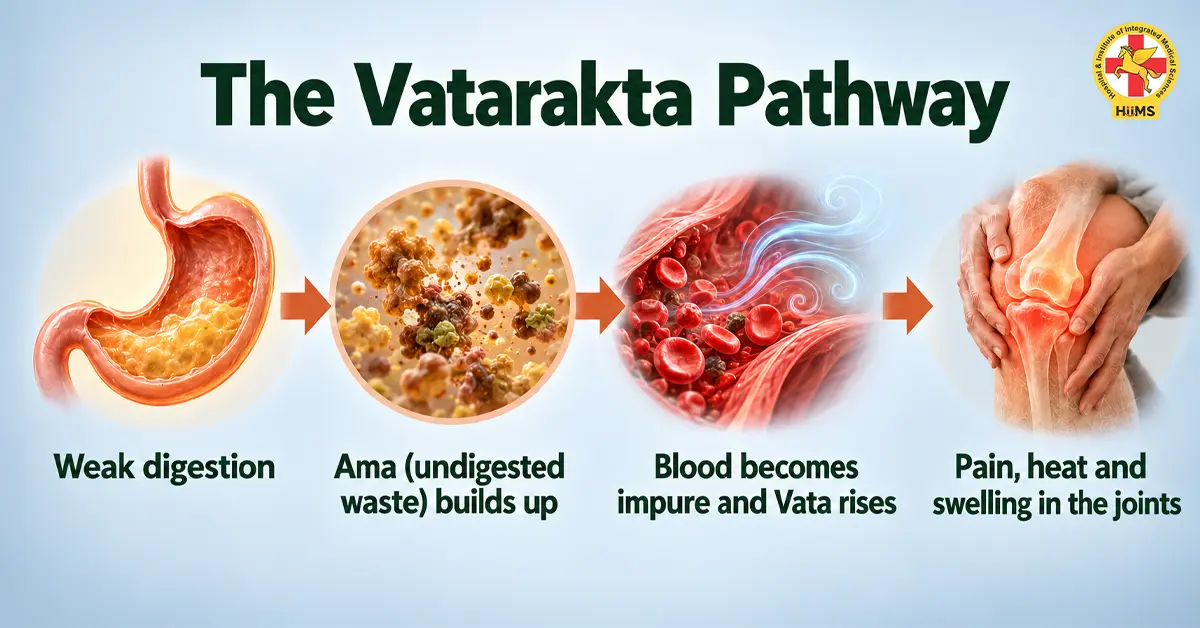
Common triggers include heavy and oily meals, too much sour and salty food, alcohol, sleeping in the day, late nights, and long gaps between meals. Fixing digestion is the first step.
Ayurvedic Approach to Uric Acid: The Four Pillars of Care
Uric acid builds up quietly inside the body. Ayurveda explains that weak digestion creates waste, this waste affects the blood, and the joints show the pain.
So the care must work on the root, not just the pain. Ayurveda does this through four pillars. Each one tackles a different part of the problem.
- Ahar (food): Choose what you eat and drink so less waste forms.
- Vihar (daily routine): Fix your sleep, movement and habits so the body clears waste better.
- Shaman (calming care): Use herbs and medicines to settle the Vata and Rakta imbalance.
- Shodhan (deep cleansing): Clear the old buildup from the body with detox therapies like Panchakarma.
Each pillar supports the others, so the best results come when all four work together. Let us begin with Ahar, because the food on your plate shapes your digestion every single day.

Ahar: What to Eat and What to Avoid to Reduce Uric Acid Naturally
Ayurveda sees food as one of the main supports of good health. In Vatarakta, the aim is to keep digestion strong and avoid foods that add heat and heaviness. People feel better once they stop skipping meals and cut sweet drinks and late dinners. Small food changes often help before big ones.
Foods to include:
- Warm water, sipped slowly through the day
- Moong dal soup and light khichdi
- Bottle gourd, ridge gourd, pumpkin and other cooked vegetables
- Barley and old rice, which are easy to digest
- Amla, guava and lemon for vitamin C
Foods to limit:
- Red meat, organ meat and some seafood, which are rich in purines
- Beer and other alcohol
- Soft drinks and packaged juices, because the fructose in them raises uric acid
- Fried, very sour, salty and heavy food
Avoid crash diets and long fasts. They can push uric acid levels up and trigger a painful attack.
Vihar: Daily Routine, Exercise and Lifestyle Tips
Vihar means the way you live each day. Ayurveda says a steady routine keeps Vata calm and digestion strong. People who sit for long hours and sleep late have more repeat attacks. A simple routine can make a real difference.
- Drink enough water: Sip it slowly through the day.
- Walk daily: Regular low to moderate exercise, like brisk walking, cycling or swimming, can help lower uric acid. Rest the joint during a painful flare.
- Lose weight slowly: Aim for about 1 to 2 pounds (half to one kg) a week. Fast weight loss can trigger an attack.
- Eat dinner early: Keep it light and finish 2 to 3 hours before bed.
- Avoid daytime sleep: Ayurveda links it with heaviness and poor digestion.
- Move every hour: Stand up and stretch if you sit for long.
- Try gentle yoga: Vajrasana, Pavanmuktasana and Tadasana are good starts. Practise them only under guidance.
Keep a small diary of uric acid symptoms such as night pain, swelling and stiffness. It helps your doctor see what triggers your flares.
Shaman: Herbal Support in Ayurvedic Uric Acid Treatment
Shamana means pacifying care, or herbal care. It uses herbs and medicines to settle the Vata and Rakta imbalance and improve digestion. An Ayurvedic uric acid treatment plan often draws on these herbs, which are traditionally used:
- Giloy (Guduchi): Used in classical care for Vatarakta
- Guggulu: Known for joint care, often in formulas like Kaishore Guggulu
- Triphala: Supports digestion and gentle bowel clearing
- Punarnava: Traditionally used for swelling and urine flow
- Manjistha: Used for blood purity
- Gokshura: Traditionally used for urinary and kidney support
Herbs calm the imbalance, but the right choice depends on your body and reports. Let us now look at Shodhan, which cleans out what has settled deep inside.
Shodhan: Cleansing Therapies for Deeper Care
Shodhan means deep cleansing. It is done through Panchakarma, a set of therapies that remove deep-seated toxins. It is chosen only when the body is strong enough for it. Doctors usually begin by checking your history, reports, strength and digestion before suggesting any cleansing.
Classical care for Vatarakta may include:
- Snehana and Swedana: Oil massage and herbal steam to prepare the body, used carefully in painful, swollen joints
- Virechana: Medicated purgation that clears excess Pitta and toxins
- Basti: Medicated enema, seen as a key therapy for Vata imbalance
- Raktamokshana: Traditional blood cleansing, used only in selected cases by trained experts
Panchakarma should happen under expert supervision. Results differ from person to person, so no outcome can be promised.
Why Treating the Root Matters More Than the Number?
A lower number on your report is not the end of the problem. If the cause stays the same, the pain can come back. Ayurveda looks at the cause. It asks why your digestion is weak and why waste keeps building up. When you work on these, the care goes deeper than the number.
What Your Earlier Questions Point To?
Remember the questions we asked earlier? Will I need tablets for life? Why does the pain come back? Is there a way to fix the cause? All of them point to the same thing: the cause needs care.
Your doctor decides about any tablet, so never stop one on your own. But food, sleep, movement and digestion are in your hands every day. Ayurveda works on these four pillars, one step at a time.
How Jeena Sikho HiiMS Hospital Focuses on the Root Cause?
Every person has a different cause, so the care must be different too. This is where Jeena Sikho HiiMS Dehradun brings a root-based approach. The doctor first listens. They ask about your past illness, food habits, sleep, work and family history, and they read your reports. The plan then follows the person, not just the number.
What Does a Care Plan Include?
- Diet guidance: Simple, home cooked food that suits your body
- Herbal medicine: Chosen by the doctor after examination
- Therapies: Basti, a medicated enema that calms Vata, and Virechana, a gentle cleansing therapy that helps the body clear excess waste
- Lifestyle advice: Sleep, movement and daily routine
- Follow-ups: Reports and symptoms are checked again to adjust the plan
Why This Approach Is Different?
The doctor looks at why your level rises and works on digestion, daily habits and the body’s own way of clearing waste. Every person responds in their own way, and no doctor can promise a result.
When to See a Doctor Without Delay?
Home care has limits. Some signs mean your body needs a doctor’s check soon. Get expert help quickly if you notice any of these:
- A hot, red, very swollen joint with fever or chills: This can point to an infection in the joint, which needs urgent care.
- Your first ever sudden and severe joint pain: A doctor can find the real cause before you start any care at home.
- Pain in the lower back or side with blood in urine: This may mean a kidney stone.
- Pain that does not ease after a few days: Long-lasting pain needs a proper check.
- Frequent attacks or hard lumps near the joints: These show that uric acid has been high for a long time.
Do not wait or try to manage these signs on your own. A timely check keeps small problems from becoming bigger ones.
Conclusion
Uric acid is more than a number on a report. It shows how you eat, sleep, move and digest every day.
Ayurveda cares for it through four pillars: Ahar, Vihar, Shamana and Shodhan. Small and steady changes in each one can help your body handle uric acid better. Results differ from person to person. Never stop a prescribed medicine on your own.
At Jeena Sikho HiiMS Hospital, doctors study your reports and routine before they plan your care. Book a VOPD consultation and take the first step toward easier movement.

FAQs
1. Which foods should I avoid with high uric acid?
Limit red meat, organ meat, some seafood, beer, soft drinks and packaged juices. Fried and heavy food can also add to the problem.
2. Can high uric acid affect the kidneys?
Long-term high levels can lead to kidney stones in some people. Get your reports checked on time, and see a doctor if you have back or side pain.
3. Does exercise lower uric acid?
Regular, gentle exercise like walking, cycling or swimming can help. Rest the joint during a painful flare.
4. Can I stop my tablets if I feel better?
No. Feeling better does not always mean the level is under control. Your doctor decides when to change or stop any tablet.
5. Can Ayurveda help with high uric acid?
Ayurveda works on food, routine, digestion and herbs. An expert plans care to suit your body. Results differ from person to person.