
When the skin starts showing thick patches, redness, or constant flaking, most people first assume dryness or a simple allergy. However, when those patches return again and again, resist moisturizers, and begin to itch or crack, the situation deserves deeper attention. Psoriasis is one such condition that many people misunderstand in its early stages.
Understanding the types of psoriasis clears confusion and reduces fear because every patch does not look or act the same. Some forms remain mild and limited to one area, while others require faster medical attention and proper supervision. When you understand what your skin is showing and why it reacts in that manner, you move forward with clarity and purpose rather than making uncertain guesses about what to do next.
In this blog, you will clearly understand different forms of psoriasis, common signs, triggers, and practical care approaches that support long-term balance.
What Is Psoriasis?
Psoriasis is a long-term skin problem where the body’s own defence system becomes too active and causes skin cells to grow faster than they should. These cells do not fall away in their usual time, so they stay on the surface and stack up into thick, scaly patches. Because of this buildup, people experience psoriasis symptoms such as red areas, white flakes, itching, and dry skin.
Doctors consider it manageable but long-term, which means it needs consistent attention rather than occasional treatment. Several psoriasis causes work together, including immune imbalance, genetic tendency, and lifestyle stress. Because each person’s immune response differs, outbreaks do not appear in the same pattern for everyone. That is why identifying the specific type becomes important before planning psoriasis treatment.
What Are the Different Types of Psoriasis?
Understanding the types of psoriasis allows both patients and doctors to choose a more focused care path instead of relying on trial and error.
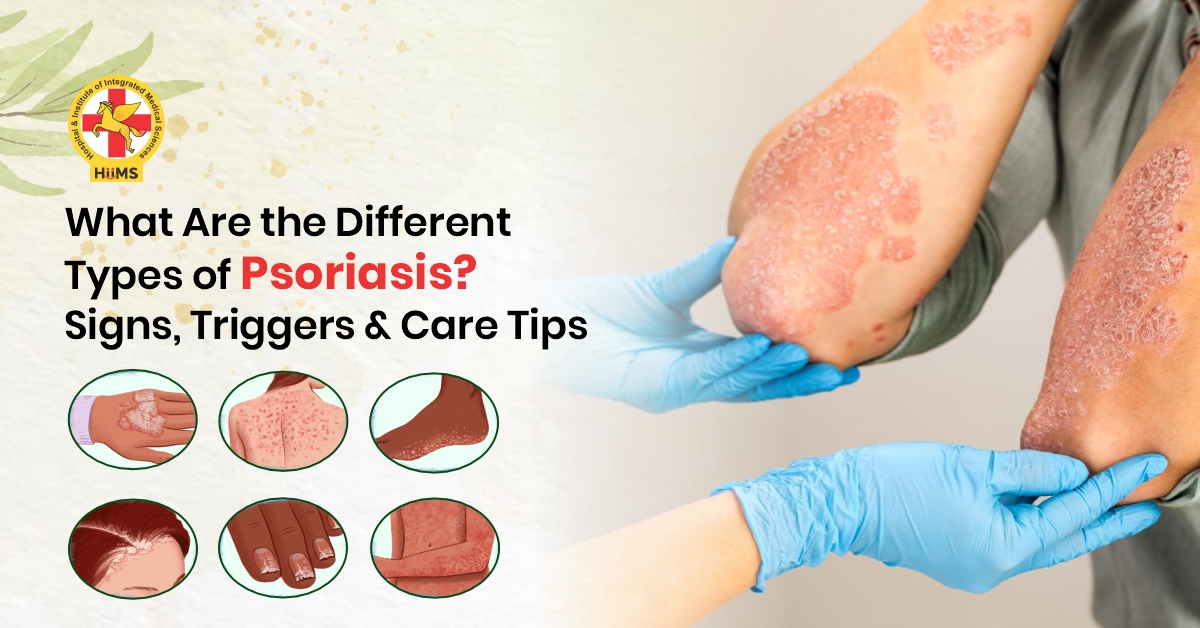
Plaque Psoriasis
This is the most common form. It appears as raised red patches covered with silvery scales, usually on elbows, knees, scalp, or lower back. The skin often feels dry, itchy, and slightly thickened.
Guttate Psoriasis
This type shows small, drop-like spots that may spread across the arms, legs, or torso. It often develops after throat infections and appears more frequently in children or young adults.
Inverse Psoriasis
Inverse psoriasis develops in skin folds such as underarms, groin, or under the breasts. The patches look smooth, shiny, and red rather than scaly. Sweat and friction often worsen this condition.
Pustular Psoriasis
This form produces white, pus-filled blisters surrounded by red skin. It may remain limited to palms and soles or spread widely. Immediate consultation with a psoriasis specialist becomes necessary in such cases.
Erythrodermic Psoriasis
This rare and serious type causes widespread redness and peeling across large body areas. It requires urgent supervision by a trained psoriasis doctor.
Nail Psoriasis
Some people notice pitting, thickening, or discoloration of nails. Nail changes may look small at first, but they often reflect deeper immune activity within the body.
Psoriatic Arthritis
When joint pain, stiffness, or swelling accompany skin wounds or infections, doctors diagnose psoriatic arthritis. Early medical attention prevents long-term joint damage.
Early Signs and Psoriasis Symptoms to Notice
Many individuals ignore mild changes, thinking they will settle on their own. Early psoriasis symptoms often start as rough patches on the elbows or scalp, steady itching, flakes that fall onto clothes, or small cracks that may bleed during winter. Thick or yellowish nails can also point toward an internal imbalance that needs attention.
If these signs repeat or spread gradually, visiting a qualified psoriasis doctor helps prevent complications and supports early planning for suitable psoriasis treatment.
What Triggers Psoriasis Symptoms?
After identifying symptoms, the next step involves understanding triggers. Various psoriasis causes work internally and externally.
Internal Factors
Immune system imbalance plays the primary role. Family history increases risk, and long-term emotional stress weakens immune control. From an Ayurvedic perspective, digestive imbalance and toxin accumulation disturb internal harmony.
External Triggers
Skin injuries such as cuts, burns, or excessive scratching may start new lesions. Infections, cold weather, and certain chemical-based medicines can make flare-ups worse. Lifestyle habits, irregular sleep, and poor diet further disturb skin health.
Why Understanding Your Type Changes the Treatment Path
Many people try creams without knowing their diagnosis. However, psoriasis treatment depends on the exact form and severity. What works for plaque psoriasis may not suit pustular or erythrodermic cases.
A detailed check-up at a psoriasis treatment hospital gives doctors time to understand your triggers, observe how your immune system is reacting, and review your overall health. Based on this, a psoriasis specialist creates a plan that fits your specific condition rather than giving the same advice to everyone.
Care Tips for Managing Different Types of Psoriasis
Daily Skin Care
Use mild natural cleansers and avoid harsh soaps that strip natural oils. Apply thick herbal moisturisers regularly to reduce dryness and cracking.
Stress and Lifestyle Care
Practice yoga, breathing exercises, and maintain steady sleep patterns. Light physical activity supports immune stability.
Diet Awareness
Prefer simple, warm meals with fewer processed or spicy foods. Proper hydration keeps skin soft.
When to Consult a Specialist
Seek professional help if patches spread rapidly, joint pain appears, or discomfort interferes with daily life.
Ayurvedic Perspective at Jeena Sikho HiiMS
At Jeena Sikho HiiMS, doctors view psoriasis as more than a surface condition. Ayurveda explains it through Vata and Kapha imbalance along with toxin accumulation. Panchakarma therapies help detoxify the body gradually. Herbal support using neem, turmeric, and manjistha helps calm inflammation from within the body.
The hospital prepares individual care plans under experienced guidance, bringing together diet changes, herbal support, and supervised therapies in a complete psoriasis treatment hospital setting.
Living with Psoriasis – Emotional and Physical Balance
Psoriasis affects more than appearance. It influences confidence, clothing choices, and daily comfort. When people understand the types of psoriasis, they stop fearing every flare-up and begin responding calmly. Healthy habits and timely consultation reduce uncertainty and create long-term stability.
Conclusion
When you understand the types of psoriasis, you shift from confusion to clarity. Each form carries its own pattern, triggers, and care needs, which is why guessing rarely works in the long run.
Recognising early psoriasis symptoms, identifying possible psoriasis causes, and choosing guided psoriasis treatment under supervision make a significant difference. Consistent skin care, stress control, and proper evaluation at a trusted centre like Jeena Sikho HiiMS provide structured direction instead of uncertainty.
If you notice persistent outbreaks of this problem, then consult a qualified psoriasis specialist today. For appointments, call +91 82704-82704 or email care@jeenasikho.com for guidance.
FAQs
- Can psoriasis spread to other parts of the body?
Psoriasis may extend to nearby or distant areas depending on immune activity and triggers. - Is stress linked with psoriasis flare-ups?
Emotional stress can disturb immune balance and increase symptoms frequency. - When should someone visit a psoriasis doctor?
Healthcare advice becomes important when patches spread, worsen, or involve joints. - Can diet influence psoriasis symptoms?
Balanced meals and proper hydration often support better skin stability.
5. Does psoriasis affect only the skin?
Some forms may also involve nails and joints, requiring specialised attention.