
Have you ever had an annoying itch that just makes you crazy and won’t go away? Or maybe you saw a weird red, ring-shaped rash right after you finished a hard workout at the gym? If this is your concern, you’re certainly not alone. If that sounds familiar, you’re definitely not alone. Millions of people deal with these exact skin issues every single day. Let’s be real: skin troubles can be incredibly uncomfortable, awkward, and just downright frustrating to handle. To deal with them the right way, we first need to understand what’s actually going on and ask: what exactly are fungal skin diseases?
Basically, these issues pop up when tiny, microscopic fungi find a warm, sweaty spot on your body and decide to multiply. Fungi live around us all the time in tiny, harmless amounts. But the moment you give them the perfect environment, like staying in damp, sweaty workout clothes, they grow out of control. This sudden overgrowth leads to what we call a fungal skin infection. Let’s break down why this happens and how you can get your skin back to normal.
Why Does It Happen? Causes of a Fungal Skin Infection
Fungi absolutely love anything dark, humid, and wet. That’s exactly why most common skin issues show up in places like your armpits, groin, or right between your toes. If you can keep these specific areas clean and dry, you’ll naturally lower your chances of developing fungal skin diseases.
Most of the time, a fungal skin infection is triggered by a few simple, everyday habits:
- Staying in sweaty clothes: Leaving your gym gear or tight synthetic clothes on for hours gives fungi the perfect home to grow.
- Sharing personal stuff: Borrowing an unwashed towel, sweaty shoes, or even a hairbrush from a friend can easily transfer the fungus to your skin.
- A weak immune system: If you’re stressed out or recovering from an illness, your body struggles to fight off these tiny invaders.
- Walking barefoot in public: Walking without slippers around community showers or public pool decks is an easy way to pick up stubborn foot bugs.
How to Spot the Signs of Fungal Skin Diseases
How do you know if your skin irritation is actually a fungus or just a regular allergy? While symptoms vary depending on where the rash is, a few common signs appear in almost all fungal skin diseases. Here is what you have to be careful about:
- Unstoppable itching: It’s the first sign and it usually gets a lot worse when the area gets hot or sweaty.
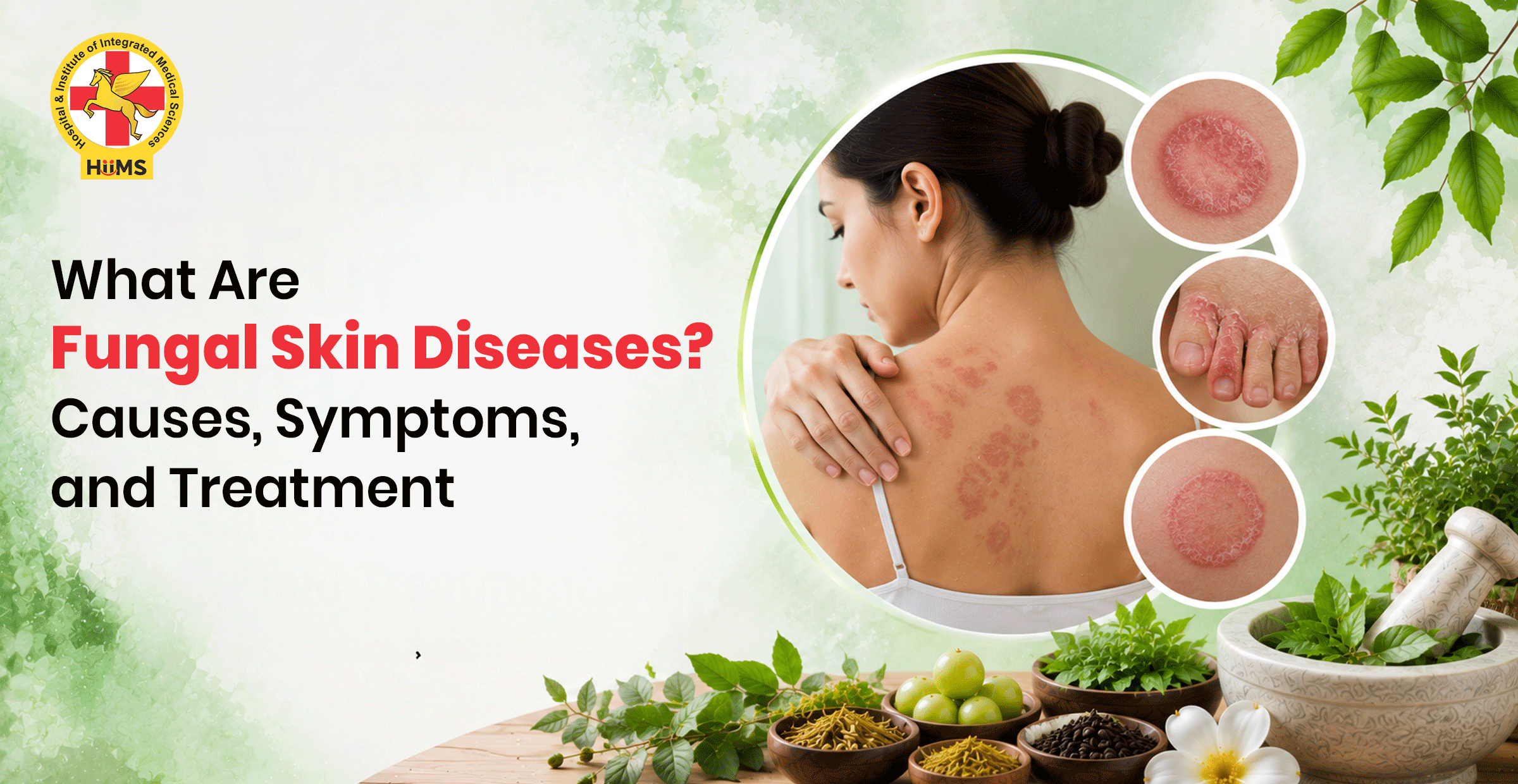
- Red, ring-shaped rashes: Look out for raised, red borders that form circles, often with dry or flaking skin inside them.
- Cracked and peeling skin: If the issue is on your feet, the skin might flake off in white pieces, leaving painful, raw cracks.
- Burning and soreness: Scratching worsens inflammation, leading to a constant burning sensation that makes tight clothes hurt.
Catching a fungal skin infection early means you can treat it before it spreads and becomes a massive headache.
Healing Root Causes Through Fungal Skin Diseases Treatment
Most people rush to the nearest pharmacy and buy random chemical creams. Sure, they might stop the itch for a couple of days, but the issue almost always comes back. Why? Because those creams only hide the problem on the surface rather than fixing the root cause, such as internal body heat or poor digestion.
Ayurveda addresses fungal skin diseases by considering imbalances of your Pitta (heat) and Kapha (moisture) doshas. When your digestion is off toxins build up in your blood and come out on your skin.
To get rid of this for good, holistic wellness centres like Jeena Sikho HiiMS use a natural approach to clean your system from the inside out:
Blood Purification (Panchakarma):
Therapies at Jeena Sikho HiiMS focus on flushing out deep toxins from your blood so the fungi lose their breeding ground.
Dietary Corrections:
Doctors help you cut out fermented foods, sugary foods, and heavy dairy products that fuel the infection.
Local Herbal Lepas:
Instead of chemical tubes, they use natural herbal pastes applied directly to the skin to naturally cool the burn.
Simple Daily Habits to Keep Fungi Far Away
- Always dry your body properly with a towel after bath. Separate clean towel is a must for infected areas as fungal spores are prone to spreading onto healthy skin if you use the same towel for both.
- Wear loose-fitting and highly breathable cotton clothing that will allow the air to circulate and keep sweat off your skin.
- Set your washing machine to a high temperature when you do the laundry of bed linens, towels and undies, then line dry them under direct sunlight as the sun’s rays have the power to kill even the most stubborn fungal spores.
- Always wear slippers in public locker rooms, on swimming pool decks, or in hotel bathrooms.
Conclusion
Living with fungal skin diseases can feel exhausting, but you don’t have to just accept the constant itching and embarrassment. Your skin is simply telling you that something inside your gut or immune system needs a bit of attention. By staying dry and eating clean, you can easily protect yourself.
If you’re tired of temporary fixes and want a safe, natural way to clear your skin, don’t wait around. You can book a VOPD consultation with the highly experienced doctors at Jeena Sikho HiiMS. We will assess your lifestyle and provide customised Ayurvedic care to help you achieve healthy, clear skin naturally!

FAQs
1) How long does it take to completely heal a fungal skin infection?
The mild ones clear in 1 to 2 weeks. The deeper ones take about a month of solid care.
2) Why do fungal skin diseases keep coming back even after using creams?
Chemical creams clean the surface, but they do not fix internal toxins or poor gut health.
3) Can a fungal skin infection spread from one person to another?
Absolutely, it is a very contagious condition and the infection mainly occurs through skin contact or via sharing of towels and clothes.
4) Is it safe to use coconut oil on fungal rashes?
Yes, its natural properties help soothe the dryness and itching quite well.
5) What is the unique aspect of the treatment approach of Jeena Sikho HiiMS?
Jeena Sikho HiiMS’ treatment focus is on naturally detoxifying the body and changing the diet habits in order to eradicate the cause of disease from its origin.