

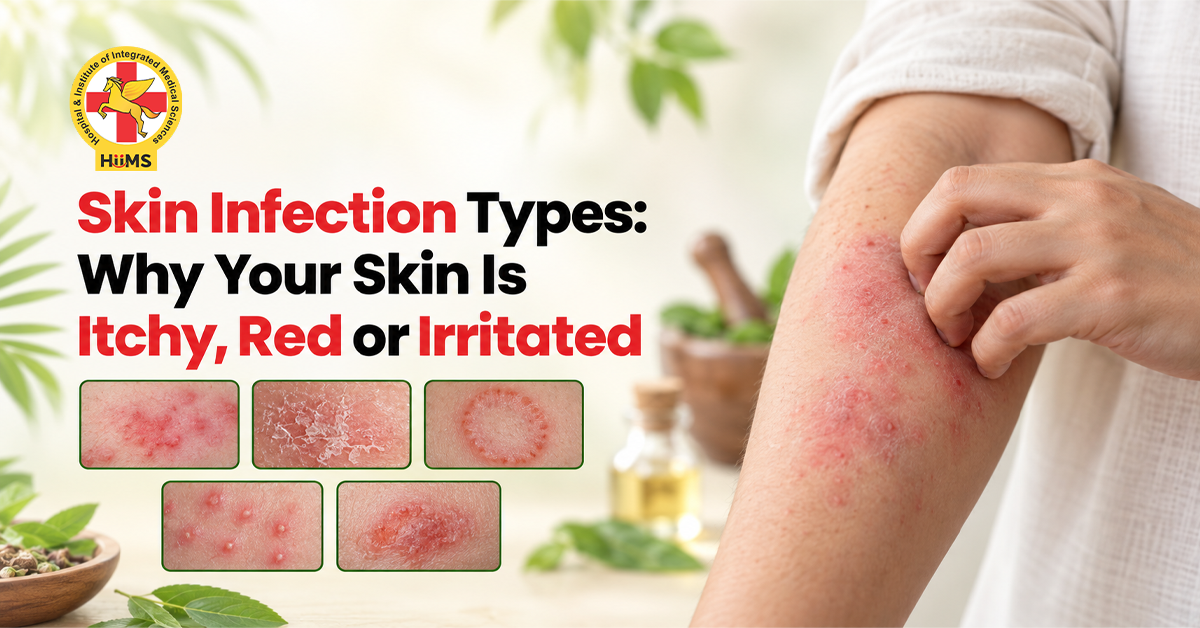
Itching, redness or irritation can turn an ordinary day into a constant distraction. You may notice a rough patch after sweating, a red area that keeps spreading, or a persistent urge to scratch until the skin becomes sore. These changes are not always caused by an infection. A reaction to a soap, allergy, eczema, psoriasis, excess moisture or a skin infection can produce symptoms that look surprisingly alike.
This is why choosing a cream only by looking at the rash may not solve the problem. Where the rash appears, how it started, whether it is spreading and what other symptoms come with it can offer useful clues. At Jeena Sikho HiiMS, an Ayurveda-focused approach considers the individual condition along with diet, routine and overall health.
In this blog, you will understand common causes, skin infection types, warning signs, Ayurvedic care and simple habits that can help you look after your skin daily with confidence.
Why Does Your Skin Become Itchy, Red or Irritated?
Your skin meets sweat, dust, weather changes, products and microorganisms. When its protective barrier becomes irritated or an infection develops, it may respond with itching, redness, burning, scaling or swelling. Heat and sweating can leave moisture trapped around the feet, groin, underarms and skin folds.
A new soap, cosmetic or detergent can also trigger irritation. Small cuts, close contact and shared towels or footwear can increase infection risk. The American Academy of Dermatology observes that warm, humid conditions, heavy sweating and close contact can make a person more likely to develop ringworm. Finding the trigger is important because similar-looking rashes can need different care.
Skin Infection vs Other Skin Problems: Are They the Same?
Not every itchy or red patch is an infection. A skin infection can occur when harmful fungi, bacteria or viruses affect the skin. But many skin problems have nothing to do with an infection and may instead be linked to allergies, inflammation or the body’s immune response.
Eczema, psoriasis and contact dermatitis can all cause itching, redness and scaling, yet they belong to a different group. The wrong cream may irritate sensitive skin or delay proper care. If a rash keeps returning, spreads or changes, professional assessment is more useful than guessing from its appearance.
Common Skin Infection Types You Should Know
Fungal Skin Infections
Fungi grow more easily in warm, damp areas. Ringworm can form an itchy, scaly patch with a defined edge, while athlete’s foot often affects the skin between the toes. Jock itch usually affects the groin and inner thighs. Keeping these areas dry can help. Centers for Disease Control and Prevention (CDC) explains that ringworm is a common fungal infection that can affect the skin as well as areas such as the scalp and nails.
Bacterial Skin Infections
Bacterial infections may cause redness, warmth, swelling, tenderness or crusting. Impetigo can produce sores and crusts, while cellulitis can cause deeper redness and swelling. Increasing pain, fever or rapidly spreading redness needs prompt medical attention.
Viral Skin Infections
Some viruses affect the skin and can produce warts, blisters or distinctive rashes. Their appearance may overlap with other conditions, so the pattern and accompanying symptoms matter.
Inflammatory Skin Diseases That May Look Similar
Eczema and psoriasis are different from infections, even though the skin can look quite similar in both cases. Redness, itching and scaling are common with these skin diseases, and the symptoms may come and go over time. Because several skin conditions can look alike, it is better to get the cause checked before deciding what treatment to use.
What Are the Common Signs of a Skin Infection?
Pay attention when itching, redness, scaling, peeling, cracking, swelling, warmth or tenderness does not settle. The American Academy of Dermatology describes itching, scaling, peeling, cracking and other changes as possible signs of ringworm, although these symptoms can also occur with other skin conditions. Blisters, fluid, crusting or changes around the nails and scalp also deserve attention. A rash that returns or spreads should not be ignored. Symptoms alone cannot always reveal the cause, so persistent or worsening changes should be assessed by a healthcare professional.
How Ayurveda Looks at Skin Health
Ayurveda views skin as part of overall health, so an assessment may consider food, digestion, sleep, stress and daily routine along with the visible concern. Ahar focuses on food, Vihar on lifestyle, Shaman on appropriate Ayurvedic medicines or supportive measures, and Shodhan on selected therapies when suitable. These approaches are not like a one fixed formula. A qualified practitioner decides what fits the person’s condition.
Ayurvedic Care for Skin Problems at Jeena Sikho HiiMS
At Jeena Sikho HiiMS, the first step is to understand what you are experiencing and what may be affecting your skin. Your routine, eating habits and general health can all be considered while planning care. The care plan can be different for each person and may include changes in food and daily routine, Ayurvedic medicines, external applications or other therapies where needed. When skin problems keep returning, it is worth finding out what may be causing them instead of changing creams or products every time.
If a skin problem keeps returning even after taking basic precautions, it is better to speak with an expert and understand the cause rather than continuing to change creams on your own. Understanding what is behind the symptoms can make the next step clearer.
Simple Habits That Can Help Protect Your Skin
- Keep sweaty areas clean and dry, change damp clothes promptly and choose breathable fabrics.
- Do not share towels, footwear, razors or clothes when an infection is suspected.
- Avoid scratching broken skin and using strong creams without knowing the cause.
- Regular sleep, balanced meals, enough water and a steady routine support healthy skin.
Conclusion
Itchy, red or irritated skin deserves attention when the change persists, spreads or keeps returning. A skin infection is only one possible explanation. Allergies, inflammation, eczema, psoriasis and everyday irritation can produce signs.
Understanding skin infection types and skin diseases can help you avoid random treatments and seek suitable guidance. At Jeena Sikho HiiMS, the Ayurvedic approach looks beyond the skin concern and also takes into account your food habits, daily routine and individual needs while planning care.
If skin problems affect your comfort or routine, speak with a doctor rather than continuing trial and error. You can opt for a VOPD consultation with doctors at Jeena Sikho HiiMS from home.

FAQs
- What can cause itchy and red skin?
Itchy, red skin may result from an infection, allergy, irritation, eczema, psoriasis, sweating or contact with an unsuitable product. - How can I tell whether a rash is a fungal infection?
Fungal rashes often appear in warm, moist areas and may cause itching, scaling or defined patches, but proper assessment is needed for confirmation. - Can a skin infection spread to other parts of the body?
Some infections can spread through scratching, moisture or contact, while others remain limited, depending on their underlying cause. - When should I see a doctor for a skin rash?
Seek medical attention when the rash spreads quickly, becomes painful or swollen, produces discharge, returns repeatedly or occurs with fever. - How does Ayurveda approach skin concerns?
Ayurvedic care may consider diet, lifestyle, medicines and selected therapies after understanding the person’s symptoms and overall health.