
Your kidneys clean your blood every minute of the day. In some families, small fluid-filled sacs called cysts slowly grow inside them. This inherited condition is called Polycystic Kidney Disease, or PKD. The good news is that it grows slowly. So when you find it early, you get years to protect your kidneys.
However, many people learn about it late. A study of 51 patients at SVIMS, Tirupati found that 71% already had chronic kidney damage at diagnosis. Also, 40% had high blood pressure. Only 26% had a documented family history. This blog explains what PKD is, its main signs, its causes, and the care options that can help.
What Is Polycystic Kidney Disease?
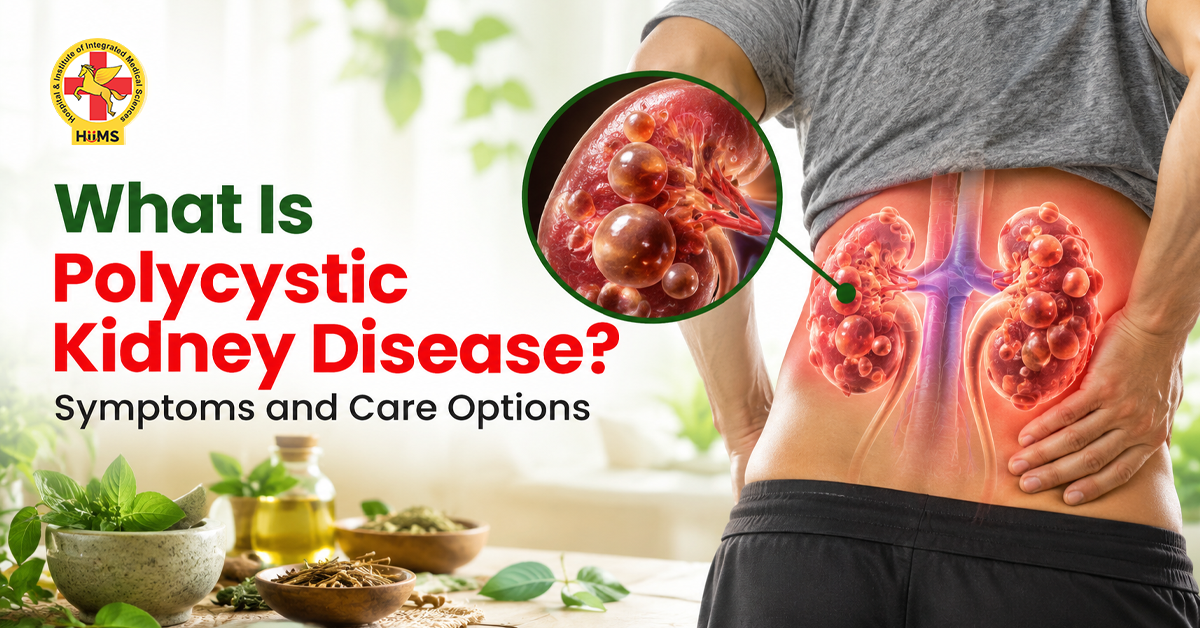
In PKD, clusters of cysts form in both kidneys. Over time, these cysts grow in number and size. As a result, the kidneys get bigger and slowly lose their ability to filter blood.
Most people have autosomal dominant polycystic kidney disease (ADPKD). It usually shows up between the ages of 30 and 50. If one parent has it, each child has a 50% chance of getting it. A rarer type, ARPKD, affects babies and young children.
Many people live for years with normal kidney function. Since the disease stays quiet for so long, it helps to know its signs.
Understanding the Symptoms of Polycystic Kidney Disease
In the early years, PKD often causes no symptoms. Signs usually appear once the cysts become large.
Pain in the Back, Side or Belly
Growing cysts stretch the kidney and cause a dull, lasting ache. In the Tirupati study, 47% of patients had belly pain.
High Blood Pressure
High BP is often the first sign, sometimes even before age 30. The cysts press on blood vessels inside the kidney, which pushes BP up. Uncontrolled BP then damages the kidneys faster.
Blood in the Urine
When a cyst bursts, urine may turn pink, red, or brown. It often settles in a few days, but always tell your doctor.
Urine Infections and Kidney Stones
Cysts slow the normal flow of urine. Because of this, infections and stones are more common in PKD. Watch for burning urine, fever, or sharp pain on one side.
A Swollen Belly and Later Signs
Large kidneys can make the belly look full. In fact, 25% of patients in the study had a lump that could be felt from outside. Later, tiredness, swollen feet, and less urine show that kidney function is dropping.
Once you know the signs, the next step is to understand why the disease starts.
Polycystic Kidney Disease Causes and Risk Factors
The main cause is a change in the PKD1 or PKD2 gene. Changes in PKD1 usually lead to faster damage. PKD often runs in families. Even so, about 1 in 10 people have no family history, because the gene changed first in them.
You cannot change your genes. But uncontrolled BP, a salty diet, smoking, frequent painkillers and repeated infections can all speed up kidney damage. For this reason, PKD care focuses on slowing the damage.
How PKD Is Usually Treated, and Where It Falls Short
Doctors mainly treat PKD with BP medicines, pain relief, and antibiotics. For some people with fast-growing ADPKD, doctors may prescribe a drug called tolvaptan. In later stages, patients may need dialysis or a transplant.
These treatments help, but they have limits. None of them remove the cysts. Tolvaptan is costly and needs regular liver tests. It also causes heavy thirst and frequent urination. On top of that, treatment is lifelong and mainly manages the disease.
Because of this, many families look for supportive care that works on the whole body. They want help with diet, digestion, BP, and daily habits, alongside their kidney doctor’s plan.
An Ayurvedic View of Polycystic Kidneys
In Ayurveda, the kidneys are called Vrikka. They belong to Mutravaha Srotas, the channels that make and carry urine. Ayurveda describes cyst-like growths as Granthi. These form when Kapha builds up in one place, while disturbed Vata adds pain.
Ayurveda also looks closely at digestion. When agni (digestive fire) is weak, food turns into ama, a sticky waste. This ama can block the urinary channels. So Ayurvedic care for Polycystic Kidney Disease works on the root: digestion, diet, fluid balance, and routine.
A clinical study published in Ayu (2011) followed 100 patients with chronic kidney failure. They received Punarnavadi kvatha basti, Gokshuradi guggulu, and Varunadi kvatha for one month. After that, their creatinine, urea, and urine albumin levels went down. The study covered kidney failure in general, not PKD alone. Still, it shows how Ayurveda can support kidney care.
Ayurvedic Kidney Care at Jeena Sikho HiiMS
Jeena Sikho HiiMS builds its kidney care on this same root-cause idea. It is an integrated hospital that brings together Ayurveda, Naturopathy, Homeopathy, Unani, and modern medical science. For people living with Polycystic Kidney Disease, HiiMS offers these therapies.
GRAD Therapy
GRAD stands for Gravitational Resistance and Diet, and it combines three parts. Hot water immersion helps improve blood circulation and relaxes the body. Head-down tilt therapy aims to increase blood flow to the kidneys which supports their filtering work. Meanwhile, a pH-balanced diet supports digestion and reduces the daily load on the kidneys.
Panchakarma
Panchakarma is Ayurveda’s classical cleansing system. For kidney care, doctors often choose Basti, a medicated enema, after checking the patient.
pH-Balanced Diet
This diet uses fresh, plant-based, and lightly cooked food with little salt. Doctors plan it around each patient’s reports, so the kidneys face less daily load.
Herbal Support
Ayurveda traditionally uses Punarnava to help the body clear extra fluid. Gokshura supports healthy urine flow, while Varuna supports the urinary tract. Patients take these only under a doctor’s guidance.
Lifestyle Changes
Yoga, pranayama, good sleep, and a fixed routine help keep stress and BP in check. As a result, the kidneys face less strain.
Daily Habits That Help Protect Your Kidneys
Small daily choices can slow how PKD moves forward.
- Drink enough water: Spread it across the day. Ask your doctor how much suits your stage.
- Cut down on salt: Less salt makes BP easier to control. So limit pickles, chips, and packaged snacks.
- Avoid painkillers without advice: Drugs like ibuprofen can harm weak kidneys. Always ask your doctor.
- Screen your family: Parents, siblings, and children can get a simple ultrasound. Early checks mean earlier care.
See a doctor quickly if you notice blood in your urine or a fever with side pain. Together, these habits and the care above help you manage PKD with more confidence.
Conclusion
Polycystic Kidney Disease is an inherited condition in which cysts slowly grow in both kidneys. Its common signs include side pain, high BP, blood in the urine, and repeated infections. Standard treatment manages its effects but does not remove the cysts. Ayurveda works on the root through digestion and balance. HiiMS adds GRAD therapy, Panchakarma, diet, herbs, and lifestyle care to this approach.
Get expert kidney care from home with a VOPD (video consultation) with the Jeena Sikho HiiMS doctors. Discuss your problem openly and receive a care plan made for you.

FAQs
- What are the first polycystic kidney disease symptoms?
High blood pressure and a dull pain in the back or side are often the first signs. Many people also notice blood in their urine or get urine infections often. - Is polycystic kidney disease passed down in families?
Yes, most cases run in families. If one parent has ADPKD each child has a 50% chance of getting it. - Can drinking more water help with PKD?
Drinking enough water throughout the day supports the kidneys. Still ask your doctor how much is right for you, especially in later stages. - How does Ayurveda support people with PKD?
Ayurveda works on digestion, diet, fluid balance and daily routine. It supports the kidneys alongside your nephrologist’s treatment. - Which therapies does Jeena Sikho HiiMS offer for kidney care?
HiiMS offers GRAD therapy, Panchakarma, a pH-balanced diet, herbal support and lifestyle guidance. You can also book a VOPD (video consultation) to talk to their doctors from home.