
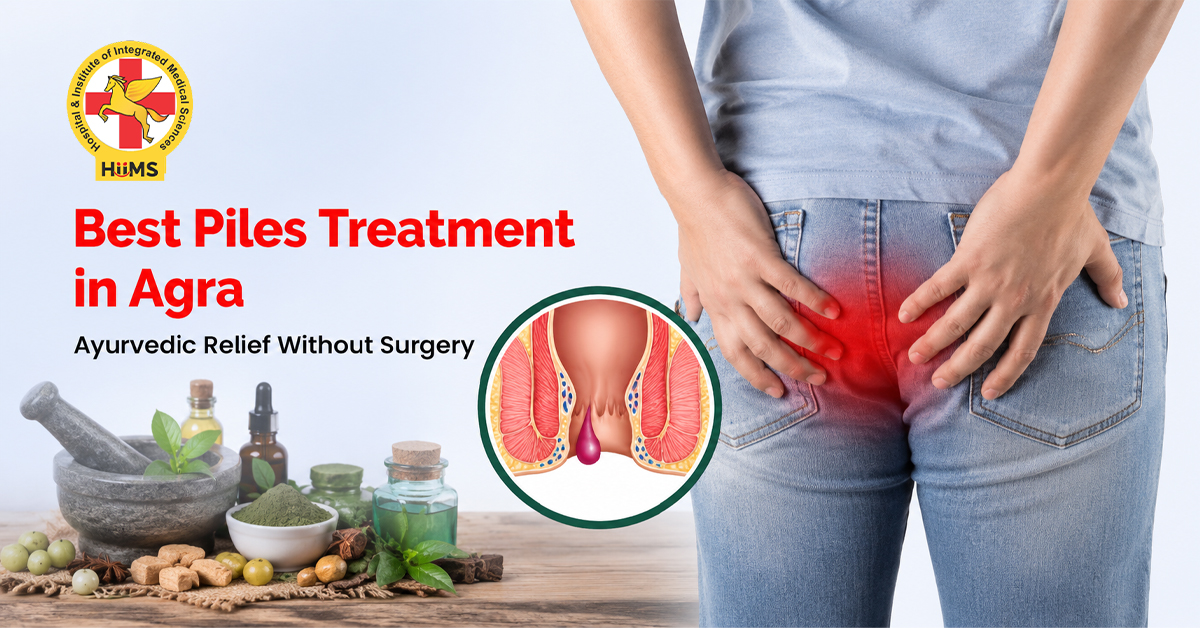

Piles is one of those things people quietly suffer with for months before saying a word, even to their own doctor. Embarrassment, fear of surgery, or just not knowing where to start usually keep people stuck. If you’ve been dealing with pain, bleeding, or discomfort while passing stool and have started looking into piles treatment in Agra, you’re not alone, and thankfully, surgery isn’t the only route anymore.
This blog walks you through what piles actually are, what real treatment options look like, including Panchakarma and Kshar Sutra, and why more people in Agra are choosing Ayurveda over the operation table.
What Causes Piles, and How Do You Know You Have Them?
Piles, or hemorrhoids, happen when the veins around your anus or lower rectum become swollen, usually from constipation, prolonged sitting, low fibre intake, or repeated straining during bowel movements. Getting familiar with piles symptoms and treatment early makes a real difference in how manageable the condition stays.
The common signs include bleeding during or after passing stool, itching or irritation around the anus, a lump or swelling you can feel externally, and pain, especially while sitting for long periods. Internal piles often go unnoticed longer since they’re usually painless early on, while external ones tend to cause discomfort right away.
Three Routes for Piles Treatment in Agra
Before deciding anything, it helps to know what’s actually available. Generally piles treatment in Agra can be classified in three ways:
- Medication and diet correction – used for early-stage piles, includes stool softeners, fibre supplements, and topical creams.
- Surgical procedures – banding, laser treatment, or complete removal, are usually kept for advanced or prolapsed piles.
- Ayurvedic therapies and Panchakarma-based care – includes Kshar Sutra therapy and Panchakarma treatments that work on the root cause gradually, without major cutting.
Most general surgeons and gastro clinics in Agra offer the first two, especially for advanced cases needing a quick fix. It’s the third route, though, that’s changing how people approach piles today.
How Panchakarma Supports Piles Treatment
This is a part that people often don’t know about. Panchakarma isn’t just a general detox; specific therapies within it are used directly for piles. Basti, a warm herbal oil or decoction given through the rectum, is commonly used to soften hardened stool, reduce inflammation, and ease the strain that worsens piles over time.
Alongside this, Virechana (a supervised purgation therapy) helps clear excess heat and toxins from the digestive system, which is often the actual root cause behind recurring piles. These therapies aren’t stand-alone cures; they’re usually combined with diet correction and herbal support to prepare the body before or alongside further treatment.
Kshar Sutra: The Non-Surgical Route for More Advanced Cases
If the piles do not come under control with diet and Panchakarma then Kshar Sutra is the best non-surgical piles treatment. Preparation of medicated thread with the help of some herbal ingredients like Apamarga Kshar, Snuhi latex and turmeric. It is applied in multiple coated layers.
This thread is tied around the base of the pile mass by a trained Ayurvedic doctor, and over the following days, it gradually cuts off blood supply to the tissue, causing it to dry, shrink, and shed off naturally while healing the wound from within. It’s usually done under local anaesthesia, needs little to no hospital stay, and comes with a shorter recovery period than conventional surgery.
What Complete Ayurvedic Piles Treatment Actually Looks Like
A proper Ayurvedic piles treatment plan rarely relies on just one therapy. It typically combines Panchakarma procedures such as Basti for immediate relief, Kshar Sutra for more advanced cases, and herbs such as Triphala, Haritaki, and Nagkesar to support digestion in the long term.
Diet correction plays an equally big role, cutting back on spicy, fried, and processed food while adding more fibre is usually non-negotiable, since poor digestion is what triggers piles for most people in the first place.
Fissure and Fistula Treatment: A Related but Different Concern
A lot of people use piles, fissures, and fistulas interchangeably, but they’re actually different conditions. A fissure is a small tear in the anal lining that causes sharp pain during bowel movements, while a fistula is an abnormal tunnel that forms between the anal canal and the skin, often linked to infection.
Fissure and fistula treatment in Ayurveda also uses Kshar Sutra and supportive Panchakarma therapies but the treatment varies as per the condition.
When is Natural Treatment Enough on Its Own?
This depends on how far the condition has progressed. For early-stage piles, natural piles treatment through diet, Panchakarma therapies like Basti, and herbal support can genuinely bring relief without needing any procedure at all.
But once piles reach a later stage, with persistent bleeding or prolapse, Kshar Sutra becomes the more appropriate route, since Panchakarma and diet alone usually aren’t enough to reverse things by that point.
Why is Jeena Sikho HiiMS Agra Worth Considering?
This is where Jeena Sikho HiiMS Agra stands out as both a dedicated piles hospital in Agra and a well-rounded Ayurvedic hospital Agra residents have started turning to. The approach here starts with a proper evaluation; not every patient goes through the same treatment.
Depending on your specific case, the plan might combine Panchakarma therapies, Kshar Sutra where needed, herbal formulations such as Arshoghni Vati and Guggul, and dietary correction to ease constipation, rather than just managing discomfort temporarily.
Conclusion
Piles can feel like an isolating thing to deal with, but it’s far more common than people realise, and it doesn’t have to mean surgery. If you’ve been putting off hemorrhoids treatment in Agra out of fear or discomfort, it’s worth exploring the Ayurvedic route first, whether that’s Panchakarma or Kshar Sutra.
You can book a VOPD consultation with Jeena Sikho HiiMS Agra and get a proper, personalised understanding of what your body actually needs.

FAQs
1. Can Panchakarma alone treat piles?
For early stage piles, Basti and diet correction can provide actual relief without the need for any further procedures.
2. Does Kshar Sutra therapy painful?
It’s done under local anaesthetic and is generally much less painful than conventional surgery, with a gradual healing process.
3. How long does it take to recover after Kshar Sutra treatment?
Most patients get better within a few days to a few weeks, depending on how bad the condition is.
4. What is the difference between piles, fissure and fistula?
Haemorrhoids are swollen veins. Anal fissure is a cut in the lining of the anus. A fistula is an abnormal tunnel next to the anal canal. Each requires a slightly different approach.
5. Can diet alone cure piles?
For early-stage piles, yes, fibre-rich food and better hydration can help significantly, but advanced cases usually need additional treatment like Panchakarma or Kshar Sutra.