
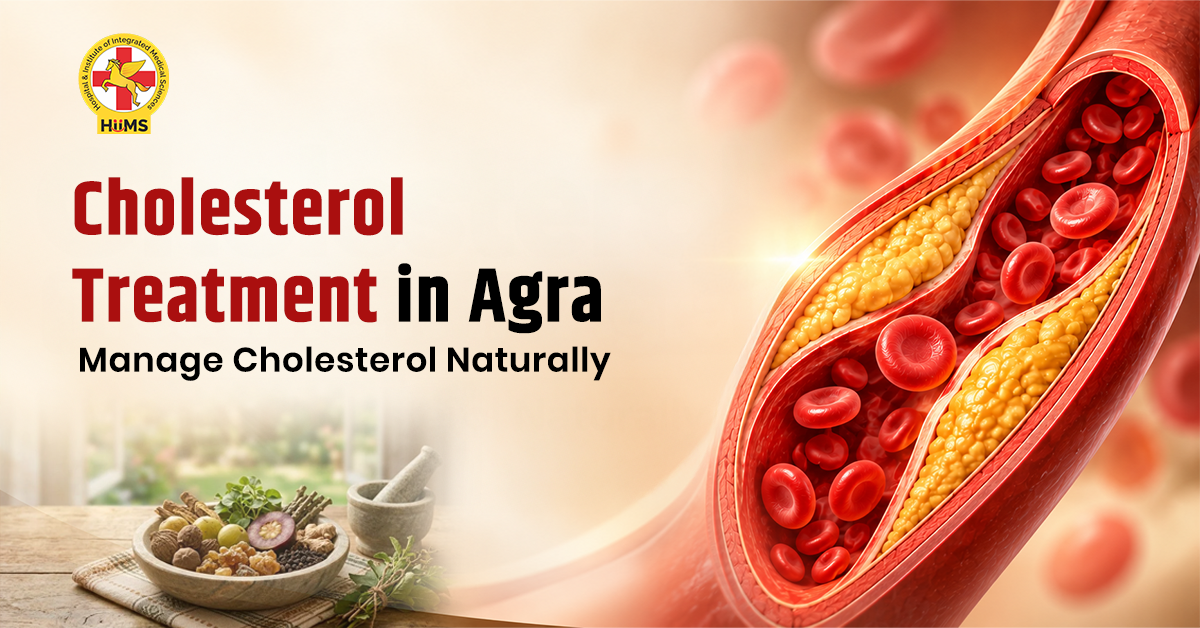
High cholesterol often develops quietly. A person may feel completely normal and still have a high cholesterol level in a blood test. This is one reason regular health checks and attention to daily habits matter. Cholesterol itself is not always harmful. The body needs it for important functions, but too much low density lipoprotein, often called LDL cholesterol, can increase the risk of heart and blood vessel problems. Diet, physical activity, body weight, family history, age, and other health factors can all affect cholesterol levels.
For people looking for cholesterol treatment, the first step should be understanding their lipid report and the habits that may be affecting it.
The natural approach towards cholesterol treatment in Agra at Jeena Sikho HiiMS centres around simple food habits, regular physical movement, proper sleep and a disciplined daily routine. Ayurveda also pays close attention to digestion, food quality, lifestyle and what each individual actually needs. All of this becomes a part of a long term wellness plan, supported by regular health monitoring. The whole idea is to build habits that last, instead of relying on one single food or remedy.
What Is Cholesterol and Why Does It Matter?
Cholesterol is a soft, waxy substance found in the blood. The liver makes most of it, and a small part comes from the food we eat. It travels through the body with the help of tiny carriers called lipoproteins.
There are two types we hear about the most. LDL is called bad cholesterol because too much of it can stick to the walls of the arteries. HDL is called good cholesterol because it carries extra cholesterol back to the liver. A lipid profile test shows both, along with total cholesterol and triglycerides.
Common Reasons Behind High Cholesterol
Cholesterol can rise for several reasons, including daily food habits, lack of activity, family history, age, and certain health conditions.
- Too much fried and oily food
- Packaged snacks, biscuits and bakery items
- Very little walking or exercise
- Extra weight, especially around the belly
- Smoking and tobacco
- A family history of high cholesterol
- Growing age and some health conditions
Understanding these factors can help you make better choices and keep a closer watch on your cholesterol levels. If you are facing these cholesterol-related concerns, don’t delay. Book an appointment with a HIIMS expert doctor today and understand your health better.

Understanding the Risks of High Cholesterol
High cholesterol often has no clear symptoms, but some signs may appear when cholesterol begins affecting blood flow and the overall health.
- Tiredness and heavy legs
- Pain or tightness in the chest
- Breathlessness while climbing stairs
- Cramps in the calves while walking
Since high cholesterol can remain unnoticed, regular lipid testing is important for understanding your levels and managing them in time.
An Ayurvedic Approach for Cholesterol Treatment in Agra at Jeena Sikho HiiMS
Ayurveda does not see cholesterol as a number alone. It links it to weak digestion. When the body’s digestive fire is low, food is not broken down well, and a sticky waste called ama builds up in the channels of the body. This raises fat in the blood. So the Ayurvedic plan is to fix the digestion first, clear the waste, and then bring balance to the three doshas, mainly kapha.
Many people now prefer Ayurvedic cholesterol treatment in Agra at Jeena Sikho HiiMS because it works on the root cause and does not only push the number down for a few weeks. In high cholesterol Ayurvedic treatment, the plan is made after checking the pulse, food habits, sleep and stress.
Ayurvedic Herbs That Help Lower Cholesterol
Ayurveda names many plants that are known to support healthy fat levels. Some of them are:
- Arjuna bark: supports the heart and helps control LDL
• Guggul: a resin used for ages to reduce extra body fat
• Triphala: cleans the gut and improves digestion
• Garlic: may lower LDL and keep blood flowing well
• Fenugreek seeds: soaked overnight and eaten in the morning
Small studies on arjuna and fenugreek have shown a fall in LDL in some people, though results differ from person to person. This is why any Ayurvedic treatment for high cholesterol should begin with a checkup by a trained professional.
Personal Care That Looks at the Whole Person
At Jeena Sikho HiiMS Agra, the doctors first listen to the patient’s history and study the lipid report. Then they plan herbal medicines, a diet chart and simple yoga for each person. Follow-up visits are kept so that progress can be seen step by step. This kind of steady and personal cholesterol management in Agra suits those who want to avoid a lifetime of tablets.
Foods That Support Healthy Cholesterol Levels
Food is the first medicine in Ayurveda. A few small changes at the table can bring a big change in your report. Diet is a major part of any cholesterol treatment that aims for lasting results.
Add more of these:
- Oats, barley and whole grains
- Green leafy vegetables and fresh fruits
- Almonds and walnuts in small amounts
- Warm water throughout the day
Cut down on these:
- Deep fried snacks, bakery items and sweets
- Red meat and too much butter
A simple, balanced diet with more wholesome foods and fewer fried or heavy foods can support healthy cholesterol levels over time.
Yoga and Lifestyle Habits for Cholesterol Care
Medicine and food work best when the day itself is well planned. Walk briskly for 30 to 40 minutes every morning. Yoga poses such as Surya Namaskar, Bhujangasana and Vajrasana help burn fat and improve blood flow. Pranayama calms the mind, and stress is a known reason for rising cholesterol. Sleep by ten at night and wake early. Natural treatment for high cholesterol is built on such small habits, followed every day without a break.
For those who want natural cholesterol treatment in Agra, this simple routine is the right place to begin.
How to Choose the Right Doctor
Cholesterol needs steady guidance, so the doctor you pick matters. Look for a qualified Ayurvedic physician who listens well, asks about your food and sleep, and explains every herb in plain words. A patient who wants the best doctor for cholesterol in Agra should also check that the clinic gives a diet plan and not only medicines.
Ask, too, whether Panchakarma is part of the care. These cleansing therapies, such as Virechana and Basti, are used in Ayurveda to clear the waste that builds up in the body, and they are selected based on your health and individual needs. Good cholesterol treatment always requires patience, because fat that took years to gather cannot go away in a week.
Conclusion
Managing cholesterol is not only about one blood test. It is also about the habits followed every day. A balanced diet, regular movement, healthy body weight, proper sleep, and regular health checks can all form part of a natural approach. Ayurveda also gives importance to food, digestion, lifestyle, and individual needs while planning wellness care.
Cholesterol treatment in Agra at Jeena Sikho HiiMS follows an integrated approach that gives attention to the diet, lifestyle, Ayurvedic guidance and personalised care. If you want to understand your cholesterol report and explore a suitable wellness plan, you can consider a VOPD consultation with the experts.

FAQs
1. What is the difference between LDL and HDL cholesterol?
LDL can stick to the walls of the arteries, while HDL carries extra cholesterol back to the liver.
2. Can a thin person have high cholesterol?
Yes, because food habits, family history and age can raise cholesterol even in a slim body.
3. Which foods can raise cholesterol?
Deep-fried snacks, bakery items, sweets, packed food and too much butter can push the numbers up.
4. How does Ayurveda look at high cholesterol?
Ayurveda links it to weak digestion, a sticky waste called ama and an imbalance of kapha.
5. Can cholesterol be lowered naturally?
Many people see better numbers with steady food, sleep and exercise habits, though very high levels need a proper check.