

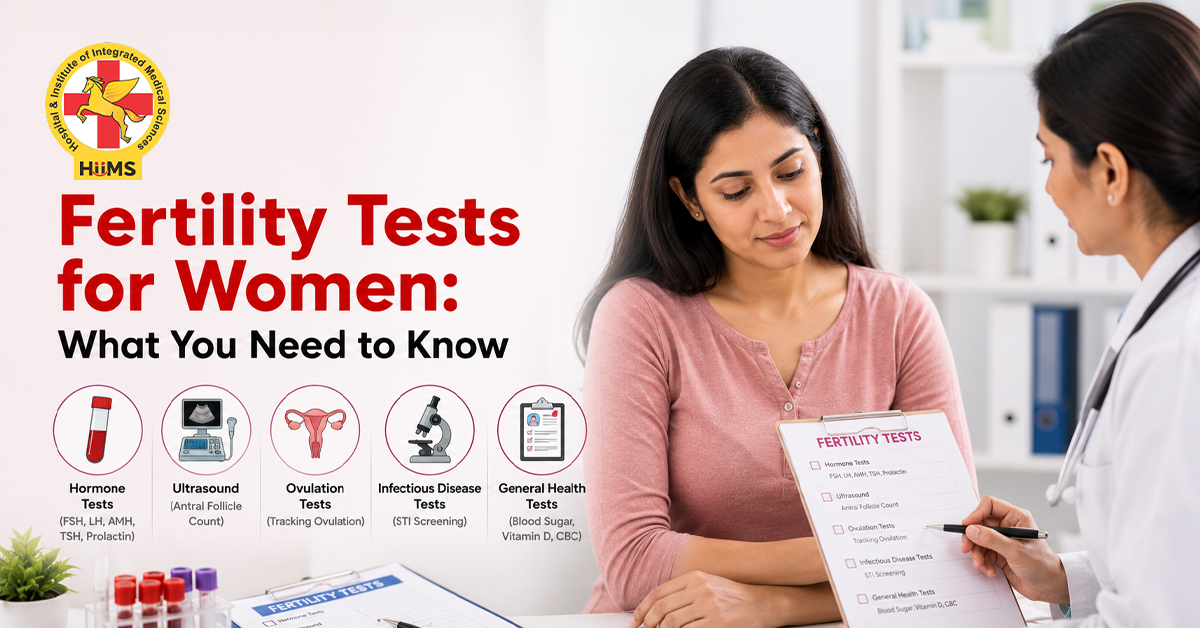
If you are struggling to conceive, scheduling fertility tests for women is the most direct step you can take to find out what is happening inside your body. Trying for a baby without success can be deeply frustrating, but guessing about your reproductive health only adds unnecessary time and stress to your journey. Clinical female fertility tests remove that guesswork by providing concrete data about your hormones, egg supply and anatomy.
Undergoing a fertility test for women is not a medical failure but an informational toolkit. To get a clear female infertility diagnosis, specialists look at a few specific areas: whether you are releasing eggs regularly, how many eggs you have left, and whether there are physical blockages in your reproductive tract. Gathering these facts is exactly how you find out what is holding you back, allowing you to build a targeted, highly effective plan to achieve a successful pregnancy.
When Should You Consider Fertility Tests For Women?
Many couples wonder exactly when they should stop trying naturally and start looking into professional medical guidance. The medical community has created standard timelines to help you know exactly when it is the right time to get a professional women’s fertility check. These guidelines are heavily based on age because a woman’s egg supply naturally shifts over time.
Guidelines Based on Age
Under Age 35: Medical guidelines generally recommend scheduling an exploratory evaluation after 12 months of regular, unprotected intercourse. This timeline gives your body a full year to conceive naturally before checking if you need specialised tests for female infertility.
Age 35 to 39: Because egg quantity and quality begin to change more quickly in your late thirties, it is highly recommended to seek professional testing after 6 months of trying to conceive without success.
Age 40 or Older: If you are over the age of 40, it is best to consult a specialist right away when you decide you want to conceive. Bypassing the traditional waiting periods entirely saves you precious time and gives you the best care from day one.
Core Evaluations and Fertility Tests For Women
Medical History Assessment
Your diagnostic journey always begins with a detailed, face-to-face review of your health background. A specialist looks closely at your lifetime menstrual cycle regularity, the tracking logs of your periods, any past illnesses, pelvic surgeries, family health patterns, and daily lifestyle factors. This conversation is foundational because it helps uncover hidden clues such as thyroid imbalances or cycle irregularities that heavily affect conception long before any physical testing begins.
Sonogram (Ultrasound Imaging)
This routine test uses hand-held equipment and high-frequency sound waves to generate a live, real-time visual picture of your reproductive organs on a monitor. Doctors use an abdominal scanner or an internal probe to check the size, shape and overall health of your pelvic cavity. This ensures your body is ready to support a pregnancy.
Hormone Test
These hormone tests for women are routine blood tests that check your hormone levels at specific times during your monthly cycle. These panels measure hormones like Progesterone, LH, and Estradiol. The results show if your brain is signalling your ovaries correctly. It shows doctors if your body is sending the right signals to mature and release a healthy egg each month.
Ovarian Reserve Test
This blood test measures your Anti-Müllerian Hormone (AMH) levels. This specific hormone is made by the small sacs inside your ovaries. Since your body doesn’t make new eggs over time, this test is the best way to estimate the remaining egg supply. This gives your healthcare expert a clear look at your fertility timeline. It helps you make the right choices about your next steps.
Laparoscopy
This is a minor, minimally invasive procedure done under anesthesia. The doctor inserts a tiny camera through a small incision near your navel to look inside. It allows the specialist to physically look inside your abdomen to clearly see, identify and sometimes immediately treat complex internal conditions like endometriosis, pelvic scar tissue, or hidden adhesions that cannot be detected on regular X-rays or blood tests.
Sonohysterogram
During this advanced imaging evaluation, a doctor gently introduces a safe, sterile saline fluid through the cervix into your uterine cavity while performing an ultrasound scan. The fluid expands the area, making it easy for the doctor to spot small tissue growths like polyps or scarring that could keep an embryo from implanting.
Hysterosalpingogram
This test uses a safe liquid dye and X-rays to check the inside of your fallopian tubes. It is quick but highly accurate. The doctor watches the dye move through your system in real time. As the fluid is introduced, the X-ray tracks its movement; if the dye flows smoothly through the tubes and empties safely into the pelvis, it proves the path is open and clear for sperm to travel up and meet the egg naturally.
Hysteroscopy
This direct procedure involves inserting a very thin, lighted telescope-like scope through the cervix and right into the womb, requiring no surgical cuts. It provides a live view of the entire uterine lining. The main advantage of this test is its accuracy in identifying structural irregularities. It allows doctors to safely remove small polyps or clear away minor scar tissue during the same session.
Pelvic ultrasound for fertility
This focused internal or external scan maps your ovaries and uterus with extreme precision. It is a vital, everyday test for fertility that doctors rely on to check for structural changes like uterine fibroids or ovarian cysts. This scan checks your current fertility by counting the visible egg sacs in your ovaries. Doctors call this an antral follicle count and they usually schedule it at the very beginning of your cycle.
Conclusion
Undergoing clinical fertility tests for women is not something to fear or feel discouraged about. It is simply a highly effective diagnostic toolkit designed to provide you with clear, honest, and actionable data about your unique body. Knowing exactly how your hormones are behaving and ensuring your anatomy is clear removes the emotional weight of the unknown.
If you are ready to find answers and want to learn how to choose the right test for fertility, feel fully empowered to take action today. Jeena Sikho HiiMS Agra is a trusted healthcare provider that offers expert guidance and personalised care. You can book your medical consultation through HiiMS VOPD (video consultation) to start your personal health journey with clarity.

FAQs
1. Are fertility tests for women painful or highly invasive?
Most basic evaluations like blood tests and ultrasounds are completely painless, while structural tests might cause mild temporary cramping.
2. Does a low AMH level mean I cannot get pregnant naturally?
No, a low AMH indicates a lower quantity of remaining eggs but women with low AMH can still get pregnant naturally with good egg quality.
3. Can I just use an at-home tracking app instead of clinical medical testing?
No, while apps are great for tracking ovulation dates but they cannot check for physical fallopian blockages or measure your actual egg reserve.
4. How long should we try to conceive before booking a fertility check?
You should seek an evaluation after 12 months if you are under 35 or after 6 months if you are over 35.
5. Can a routine pelvic ultrasound detect all causes of female infertility?
No, an ultrasound maps structural organs like the uterus and ovaries but cannot see if the fallopian tubes are blocked or measure hormone levels.
Disclaimer: The information provided on this blog is for general educational and informational purposes only. It is not intended to replace professional medical advice, diagnosis, or treatment. Always consult a qualified healthcare professional before making any changes to your diet, lifestyle, or treatment plan. Individual results may vary.