

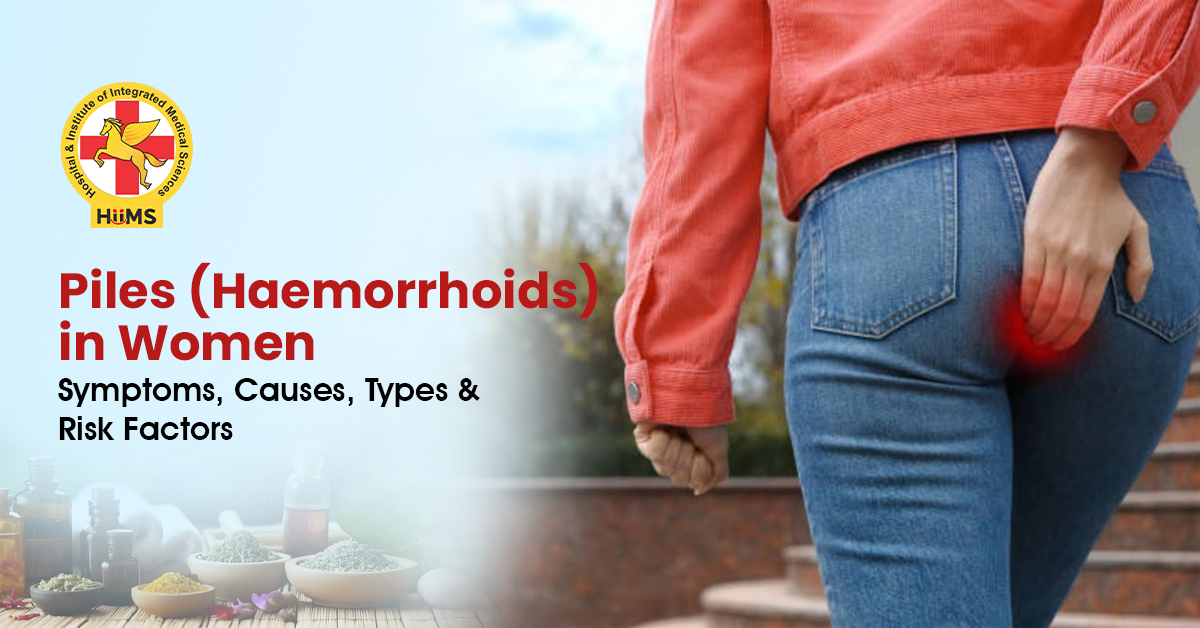
Many women experience discomfort around the anal area at some point in their lives, but they often ignore it because of embarrassment or the lack of awareness. One such common condition is the piles, also known as haemorrhoids. Piles in women can affect the daily activities and make simple tasks like sitting, walking, or passing stool uncomfortable. Pregnancy, hormonal changes, constipation, and a sedentary lifestyle are some of the common reasons that increase the risk in women.
Piles are the swollen veins in the lower rectum or around the anus. While the condition can affect anyone, women may face certain situations that make them more likely to develop it. Understanding the symptoms and causes can help in the early management and prevent further discomfort. At Jeena Sikho HiiMS, awareness about the lifestyle related health concerns is encouraged so that people can take timely steps towards better well being and seek the proper guidance when needed.
What Are Piles?
Piles, or haemorrhoids, are the enlarged and the swollen veins present inside the rectum or around the anus. These swollen veins may cause pain, itching, bleeding, or discomfort during bowel movements. The condition can range from the mild to severe depending on the size and location of the swollen veins.
Although the piles are not always dangerous, they can affect the quality of life if left unmanaged.
Common Signs & Symptoms of Piles
The symptoms may vary from person to person. Some women may experience mild discomfort, while others may face severe symptoms. Common symptoms include,
- Bleeding during the bowel movements
- Pain or burning sensation around the anus
- Itching in the anal area
- Swelling or a lump near the anus
- Difficulty while sitting for the long periods
- Feeling that the bowel is not completely empty
- Mucus discharge after passing stool
The symptoms of piles in women may become more noticeable during pregnancy or after the childbirth due to the increased pressure on the pelvic region.
Understanding the Causes of Piles in Women
Several factors can increase the chances of developing the piles in women, some of which include,
Chronic Constipation
Straining during the bowel movements puts pressure on the veins around the rectum, leading to swelling.
Pregnancy
During pregnancy, the growing uterus increases the pressure on the veins in the lower body. The hormonal changes can also slow down the digestion and cause constipation.
Childbirth
The force applied during childbirth may put stress on the anal veins and can lead to the piles in some women.
Sitting for Long Hours
Sitting for extended periods and leading an inactive lifestyle may contribute to the poor blood circulation and increased pressure in the anal area.
Obesity
Obesity can increase the pressure on the lower part of the body, especially the abdominal and pelvic veins.
Low Fibre Diet
A diet low in fruits, vegetables, and whole grains may lead to the hard stools and constipation.
Aging
As women grow older, the tissues supporting the veins in the rectum may weaken.
Awareness of these causes can help women focus on prevention and make simple changes that support better health.
Different Types of Piles (Haemorrhoids)
The piles are generally classified into different types based on their location and the symptoms, and each type may need a different approach to the management.
Internal Piles
These develop inside the rectum and usually cannot be seen from outside. They may cause painless bleeding.
External Piles
These form under the skin around the anus and may cause pain, itching, and swelling.
Prolapsed Piles
These are the internal piles that come out of the anus during the bowel movements.
Thrombosed Piles
These occur when a blood clot forms inside an external pile, causing the severe pain and swelling.
Learning about the different types of piles can help in the early identification of the symptoms and encourage the timely consultation with a healthcare professional.
How Do Piles Affect Women’s Health?
Piles can affect more than just the anal area. Ongoing pain, itching, bleeding, and discomfort may interfere with the daily activities such as sitting, walking, or passing stools. In some women, these symptoms can also lead to the stress, embarrassment, and reduced self confidence. If left untreated, the condition may affect the overall well being and the quality of life, making early attention important.
Diagnosis and Treatment Approaches for Piles
Piles are usually diagnosed based on the symptoms and a physical examination. In some cases, the additional tests may be suggested to rule out the other causes of rectal bleeding. The choice of the piles treatment depends on the severity of the condition and may include the lifestyle changes, dietary modifications, and other approaches recommended by the healthcare professional.
At Jeena Sikho HiiMS, an Ayurvedic approach that focuses on healthy living is often encouraged to support the digestive health. It is important to consult a healthcare professional if the symptoms continue or start affecting the quality of life.
When Should You See a Doctor?
Medical advice should be considered if you experience the,
- Continuous bleeding
- Severe pain
- Large swelling around the anus
- Difficulty sitting or walking
- Symptoms that do not improve with the lifestyle changes
Many women search for the piles hospital near me when symptoms become difficult to manage. Early guidance can help in understanding the condition better and prevent the unnecessary discomfort.
Conclusion
Piles are a common condition that can affect the women of all ages. Pregnancy, constipation, lifestyle habits, and the hormonal changes can all increase the risk of developing this condition. Understanding the symptoms, causes, and the piles treatment options can help women take timely steps toward the better health.
At Jeena Sikho HiiMS, the focus remains on creating awareness about the lifestyle related concerns and encouraging a balanced approach to the well being. If you are experiencing symptoms of piles in women, seeking timely guidance can make a difference. You can also book an appointment to receive expert guidance from the comfort of your home.

FAQs
- Can pregnancy increase the risk of piles?
Yes, pregnancy can increase the pressure on the pelvic veins and raise the risk of piles.
- Why do piles cause bleeding?
Bleeding can occur when the swollen veins become irritated during the bowel movements.
- Does drinking less water increase the risk of piles?
Yes, poor water intake can lead to the hard stools and constipation.
- What is the first step in piles treatment?
Lifestyle changes such as increasing the fibre intake and drinking enough water are often recommended.
- Can a low-fibre diet lead to piles?
Yes, a low-fibre diet can cause constipation, which may increase the risk of piles.