

Your skin can tell you quite a lot about what is happening around you and how you are living each day. A few pimples, dry patches or occasional itching may not seem important, but repeated changes in the skin deserve some attention. Weather, pollution, allergies, infections, stress, hormonal changes, food habits and unsuitable skin products can all affect the way your skin looks and feels.
Some conditions settle with simple care, while others may continue for months or keep coming back after temporary relief. Understanding the type of problem is therefore important before choosing any treatment. At Jeena Sikho HiiMS, the focus is on understanding the person’s condition and supporting skin health through an individualised approach.
In this blog, you will learn about common types, causes, symptoms, Ayurvedic care and practical steps for maintaining healthier skin.
Understanding Skin Problems
Skin problems can describe any change in the normal appearance or feel of the skin. Dryness, redness, itching, acne, rashes, swelling, dark spots and unusual patches are some common examples. A problem may affect a small area or spread to different parts of the body, depending on its cause.
Some changes remain for a short time after exposure to heat, dust or a new product. Others, such as eczema, psoriasis or recurring acne, may need proper assessment because the symptoms can return. Paying attention to how long a problem lasts and whether it is changing can help in understanding what kind of care may be needed.
Common Types of Skin Problems
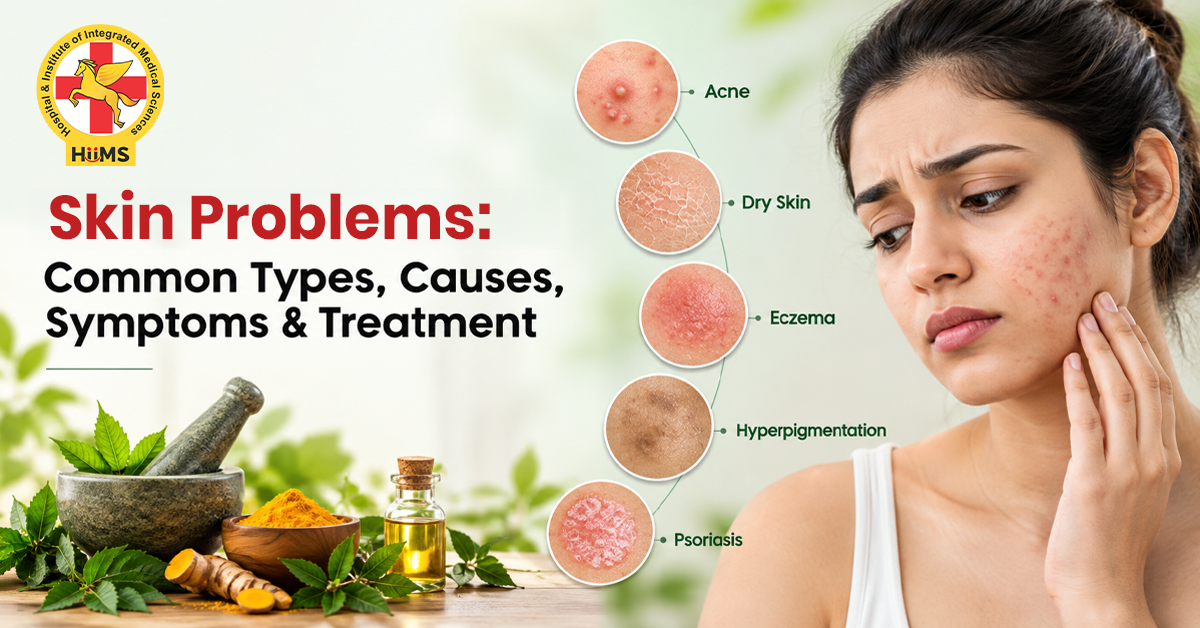
Different conditions can look alike at first, which is why people often confuse one problem with another. Acne commonly causes pimples, blackheads and whiteheads, while eczema may leave the skin dry, itchy and irritated. Psoriasis can produce raised, dry and scaly patches and is not a contagious infection.
Pigmentation problems can cause the skin to become darker, lighter or uneven in colour. Vitiligo is one example in which certain areas lose their usual pigment. Along with these conditions, infections caused by fungi, bacteria or viruses can also affect the skin.
What Causes Skin Problems?
There is rarely one reason behind every skin condition. Skin problems may develop because of a combination of personal, environmental and genetic factors. Poor sleep, prolonged stress, hormonal changes, allergies, pollution and contact with irritating substances can influence skin health. Food habits and an irregular daily routine may also affect overall wellbeing, which can have an effect on the skin.
Understanding Common Triggers
Sometimes the reason is quite simple. A cream or soap may not suit your skin, or you may develop a reaction after using something new. Sharing towels, clothes or other personal items can also pass certain infections from one person to another. Fungal problems are more likely to trouble skin that stays sweaty or damp for long periods. In some cases, food, medicines or things in the surroundings can also set off an allergic reaction.
Symptoms You Should Not Ignore
Common signs include persistent itching, redness, dryness, burning, swelling, scaling and cracking. Some skin diseases may also cause repeated rashes, thickened patches or changes in skin colour. Pus-filled bumps, fluid-filled lesions or a rapidly spreading rash can point towards an infection or another condition that needs medical attention.
The important thing is not to judge a condition only by how it looks. If a patch keeps growing, the symptoms repeatedly return or the skin changes suddenly without an obvious reason, professional assessment can help identify the problem.
Skin Diseases and Skin Infections: What Is the Difference?
The terms are often used together, but they do not mean the same thing. Skin diseases can develop because of inflammation, immune responses, genetics, hormonal changes or other factors. Eczema and psoriasis are common examples.
The picture is different with skin infection types, where fungi, bacteria or viruses are responsible for the problem. Ringworm is one of the better-known examples, although several bacterial and viral infections can also affect the skin. Depending on the infection, it may spread through contact with an affected person or contaminated personal items, making good hygiene an important part of care.
How Ayurveda Looks at Skin Health
Ayurveda looks at skin health as a part of the body’s overall wellbeing. What we eat, how well we digest our food, how we sleep and how we manage our daily routine can all matter when we are trying to understand a skin concern. Instead of looking only at the affected area, an Ayurvedic practitioner considers these different aspects while deciding suitable care.
The Four Pillars of Ayurvedic Care
Ahar focuses on suitable food and eating habits, while Vihar includes sleep, physical activity, stress management and daily routine. Shaman may include selected herbs or supportive Ayurvedic measures, while Shodhan refers to cleansing therapies that may be considered when appropriate.
These approaches are not meant to follow one fixed formula for every person. A qualified practitioner can decide which measures are suitable after understanding the individual’s condition.
Ayurvedic Care for Skin Problems at Jeena Sikho HiiMS
At Jeena Sikho HiiMS, doctors first look at the person’s symptoms, daily habits and overall health before deciding how to proceed with skin problems. The care plan can differ from person to person and may include changes in diet and routine, Ayurvedic medicines, external applications or selected therapies, depending on what the condition requires.
The purpose is to create a care plan according to the individual’s needs instead of assuming that one remedy will work for everyone. If you have a recurring skin concern, a consultation can help you understand the condition and the next appropriate step.
If a skin condition keeps returning or begins affecting your daily comfort, consider discussing it with an expert doctor instead of repeatedly changing products on your own.
Simple Ways to Care for Your Skin
Good skin care does not always require a complicated routine. Eat a balanced diet, drink adequate water, maintain regular sleep and find healthy ways to manage stress. Keep the skin clean, avoid known irritants and do not use medicines or strong creams without suitable advice.
People dealing with Skin diseases should also avoid assuming that every rash needs the same treatment. Understanding the reason behind the change is more useful than trying several products without knowing what the skin actually needs.
Conclusion
Healthy skin needs more than attention to its outer appearance. When itching, rashes, dryness, pigmentation or repeated breakouts continue, understanding the possible cause becomes more useful than simply covering the visible change.
Skin problems can have different triggers, so treatment should depend on the person’s symptoms and overall condition. Ayurveda gives importance to food, lifestyle, daily routine and individualised care, while timely healthcare guidance can help identify conditions that need specific attention.
If you are facing persistent or recurring skin concerns, you can opt for a VOPD consultation at Jeena Sikho HiiMS and discuss your health issue with expert doctors to understand a suitable approach to care.

FAQs
Q1: What are the most common skin problems?
Acne, eczema, psoriasis, pigmentation changes, dryness, allergies and different types of infections are commonly seen skin concerns.
Q2: Can stress affect skin health?
Long-term stress can influence the body’s normal functions and may worsen itching, acne or certain recurring skin conditions in some people.
Q3: How can I identify a skin infection?
Rapid spreading, unusual redness, swelling, pain, discharge or persistent itching can occur with infections, but proper diagnosis requires professional assessment.
Q4: Is every rash a skin disease?
A rash can result from irritation, allergy, infection or an underlying skin condition, so its cause should be identified before choosing treatment.
Q5: When should I consult a doctor for a skin problem?
Consult a doctor when symptoms persist, spread, repeatedly return, become painful or cause noticeable changes in the skin.
Leave a comment